Ice Machine Sanitization: Health Code Compliance Guide
Commercial Ice Machine Sanitization for Boston Health Code Compliance
Imagine a health inspector walking into your Boston restaurant, eyeing your ice machine. One whiff of slime or a peek at biofilm could shut you down. For Massachusetts business owners, commercial ice machine sanitization isn’t optional—it’s a legal must to pass ice maker health inspections and keep customers safe.
In Greater Boston’s fast-paced food scene—from Cambridge cafes to Somerville bars—downtime from failed inspections costs thousands. Royal Cooling, your local commercial refrigeration experts, helps businesses stay compliant with proven commercial ice machine maintenance strategies. We’ve serviced ice makers across Waltham, Medford, and beyond, ensuring ice machine compliance Boston standards are met every time.
This guide breaks down ice machine cleaning requirements, daily protocols, approved tools, and how to prevent violations. Ready to protect your operation? Let’s dive in.
Why Commercial Ice Machine Sanitization Matters in Massachusetts
Commercial ice machines are bacteria hotspots. Cold temperatures preserve germs while moisture fuels growth, creating sticky biofilm—often pink or brown slime on coils, bins, and lines. Mold thrives in corners, and contaminants spread to every cube served.[1][2]
Boston health codes, aligned with FDA guidelines, demand strict hygiene. Inspectors check for clean surfaces free of slime, mold, or discoloration. They scrutinize bins, chutes, scoops, and drainage—no standing water allowed. Failed ice maker health inspections mean immediate shutdowns, fines, or worse.[1]
Local context amps up the stakes. Hard water in Greater Boston accelerates mineral buildup, worsening biofilm. High-volume spots like Cambridge markets face weekly scrutiny. Proactive commercial ice machine sanitization prevents ice machine bacteria prevention issues before they hit your bottom line.
Royal Cooling’s seen it all: from Cambridge fridge repairs to emergency walk-in fixes. Our preventive plans keep your ice pristine. Learn more at royalcooling.com/services.
Key Ice Machine Cleaning Requirements for Health Compliance
FDA and manufacturer guidelines set the baseline: clean and sanitize at least twice yearly, following equipment-specific instructions.[2] Boston codes often require more—daily for high-touch areas, weekly deep cleans in busy ops.[1][4]
Daily Cleaning Protocols
Focus on high-risk zones to block ice machine bacteria prevention. Empty the bin, sanitize walls, corners, and dispensing chutes with approved solutions. Wipe scoops (store in sanitizer between uses) and check water filters for flow issues.[1]
- Remove all ice to avoid recontamination.
- Wash with food-safe sanitizer; air dry fully.
- Monitor for odors or tastes signaling problems.
Weekly and Monthly Deep Cleans
Weekly: Disassemble evaporators, water lines, and coils. Run sanitizer through systems to dissolve biofilm.[1][3] Monthly (or in hard-water areas): Full teardown for limescale, rust, and mold removal. Ice-O-Matic recommends nickel-safe cleaners like Nu-Calgon IMS-III, no more than monthly to avoid damage.[3]
Always clean first, then sanitize—cleaning removes soil, sanitizing kills germs.[4] No rinsing post-sanitizer on parts; let it air dry.[2][5]
For expert help, check our Burlington maintenance guide or maintenance tips.
Approved Tools and Sanitizers for Commercial Ice Machines
Skip household cleaners—they leave residues, damage nickel parts, and fail against biofilm.[1][3] Use EPA-approved, food-contact-safe options.
| Sanitizer Type | Best For | Key Tips |
|---|---|---|
| Quaternary Ammonium (Quats) | Daily surfaces | Safe, effective on bacteria; test concentration with strips.[1] |
| Chlorine-Based (Bleach) | Weekly deep cleans | Dilute precisely; strong against biofilm but handle with PPE.[1][4] |
| Specialized Biofilm Removers (e.g., Nu-Calgon) | Monthly | Penetrates slime; follow contact times.[1][3] |
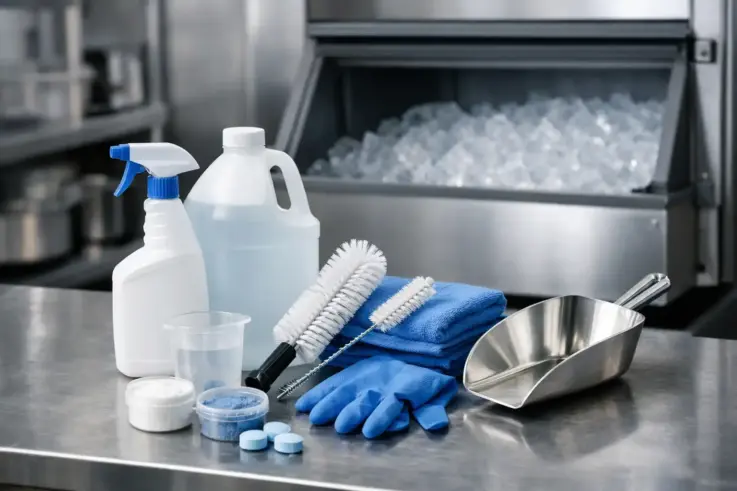
Spray bottles, color-coded tools, gloves, and test strips ensure precision. Run solutions through water systems, purge thoroughly.[1][5]
For compliance checklists, see the Cambridge maintenance checklist. Need pros? Contact Royal Cooling today.
Passing Ice Maker Health Inspections in Boston
Inspectors want proof: documented logs of every clean, sanitizer tests, and staff training. Self-audit with checklists—check bins, chutes, ice quality.[1]
In Cambridge and Somerville, violations spike from poor drainage or cross-contamination. Royal Cooling’s commercial ice machine maintenance includes audits and repairs, like Somerville refrigeration repair.
Pro tip: Install water filters and smart monitoring for early warnings. Our smart upgrades cut risks. For emergencies, schedule now.
Common Pitfalls and Ice Machine Bacteria Prevention Tips
Avoid these red flags:
- Skipping disassembly—biofilm hides inside.[2]
- Wrong dilution—test every batch.[1]
- Ignoring hard water—descale regularly.[6]
- No logs—inspectors demand records.[1]
Prevent with manufacturer schedules, staff training, and pros like us. For more, visit Ice-O-Matic resources or USDA FDA guidelines.
Royal Cooling serves Greater Boston with tailored plans. From Waltham ice repairs to full installs, we’re your compliance partner. Explore services.
FAQ
How often should I perform commercial ice machine sanitization?
Daily for bins and chutes, weekly deep cleans, and at least twice yearly per FDA/manufacturer rules. Boston codes may require more in high-volume spots.[1][2]
Can I use bleach for ice machine cleaning requirements?
Yes, diluted chlorine-based sanitizers work for weekly cleans, but use EPA-approved formulas for food surfaces. Always clean first, no rinse after.[1][4]