Commercial Refrigeration Water Line Issues Burlington MA
Commercial Refrigeration Water Line Issues in Burlington MA: Complete Repair Guide
Water line problems are among the most frustrating issues facing restaurant owners, convenience stores, and food service businesses across Burlington and Greater Boston. A single clogged water line or leaking valve can shut down your ice machine, damage your flooring, and disrupt operations—costing you thousands in lost revenue and emergency repairs. If you’re dealing with commercial refrigeration water line repair needs, understanding the root causes and solutions is essential to protecting your business.
At Royal Cooling, we’ve spent years diagnosing and fixing water line leak repair issues for businesses throughout Burlington, Somerville, Cambridge, and the surrounding areas. This guide walks you through the most common water line problems, how to identify them, and when to call a professional.
Why Water Line Problems Matter for Your Business
Your commercial refrigeration system depends on a steady, clean water supply. Whether you operate an ice machine, walk-in cooler with a defrost drain, or beverage dispenser, water flows through critical components every single day. When water lines fail, the consequences are immediate:
- Ice machines stop producing ice entirely
- Water pools inside equipment or on your floor
- Contaminated ice affects food safety and customer trust
- Electrical hazards from water leaks near electrical connections
- Expensive emergency repairs and potential health code violations
The good news? Most water line issues are preventable with proper maintenance and quick professional intervention.
Common Water Line Problems in Commercial Refrigeration
Clogged Water Supply Lines
One of the most common culprits behind ice machine failure is a clogged or partially frozen water supply line.[1] Mineral deposits, sediment, and debris accumulate over time, restricting water flow to your equipment. In Burlington’s cold winters, frozen water lines are equally problematic—ice forms inside the line, completely blocking water passage.
Signs of a clogged water supply line include:
- Ice machine producing little to no ice
- Slow water flow to dispensers or equipment
- Unusual noise from the water pump
- Equipment shutting down mid-cycle
To check for blockages, ensure your water supply valve is open and look for kinks or visible obstructions in the line. If the line is frozen, a professional can safely thaw it using controlled heat methods.[1] Never use high-temperature methods that could damage plastic tubing.
Water Filter Clogging and Contamination
Your water filter is the first line of defense against contamination, but it’s also a common failure point. A clogged filter restricts water flow and degrades ice quality.[2] If your ice tastes or smells off, a dirty filter is likely responsible.
Best practices for water filters:
- Replace filters every six months minimum
- Inspect filters monthly if your machine runs continuously
- Follow manufacturer guidelines for your specific equipment
- Use high-quality replacement filters rated for your system
Regular filter maintenance prevents downstream problems and keeps your ice fresh and safe for customers.
Water Inlet Valve Failures
The water inlet valve controls water flow into your ice machine or refrigeration system. When this valve malfunctions—whether from mineral buildup, corrosion, or mechanical failure—water either won’t enter the machine or flows uncontrollably.[2]
Signs of a faulty water inlet valve:
- No water reaching the ice-making mechanism
- Water continuously flowing (machine won’t shut off)
- Visible bulging or restriction in the valve body
- Water leaking from the valve connection
A faulty water inlet valve typically requires professional replacement. This is not a DIY fix, as improper installation can cause leaks or water damage to surrounding equipment.
Drain Line Clogging Issues
While water supply lines bring fresh water in, drain lines carry wastewater out. A clogged drain line creates a backup that can flood your ice bin or equipment interior. This is especially problematic because standing water promotes mold, bacteria, and contamination.[2]
Common causes of drain line clogs:
- Mineral and sediment buildup from hard water
- Food particles or debris entering the drain
- Frozen drain lines in winter conditions
- Improper installation with inadequate slope
Regular cleaning of drain lines—part of a comprehensive drain cleaning service—prevents backups and keeps your equipment sanitary.
Water Line Leaks: Detection and Repair
Water leaks are expensive and dangerous. Beyond the obvious water damage, leaks create electrical hazards and provide a breeding ground for mold and bacteria. Early detection is critical.
Where Leaks Occur
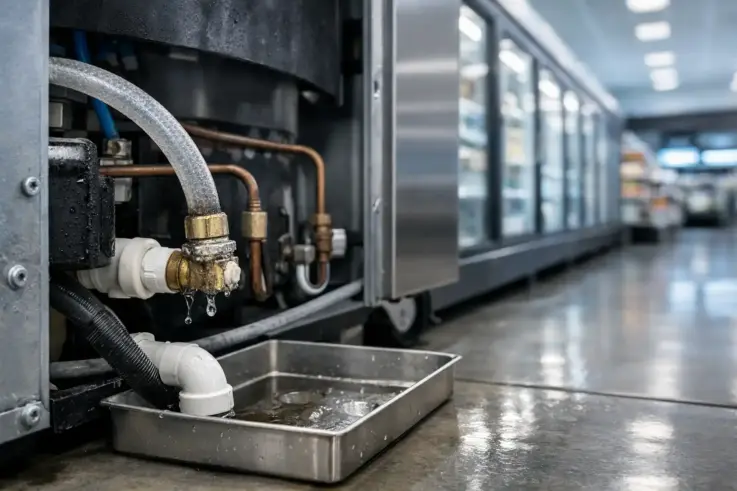
Water leaks in commercial refrigeration systems typically originate from three sources:[2]
- Loose or damaged hoses: Inspect all visible water lines for cracks, splits, or disconnections. Temperature fluctuations in Massachusetts winters can cause hoses to contract and loosen connections.
- Faulty water pumps: A malfunctioning pump may cause water overflow or pressure surges that burst hoses.
- Clogged drain lines: When drains can’t handle water volume, it backs up and leaks from seams or connection points.
What to Do If You Spot a Leak
If you discover water leaking from your ice machine or refrigeration equipment:
- Turn off the water supply immediately at the shutoff valve
- Unplug the equipment to eliminate electrical hazards
- Place towels or a bucket to contain the leak
- Contact Royal Cooling’s emergency repair team right away
Don’t attempt to repair water line leaks yourself. Improper repairs can cause additional damage and void equipment warranties.
Ice Machine Water Problems: Specific Concerns
Ice machines are particularly vulnerable to water line issues because they run constantly and depend on precise water pressure and temperature control.
Low Water Pressure Issues
If your ice machine is producing undersized cubes or no ice at all, low water pressure is often the culprit.[2] Low pressure prevents adequate water from reaching the freezing mechanism, resulting in incomplete ice formation.
To diagnose low pressure:
- Check the main water supply valve—ensure