Seasonal Commercial Refrigeration Maintenance in Boston
Seasonal commercial refrigeration maintenance in Boston means preparing equipment for freezing temperatures, snow, and power disruptions so your walk‑ins, reach‑ins, and coolers stay reliable and food‑safe all winter. A structured winter program reduces breakdowns, protects inventory, and can lower energy costs in a harsh New England climate.
Why winter maintenance matters
Boston’s winters bring rapid temperature swings, salt, moisture, and frequent storms, all of which add stress to commercial refrigeration systems. Seasonal commercial refrigeration maintenance helps prevent freeze‑ups, ice buildup, gasket failure, and compressor strain that are more likely in very cold weather. It also supports food safety compliance by keeping temperatures stable even when conditions outside the building are extreme.
Key winter risk areas
Several components become especially vulnerable in cold weather and need extra attention. Outdoor or rooftop condensers can be affected by snow drifts, ice, and very low ambient temperatures, which can cause poor oil return and erratic pressures. Doors, gaskets, and thresholds see heavier use during busy winter periods, and cold, dry air can cause seals to stiffen, crack, or leak, driving up run time and energy use.
Preventive maintenance for cold weather
Before winter, plan a seasonal commercial refrigeration maintenance visit to deeply inspect and tune all systems rather than waiting for emergency failures. A technician should check refrigerant charge, verify defrost settings, test controls and safeties, and look for worn parts that are more likely to fail under winter load. Internally, staff can support this by cleaning interiors, organizing product for airflow, and reporting unusual noises, ice patterns, or temperature swings early.
Commercial refrigeration winter checklist
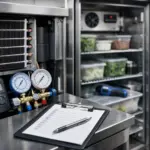
Use a winter refrigeration maintenance checklist to keep tasks organized and ensure nothing is overlooked. Typical line‑item tasks include:
- Inspect and clean condenser and evaporator coils.
- Clear and protect outdoor units from snow and ice, ensuring adequate airflow.
- Test door gaskets, hinges, and closers; repair or replace as needed.
- Confirm and document box temperatures with calibrated thermometers.
- Check and clean drain pans and drain lines to prevent ice blockages and leaks.
- Verify defrost cycles, time clocks, and sensors are correctly set for winter conditions.
- Inspect fan motors, blades, and guards for smooth, quiet operation.
- Confirm adequate clearances around equipment and remove clutter.
Cold weather refrigeration tips
Beyond formal inspections, simple daily practices dramatically improve winter reliability. Keep doors closed as much as possible and use strip curtains or air curtains on walk‑ins to limit heat and moisture infiltration. Avoid storing product directly against evaporator coils so air can circulate freely, and never block return or supply air grilles inside the box. For outdoor equipment, keep a path clear for snow removal, and use appropriate wind baffles or low‑ambient controls if recommended by your contractor.
Low ambient and control strategies
Boston’s low winter ambient temperatures can cause many standard refrigeration systems to operate outside their design envelope if they are not properly set up. Low‑ambient head‑pressure controls, fan cycling, or condenser flooding valves may be needed on certain systems so pressures remain stable in very cold weather. Control settings, including defrost schedules and setpoints, should be reviewed seasonally and adjusted to match winter operating conditions while still keeping food within safe temperature ranges.
Winter emergency preparedness for refrigeration
Every Boston business that depends on refrigeration should have a winter emergency preparedness plan tailored to local risks like nor’easters and extended outages. This plan should include:
- A prioritized equipment list (what must be kept running first).
- Contact information and service agreements with a trusted refrigeration contractor.
- Procedures for monitoring temperatures during storms or outages.
- Access to backup power or portable refrigeration where feasible.
- Clear decision points for moving or discarding product to protect food safety.
Boston‑specific planning considerations
Local building layouts, rooftop equipment, and loading practices are especially important in Boston, where snow loads and access issues can delay service. Ensure safe roof access for technicians, protect outdoor units from falling ice, and coordinate with snow‑removal contractors so they do not bury or block condensers. Because winter storms can disrupt deliveries, maintain slightly higher inventory buffers while still allowing enough airflow space in walk‑ins to avoid over‑packing boxes.
Recommended service and documentation
For most commercial kitchens, supermarkets, and foodservice operations in Boston, seasonal commercial refrigeration maintenance should be done at least twice a year, with a dedicated fall or early‑winter visit. Work with your service provider to document all findings, parts replaced, and setting changes so you have a clear record for future troubleshooting and for health department or insurance inquiries. Combining professional service with a disciplined in‑house checklist gives you the best protection against costly winter breakdowns and product loss.