Walk-In Freezer Not Freezing Hard Enough: How Massachusetts Businesses
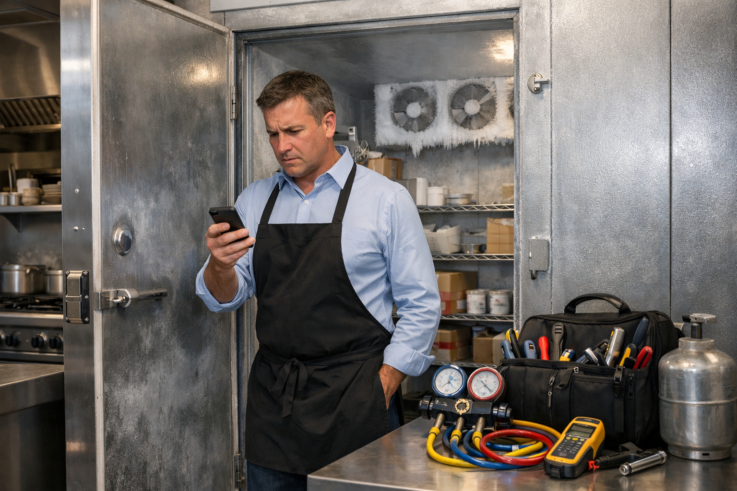
When a walk-in freezer is not freezing hard enough, every hour matters. Soft product, rising box temperature, ice cream that will not firm up, meat that is starting to temper, or a digital controller creeping above its normal range can quickly turn into lost inventory and operational disruption for Massachusetts restaurants, grocery stores, hotels, liquor stores, convenience stores, and commercial kitchens.
Short answer: A walk-in freezer that is cold but not freezing product solid may have airflow problems, dirty condenser coils, low refrigerant, a weak compressor, door gasket leaks, defrost failure, fan issues, or excessive product load. Keep the door closed, verify temperature with a reliable thermometer, protect inventory, and call a commercial refrigeration technician if temperatures keep rising or product is at risk.
Royal Cooling provides commercial refrigeration and freezer repair support for Massachusetts businesses that depend on reliable cold storage. If your walk-in freezer not freezing problem is active right now, call 781-899-4441 or use the contact page to request service. The steps below can help you respond safely while you decide whether the issue is a simple operating problem or a true emergency refrigeration repair situation.
Why a Walk-In Freezer Can Feel Cold but Not Freeze Product Solid
One of the most confusing freezer complaints is, “The box feels cold, but product is still soft.” This is common in restaurants, bakeries, supermarkets, hotels, and commissary kitchens because air temperature, product temperature, and system performance are not always the same. A freezer may feel cold to a person standing inside it, but still be too warm to pull heat out of dense product quickly enough.
For example, a freezer that normally operates well below freezing may drift upward because the evaporator coil is partially iced, the condenser coil is clogged with kitchen grease and dust, the door is not sealing, or the refrigeration system is short on refrigerant. The air still feels cold, but the system no longer has enough capacity to freeze cases of meat, tubs of ice cream, prepared meals, seafood, bakery items, or bulk ingredients solid.
In Massachusetts, seasonal conditions can also stress commercial refrigeration. A hot kitchen in Boston, a busy loading schedule in Cambridge, a supermarket prep area in Worcester, or a hotel banquet operation in Quincy may create frequent door openings and high heat loads. In winter, outdoor condensing units can face different control issues, snow exposure, or airflow restrictions. The result may be a freezer not cold enough to protect product even though the equipment still runs.
Immediate Steps When a Restaurant or Business Freezer Temperature Starts Rising
If your walk-in freezer temperature starts rising, your first goal is to reduce heat gain, document what is happening, and avoid actions that could make the problem worse. Use these steps for initial restaurant freezer troubleshooting before a technician arrives.
- Limit door openings. Every door opening brings warm, humid air into the box. Assign one person to access the freezer only when necessary.
- Check the displayed temperature and verify it. Compare the controller reading with a separate calibrated thermometer if available. Product temperature matters more than air temperature alone.
- Look for obvious door problems. Check whether the door is fully closed, the gasket is torn, the closer is working, and the threshold is clear.
- Do not chip ice with sharp tools. Puncturing an evaporator coil or refrigerant line can turn a repairable problem into a major failure.
- Move high-value product only if you have a safe backup. Transfer product to another properly operating freezer if your food safety procedures allow it.
- Document time and temperatures. Write down when the issue was noticed, temperature readings, product condition, and any alarms.
- Call for service if temperature continues rising. A commercial freezer that cannot recover should be evaluated by a trained technician.
If you operate a restaurant in Waltham, a grocery store in Framingham, a hotel in Boston, or a convenience store in Lowell, the same rule applies: do not wait until all product is soft before asking for help. Early commercial freezer repair can reduce product risk and may prevent compressor damage.
Symptoms, Likely Causes, and What They Mean
The table below compares common symptoms when a walk-in freezer is not freezing properly. It is not a replacement for professional diagnosis, but it can help owners and managers describe the issue clearly when calling for walk-in freezer service.
| Symptom | Possible Cause | Business Risk | Recommended Response |
|---|---|---|---|
| Box feels cold, but product is soft | Insufficient capacity, high product load, airflow restriction, low refrigerant, weak compressor | Product may not freeze safely or may begin thawing | Verify product temperature, limit door openings, call a technician if not recovering |
| Temperature rising slowly over several hours | Dirty condenser, fan motor issue, door gasket leak, defrost problem | Inventory loss if trend continues | Inspect obvious airflow and door issues, request commercial refrigeration service |
| Heavy ice on evaporator coil | Defrost failure, failed heater, bad termination control, air infiltration, fan delay issue | Blocked airflow and loss of freezing capacity | Do not chip coil; schedule service to test defrost components |
| Compressor running constantly | Heat load, dirty condenser, refrigerant problem, failing compressor, controls out of calibration | Higher energy use and potential equipment damage | Call for diagnosis before compressor overheats or fails |
| Short cycling or frequent starts | Pressure control issue, electrical problem, control failure, airflow problem | Unstable temperatures and mechanical wear | Have a commercial refrigeration technician inspect controls and system pressures |
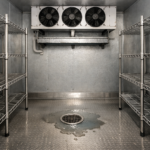
| Water or frost around door | Damaged gasket, misaligned door, failed heater strip, high humidity infiltration | Ice buildup, slip hazards, and freezer temperature loss | Address door sealing and related heater or hardware issues |
Can a Dirty Condenser Cause a Walk-In Freezer to Stop Freezing Properly?
Yes. A dirty condenser is one of the most common and preventable reasons a commercial freezer loses performance. The condenser rejects heat removed from the freezer. When coils are coated with dust, flour, grease, lint, or debris, the refrigeration system cannot reject heat efficiently. Head pressure may rise, the compressor may run hotter, and the freezer may struggle to reach or maintain its normal operating range.
This matters in food-service environments throughout Massachusetts because kitchens often have airborne grease, flour, packaging dust, and lint. A bakery in Cambridge, a pizza shop in Newton, a supermarket in Worcester County, or a hotel kitchen in Suffolk County can all experience condenser fouling. Even if staff keeps the kitchen clean, condenser coils can become restricted over time.
Staff may be able to visually inspect whether a condenser is obviously blocked, but cleaning should be done carefully. Disconnecting power, protecting electrical components, using the correct brush or coil-cleaning method, and avoiding fin damage are important. If the freezer is already warm, a dirty condenser may be only one part of the issue. A technician may also need to check refrigerant charge, superheat, subcooling, fan operation, pressure controls, and compressor condition.
Can a Defrost Issue Cause Product to Stay Soft?
Yes. Defrost issues are another frequent reason a walk-in freezer not freezing complaint develops. Freezers naturally build some frost on evaporator coils during operation. A properly working defrost system removes that frost so air can continue moving across the coil. When defrost fails, ice can build until airflow is restricted. The fans may run, the compressor may run, and the box may still feel cold, but the system cannot circulate enough cold air to freeze product solid.
Common defrost-related problems include failed defrost heaters, a bad defrost clock or controller, defective termination sensor, failed fan delay, incorrect defrost schedule, drain freeze-ups, and air infiltration from door leaks. In some cases, too much defrost can also create problems by warming the coil too often or too long. That is why guessing at settings without diagnosis can create new problems.
If you see a snow-packed evaporator, thick ice behind the fan guards, or frost spreading across product and shelving, call for service. Do not use knives, screwdrivers, torches, or aggressive scraping. A trained commercial refrigeration technician can safely evaluate the defrost system and determine whether the problem is electrical, mechanical, control-related, or caused by air leaks.
Other Common Reasons a Freezer Is Not Cold Enough
While dirty condensers and defrost failures are common, they are not the only causes. A freezer not cold enough can result from several interacting issues. The most likely causes include:
- Door gasket leaks: Torn, hardened, or loose gaskets let warm humid air enter the box. This adds load, creates frost, and may keep the freezer from reaching temperature.
- Evaporator fan failure: If one or more fans are not moving air, product in certain areas may stay soft while other areas are colder.
- Blocked airflow: Product stacked too close to evaporator fans or walls can prevent circulation. Overloading the box can also slow pull-down time.
- Low refrigerant charge: Refrigerant leaks reduce system capacity and can cause poor coil performance. Leak detection and proper repair are required.
- Compressor problems: A weak or overheating compressor may run but fail to provide enough refrigeration capacity.
- Control or sensor problems: A bad thermostat, probe, pressure control, or controller can misread conditions or fail to call for cooling correctly.
- Electrical issues: Loose connections, contactor problems, failing capacitors, and motor overloads can cause intermittent operation.
- Improper recent loading: Large amounts of warm product can temporarily raise box temperature. The freezer should recover within a reasonable time if the system is correctly sized and operating properly.
When Should You Call a Commercial Refrigeration Technician?
Call a commercial refrigeration technician when the freezer cannot recover, when product is at risk, or when symptoms point to mechanical, electrical, refrigerant, or defrost failure. In practical terms, you should request emergency refrigeration repair if any of the following are happening:
- The freezer temperature is rising and does not begin recovering after door openings are reduced.
- Product is soft, thawing, wet, or no longer frozen solid.
- The evaporator coil is heavily iced or the fans are not moving air.
- The compressor is running constantly, short cycling, making unusual noises, or not running at all.
- The condenser fan is not operating or the condensing unit is extremely hot.
- You smell electrical burning, see tripped breakers, or notice repeated resets.
- You have a large inventory load in a restaurant, supermarket, hotel, or commercial kitchen and no safe backup freezer.
For businesses in the Boston metro area, Worcester County, Middlesex County, and Suffolk County, a freezer problem can affect service schedules, deliveries, food preparation, and customer commitments. Royal Cooling can help evaluate commercial refrigeration problems and provide practical repair options. Call 781-899-4441 or visit /contact/ to request help.
What a Technician Checks During Walk-In Freezer Service
A proper service visit is more than changing a part. A technician needs to understand the full system: the evaporator, condensing unit, refrigerant circuit, controls, electrical components, defrost system, door condition, airflow, and operating environment. During walk-in freezer service, Royal Cooling may evaluate items such as:
- Air temperature, product temperature, and controller readings
- Evaporator coil condition, fan motor operation, and airflow pattern
- Condenser coil cleanliness and condenser fan operation
- Compressor amperage, operating pressures, and signs of overheating
- Refrigerant charge indicators and possible leak symptoms
- Defrost heaters, clock or controller, termination controls, and drain performance
- Door gaskets, hinges, closers, sweeps, and heater strips
- Electrical connections, relays, contactors, capacitors, and safety controls
- Box loading, shelving layout, and blocked air paths
- Maintenance history and repeated failure patterns
This diagnostic approach helps determine whether the issue is a minor repair, a maintenance-related correction, or a sign that major components are near the end of useful life. It also helps prevent repeat calls caused by treating a symptom while missing the root cause.
Repair vs. Replacement: How to Think About the Decision
Not every freezer problem means the system must be replaced. Many issues can be corrected with targeted commercial freezer repair, including fan motors, door hardware, gaskets, controls, defrost components, electrical parts, and coil cleaning. Refrigerant leaks may also be repairable depending on location, severity, equipment condition, and refrigerant type.
Replacement becomes more worth discussing when the freezer has repeated major failures, obsolete or difficult-to-source components, significant compressor issues, poor efficiency, refrigerant compliance concerns, or a history of not supporting the business’s current load. A restaurant that has expanded production, a grocery store with higher frozen inventory, or a hotel with increased banquet demand may be asking an old system to do more than it was designed to do.
A good contractor should explain the repair path, the replacement path, and the operational risk of each. The right answer depends on equipment age, condition, refrigerant, repair cost, business downtime, and how critical the freezer is to your operation. Royal Cooling works with customers to evaluate practical options rather than assuming one solution fits every site.
Preventive Maintenance Helps Avoid Emergency Freezer Failures
Preventive maintenance cannot eliminate every breakdown, but it can reduce many common causes of freezer failure. For Massachusetts businesses, a planned maintenance schedule is especially important before peak summer kitchen loads, holiday inventory periods, and busy event seasons.
A commercial refrigeration preventive maintenance visit may include cleaning condenser coils, checking fans, inspecting electrical components, testing defrost operation, reviewing temperature controls, inspecting door gaskets and hardware, clearing drains, checking for abnormal vibration, and looking for signs of refrigerant leaks. It can also identify operating issues such as blocked evaporator airflow or product stored too close to fans.
Maintenance is particularly valuable for restaurants, supermarkets, convenience stores, liquor stores, hotels, and property managers responsible for multiple refrigerated assets. If your site also has walk-in coolers, reach-in refrigerators, wine coolers, ice machines, or prep tables, coordinated refrigeration maintenance can help protect the whole cold-storage chain. Royal Cooling also supports related needs such as walk-in cooler repair, reach-in refrigerator service, wine cooler work, and broader commercial refrigeration care.
Massachusetts Service Context: Fast Decisions for Local Businesses
Commercial freezers are mission-critical for many businesses across Massachusetts. A seafood restaurant in Boston, a commissary kitchen in Cambridge, a grocery store in Worcester, a hotel in Springfield, a convenience store in Lowell, a property-managed retail space in Quincy, or a food-service operation in Framingham may all face the same urgent question: can this freezer recover, or do we need service now?
Royal Cooling serves Massachusetts customers with commercial refrigeration, walk-in freezers, walk-in coolers, reach-in refrigerators, wine coolers, freezer repair, and preventive refrigeration maintenance. Service-area needs commonly include the Boston metro, Worcester County, Middlesex County, Suffolk County, and nearby communities. To learn more about coverage, visit the service area page.
If you are calling about a walk-in freezer that is not freezing, be ready to share the equipment type, current temperature, normal operating temperature, product condition, how long the issue has been happening, whether alarms are active, and whether the compressor and fans appear to be running. Clear information helps the service team understand urgency and prepare for the visit.
Need help with a walk-in freezer not freezing hard enough? Call Royal Cooling at 781-899-4441 or request service through our contact page. We support Massachusetts businesses with commercial refrigeration troubleshooting, freezer repair, and maintenance planning.
FAQ: Walk-In Freezer Not Freezing in Massachusetts
Why is my walk-in freezer cold but not freezing product solid?
A walk-in freezer can feel cold while still lacking enough capacity to freeze product solid. Common causes include blocked airflow, dirty condenser coils, low refrigerant, evaporator ice buildup, door gasket leaks, fan problems, overloaded storage, or a weak compressor. Verify temperatures and call for service if the freezer is not recovering.
What should a restaurant do when a walk-in freezer temperature starts rising?
Limit door openings, verify the temperature with a reliable thermometer, document readings, check that the door is closing and sealing, and move product only if you have a safe backup freezer. If temperatures keep rising or product is softening, call a commercial refrigeration technician promptly.
When should I call a commercial refrigeration technician for a freezer that will not freeze?
Call when the freezer temperature continues rising, product is soft or thawing, the coil is heavily iced, fans or compressor are not operating normally, breakers trip, or you do not have safe backup storage. These symptoms can indicate mechanical, electrical, refrigerant, or defrost failures.
Can a dirty condenser cause a walk-in freezer to stop freezing properly?
Yes. A dirty condenser prevents the refrigeration system from rejecting heat efficiently. This can make the compressor run hotter, reduce cooling capacity, raise energy use, and keep the freezer from reaching its normal temperature. Regular condenser cleaning is an important maintenance task.
Can a defrost issue cause a walk-in freezer to stop freezing properly?
Yes. If the defrost system fails, ice can build on the evaporator coil and block airflow. The freezer may still feel cold, but cold air will not circulate properly through the box. A technician can test heaters, timers, sensors, drains, and controls to find the cause.
Is it safe to chip ice off my walk-in freezer evaporator coil?
No. Sharp tools can puncture the evaporator coil or refrigerant tubing, creating a larger and more expensive repair. If the coil is iced, keep the door closed as much as possible, protect product, and call for professional walk-in freezer service.
How can preventive maintenance help avoid emergency refrigeration repair?
Preventive maintenance helps identify dirty coils, failing fans, bad gaskets, defrost issues, loose electrical connections, and early refrigerant concerns before they become emergencies. It is especially useful for restaurants, grocery stores, hotels, and convenience stores with high-value frozen inventory.
Final Takeaway
A walk-in freezer that is not freezing hard enough should be treated as an urgent operational problem, not a minor inconvenience. The issue may be as simple as a blocked air path or dirty condenser, or it may involve defrost failure, refrigerant leaks, compressor problems, or electrical faults. The safest response is to reduce heat gain, protect inventory, document temperatures, and bring in a qualified technician before product loss escalates.
For commercial refrigeration service in Massachusetts, contact Royal Cooling. Call 781-899-4441 or visit /contact/ to request help with walk-in freezer service, commercial freezer repair, emergency refrigeration repair, or preventive maintenance.