Commercial Refrigeration Repair in Worcester County: Warning Signs 食品逢
Fast Answer: When Worcester County Food Businesses Should Call for Refrigeration Repair
If a commercial refrigerator, walk-in cooler, or walk-in freezer in Worcester County is running warm, cycling constantly, icing up, leaking water, making new noises, or triggering repeated temperature alarms, call a commercial refrigeration technician promptly. Limit door openings, record product and box temperatures, move at-risk inventory if safe to do so, and request service before a small control, airflow, refrigerant, or door-seal issue becomes product loss.
Commercial refrigeration problems rarely happen at a convenient time. A Worcester restaurant may notice a prep rail creeping above setpoint during lunch. A grocery store in Worcester County may find soft ice cream, sweating cases, or a walk-in freezer door packed with frost. A hotel kitchen may hear a compressor short cycling before a weekend event. These warning signs deserve attention because food businesses operate on tight safety, inventory, and customer-service timelines.
Royal Cooling provides commercial refrigeration repair in Massachusetts for businesses that depend on reliable cold storage, including restaurants, supermarkets, grocery stores, convenience stores, liquor stores, hotels, commercial kitchens, and facility managers. This guide focuses on commercial refrigeration repair Worcester County service considerations: what to watch for, what to check before calling, when a problem becomes urgent, and how to reduce product loss while waiting for a qualified technician.
Why Refrigeration Warning Signs Matter in Worcester County
Worcester County has a wide mix of food-service and cold-storage environments: high-volume restaurants in Worcester, convenience stores along commuter routes, institutional kitchens, hotels, independent grocers, liquor stores with beverage coolers, and facilities that manage multiple reach-ins, walk-ins, and freezers. Whether your business is in Worcester, near Framingham, or coordinating service across Massachusetts communities such as Boston, Cambridge, Lowell, Springfield, Quincy, Newton, and Waltham, a refrigeration failure can interrupt operations quickly.
Unlike comfort cooling, commercial refrigeration often protects inventory with a direct dollar value. A small symptom can point to a developing failure in the refrigeration cycle, airflow system, controls, door hardware, defrost components, electrical connections, or condensate drainage. Waiting too long can increase compressor strain, cause repeated nuisance alarms, and make it harder to keep product temperatures stable.
The goal is not to panic over every small fluctuation. The goal is to recognize patterns. One brief temperature rise after a delivery may not be a failure if doors were open and product was recently loaded. But if the box never recovers, if alarms repeat, or if temperatures rise during slower periods when doors are closed, it is time to investigate and consider professional commercial refrigeration repair Massachusetts businesses can rely on.
Early Warning Signs a Commercial Refrigerator Is About to Fail
The most common question operators ask is: What are the early warning signs that a commercial refrigerator is about to fail? The answer is usually a combination of temperature behavior, visible symptoms, mechanical sounds, and operating patterns.
1. Temperatures Drift Above Setpoint or Recover Slowly
A walk-in cooler, reach-in refrigerator, prep table, or display case should recover after normal door openings. If the unit runs warm for longer than usual, struggles after deliveries, or requires a lower thermostat setting to maintain the same product temperature, something is changing. Causes may include dirty condenser coils, weak evaporator fans, refrigerant issues, door gasket leaks, failing controls, blocked airflow, or a compressor that is losing efficiency.
2. Repeated Temperature Alarms
Temperature alarms are not just noise; they are an early warning system. If your alarm sounds repeatedly after doors have been closed and the product load is stable, document the time, air temperature, product temperature if available, and recent activity. Repeated alarms are a strong reason to call a commercial refrigeration technician, especially for walk-in cooler repair or walk-in freezer service.
3. Ice or Frost in the Wrong Places
Frost on a freezer evaporator can indicate defrost problems, air infiltration, door heater issues, failed fan operation, or controls that are not cycling correctly. Ice around a walk-in freezer door may point to a torn gasket, poor door closure, damaged sweep, failed heater, or pressure imbalance. Frost on suction lines, coils, or product packaging can also suggest airflow or refrigerant problems.
4. The Compressor Short Cycles or Runs Constantly
A compressor that starts and stops every few minutes may be dealing with pressure control problems, electrical issues, an oversized or misapplied control, low refrigerant, a dirty condenser, or failing components. A compressor that runs constantly but cannot reach temperature may be fighting high heat load, air leaks, dirty coils, fan problems, or refrigerant restrictions. Either condition can lead to expensive damage if ignored.
5. New Noises, Vibration, or Rattling
Commercial refrigeration systems are not silent, but operators usually know what normal sounds like. Buzzing contactors, grinding fan motors, rattling panels, humming compressors, clicking relays, or sudden vibration should be checked. Mechanical noise often appears before a component fails completely.
6. Water Leaks, Standing Water, or Condensation
Water around refrigeration equipment can come from clogged drain lines, frozen drains, damaged pans, improper pitch, failed drain heaters, high humidity infiltration, or defrost problems. In a commercial kitchen, water also creates slip hazards and can affect nearby equipment. If leaks return after basic cleaning, schedule service.
7. Door Problems and Air Leaks
Many refrigeration repair calls start with a simple door issue. Torn gaskets, worn hinges, weak closers, damaged sweeps, loose latches, or doors left ajar force the system to remove heat and humidity that should never enter the box. That extra load can cause temperature swings, ice buildup, and compressor stress.
When Should a Worcester County Restaurant Call a Commercial Refrigeration Technician?
A Worcester County restaurant should call a commercial refrigeration technician when the problem affects food holding temperatures, repeats after normal operating conditions, involves electrical or refrigerant components, or cannot be resolved with safe basic checks. Do not wait until the box is completely warm if early symptoms are present.
For restaurant refrigeration repair, call for service when:
- Cooler or freezer temperatures remain above normal after doors have been closed for a reasonable recovery period.
- Product is softening, sweating, thawing, or showing signs of temperature abuse.
- A walk-in cooler, reach-in, prep table, or freezer trips a breaker or will not stay powered.
- Evaporator fans are not running, are noisy, or appear blocked by ice.
- There is heavy frost, a frozen drain, or ice around the door or ceiling.
- The compressor short cycles, overheats, or runs continuously without reaching setpoint.
- You smell burning, see damaged wiring, or notice contactors chattering.
- A previous reset only temporarily clears the problem.
It is reasonable to check whether a door was left open, a thermostat was accidentally adjusted, product is blocking airflow, or a breaker has tripped. However, repeated resets can hide the root cause and may create more damage. If food safety, inventory value, or business continuity is at risk, professional diagnosis is the safer path.
What Grocery Stores Should Check Before Requesting Emergency Refrigeration Repair
Grocery stores, convenience stores, and markets often manage multiple cases and walk-ins at once. Before requesting emergency refrigeration repair, a manager can collect useful information without opening sealed refrigeration components or attempting unsafe repairs.
| What to Check | Why It Matters | When It Becomes Urgent |
|---|---|---|
| Actual product and air temperatures | Confirms whether the problem is a sensor issue, recovery delay, or real product risk. | Urgent if product temperature is unsafe or continues rising. |
| Door position, gaskets, and closers | Air leaks add heat and humidity, causing warm boxes and frost. | Urgent if the door will not seal or close. |
| Blocked supply or return airflow | Overloaded shelves or product against fans can prevent proper cooling. | Urgent if clearing airflow does not improve recovery. |
| Ice on evaporator coils or fans | Ice can stop airflow and indicates defrost, infiltration, or refrigerant issues. | Urgent if fans are blocked or product is warming. |
| Condenser area and coil cleanliness | Dust, grease, or blocked outdoor/indoor condensing units raise head pressure and reduce capacity. | Urgent if the system trips, runs hot, or cannot reach setpoint. |
| Recent activity | Deliveries, power interruptions, cleaning, or thermostat changes help narrow the cause. | Urgent if the unit fails to recover after activity ends. |
When calling Royal Cooling, be ready to share the equipment type, brand if visible, approximate box temperature, setpoint, product condition, whether fans are running, whether ice is present, and any alarm codes. This information helps a commercial refrigeration technician arrive better prepared for diagnosis.
How Businesses Can Reduce Product Loss During a Refrigeration Problem
Reducing product loss starts with controlling heat gain and making calm decisions. Every business should follow its food safety procedures and internal policies, but the practical steps below can help protect inventory while you arrange service.
- Limit door openings. Assign one person to access the cooler or freezer only when necessary.
- Record temperatures. Write down air temperature, product temperature if available, time of reading, and what was happening in the kitchen or store.
- Move high-risk items when appropriate. If another verified cold unit has capacity, relocate priority product while maintaining safe handling practices.
- Do not overload the working unit. Blocking airflow in a backup cooler can create a second problem.
- Separate affected inventory. Keep questionable product clearly marked for management review according to your procedures.
- Avoid repeated power cycling. Turning equipment on and off without diagnosis can make electrical or compressor problems worse.
- Keep aisles and mechanical areas accessible. A technician needs clear access to evaporators, condensers, panels, drains, and controls.
If the equipment is a critical walk-in freezer or main kitchen cooler, request service quickly. For businesses with high-value frozen food, meat, seafood, dairy, prepared foods, beverages, or wine storage, a delayed call can cost more than the repair itself.
Repair vs. Replacement: How to Think About the Decision
Not every refrigeration problem means the equipment should be replaced. Many systems can be repaired effectively when the root cause is found early. A technician may recommend repair when the box is structurally sound, the system is not at the end of its expected practical life, parts are available, and the failure is limited to components such as fan motors, controls, contactors, relays, gaskets, drain heaters, or defrost parts.
Replacement may be worth discussing when the equipment has repeated major failures, the cabinet or walk-in envelope is deteriorating, refrigerant or compressor issues are severe, repair costs are approaching the value of the unit, or energy and reliability problems are affecting operations. For walk-ins, the answer may be more nuanced: the insulated box, doors, evaporator, condensing unit, and controls can age at different rates. A professional assessment helps separate a repairable component issue from a system-wide reliability problem.
For Worcester County businesses, the best decision often comes down to urgency, inventory risk, equipment role, and future plans. A small reach-in used as overflow storage is different from the main walk-in cooler serving a full restaurant line. Royal Cooling can help evaluate repair options, preventive maintenance needs, and longer-term replacement planning without turning every service call into a sales pitch.
What a Commercial Refrigeration Technician Checks During Diagnosis
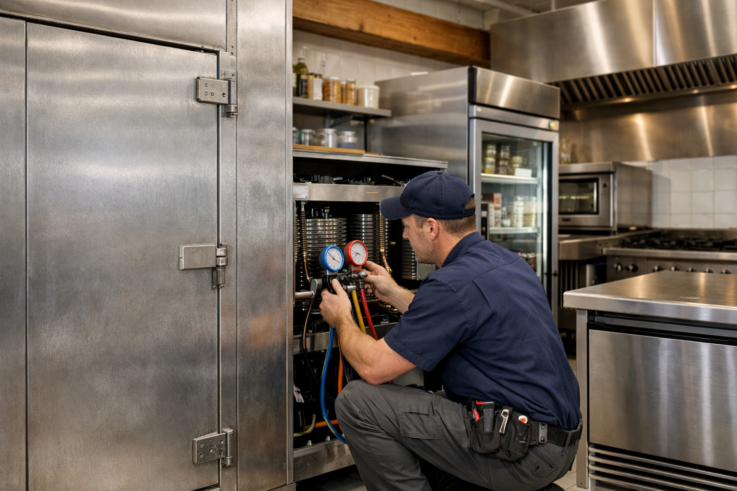
A professional diagnosis looks beyond the symptom. If a cooler is warm, the cause might be airflow, controls, electrical supply, refrigerant charge, heat load, door leakage, defrost failure, dirty coils, or compressor performance. A qualified technician works through the system to identify the cause and reduce repeat failures.
Typical inspection steps may include:
- Verifying setpoint, control operation, sensors, and temperature calibration.
- Checking evaporator fans, fan guards, coil condition, and airflow paths.
- Inspecting door gaskets, hinges, closers, sweeps, latches, and evidence of air infiltration.
- Looking for frost patterns that may indicate low airflow, defrost failure, restrictions, or refrigerant issues.
- Checking condenser coil cleanliness, condenser fan operation, and ambient conditions.
- Testing electrical components such as contactors, relays, capacitors, switches, fuses, and wiring condition.
- Evaluating compressor operation, pressures, superheat/subcooling where applicable, and signs of overheating or short cycling.
- Inspecting drain lines, pans, heaters, and condensate management.
- Reviewing recent service history, alarm logs, and operator observations.
This process matters because replacing a failed part without fixing the underlying cause can lead to a callback. For example, an evaporator fan motor may fail because of ice buildup from a defrost issue. A compressor may trip because a dirty condenser coil is causing high operating pressure. A walk-in freezer may appear underperforming when the actual problem is a door that no longer seals.
Preventive Maintenance That Helps Avoid Emergency Calls
Preventive maintenance is one of the most effective ways to reduce emergency refrigeration repair calls. Food businesses across Massachusetts, including Worcester County and the Boston metro area, often run refrigeration equipment every hour of the year. Regular inspections help catch small problems before they disrupt service.
A practical preventive maintenance program may include condenser coil cleaning, evaporator inspection, temperature control checks, fan motor review, electrical connection inspection, drain cleaning, door gasket evaluation, defrost cycle verification, refrigerant leak checks when indicated, and review of operating conditions. Maintenance also gives managers a chance to ask whether equipment is being overloaded, whether shelving blocks airflow, or whether staff practices are increasing heat load.
Between professional visits, train staff to report symptoms early. A line cook who notices a prep table running warm, a grocery clerk who sees frost on a case, or a hotel manager who hears a noisy condenser can prevent a more serious failure simply by speaking up. Clear reporting is especially valuable for facilities with multiple departments or property managers overseeing several locations.
Local Service Considerations for Worcester County and Massachusetts Businesses
When choosing an HVAC contractor or commercial refrigeration technician, local familiarity matters. Refrigeration equipment in Massachusetts faces seasonal humidity, warm kitchen environments, winter conditions around outdoor condensing units, delivery patterns, and high operational demands. A Worcester County restaurant may need different troubleshooting than a liquor store beverage cooler, a supermarket display case, or a hotel banquet kitchen.
Royal Cooling works with commercial refrigeration, walk-in freezers, walk-in coolers, wine coolers, reach-in refrigerators, freezer repair, and preventive refrigeration maintenance. If your business is in Worcester County or elsewhere in the Massachusetts service area, you can review service coverage at Royal Cooling’s service area page or request help through the contact page.
For urgent issues, call 781-899-4441. Be ready with equipment type, location, symptoms, current temperature, setpoint, and whether product is at risk. The more specific the information, the easier it is to prioritize the situation and prepare for diagnosis.
FAQ: Commercial Refrigeration Repair in Worcester County
What are the early warning signs that a commercial refrigerator is about to fail?
Early signs include rising temperatures, slow recovery after door openings, repeated alarms, frost buildup, unusual noises, water leaks, compressor short cycling, constant running, and product that feels warmer or softer than normal.
When should a Worcester County restaurant call a commercial refrigeration technician?
Call when temperatures stay above normal, alarms repeat, product is at risk, fans stop, ice blocks airflow, the unit trips electrical protection, or resets only help temporarily. A technician should inspect refrigerant, electrical, airflow, controls, defrost, and door conditions.
What should grocery stores check before requesting emergency refrigeration repair?
Check actual temperatures, door seals, airflow blockage, visible ice, condenser access, recent deliveries, and alarm codes. Do not open sealed refrigeration components. Share observations with the technician to speed diagnosis.
How can businesses reduce product loss during a refrigeration problem?
Limit door openings, record temperatures, move high-risk inventory to verified backup refrigeration if available, avoid overloading other units, separate questionable product, and call for service before temperatures continue rising.
Is a warm walk-in cooler always an emergency?
Not always, but it should be treated seriously. If the cooler does not recover after doors are closed, product temperature is unsafe, alarms repeat, or ice and mechanical issues are present, request professional walk-in cooler repair promptly.
What causes a walk-in freezer to ice up around the door?
Common causes include torn gaskets, weak door closers, damaged hinges, failed door heaters, air leaks, high humidity infiltration, or pressure issues. Ice around the door can worsen quickly and should be inspected.
Can dirty condenser coils cause refrigeration failure?
Yes. Dirty condenser coils reduce heat rejection, raise operating pressure, increase compressor stress, and can prevent the system from reaching setpoint. Coil cleaning is a key part of preventive maintenance.
Should I repair or replace my commercial refrigeration equipment?
Repair is often practical for isolated component failures. Replacement may be worth considering when equipment has repeated major failures, structural deterioration, unavailable parts, severe compressor issues, or repair costs that no longer make business sense.
Need Commercial Refrigeration Repair in Worcester County?
If your walk-in cooler, walk-in freezer, reach-in refrigerator, prep table, wine cooler, or grocery case is showing warning signs, do not wait for a full failure. Royal Cooling helps Massachusetts businesses diagnose refrigeration problems, plan repairs, and reduce operational disruption.
Call Royal Cooling at 781-899-4441 or use the contact page to request commercial refrigeration repair in Worcester County or ask about preventive maintenance for your equipment.