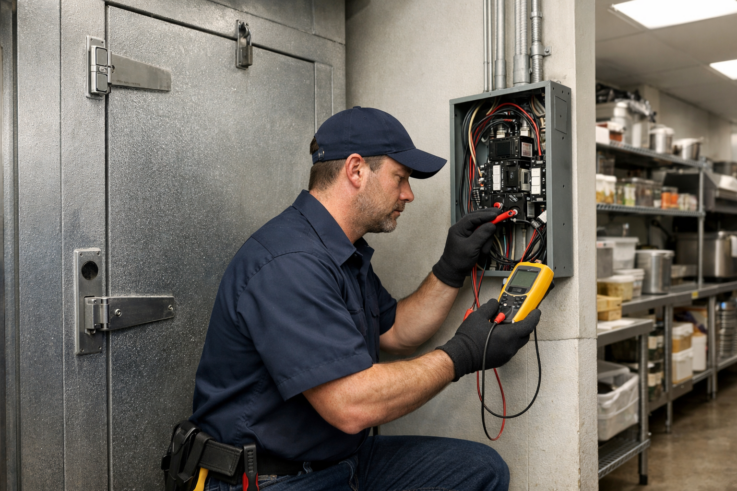
Walk-In Cooler Tripping the Breaker in Massachusetts: Causes, Safety,,
Short Answer: Why Your Walk-In Cooler Breaker Keeps Tripping
If your walk-in cooler is tripping the breaker, stop repeatedly resetting it. The cause may be an overloaded circuit, wet electrical component, damaged wiring, failing fan motor, defrost heater fault, refrigeration equipment short circuit, or walk-in cooler compressor problem. Massachusetts food businesses should protect product, document temperatures, and call a commercial refrigeration technician for safe diagnosis.
When a Tripped Breaker Becomes an Emergency for a Massachusetts Business
A walk-in cooler tripping breaker situation can turn into a business emergency quickly. Unlike a light circuit or office outlet, a walk-in cooler supports inventory, health-code compliance, kitchen workflow, and customer service. When the breaker trips, the refrigeration system may shut down completely or lose a critical component such as the condensing unit, evaporator fans, defrost circuit, door heater, or control circuit.
For restaurants in Boston, grocery stores in Worcester, convenience stores in Lowell, hotels in Cambridge, liquor stores in Quincy, and facility managers in Middlesex County or Suffolk County, a breaker trip is not something to ignore. It may be the first sign of a commercial refrigeration electrical problem that can damage expensive components or create a safety hazard. It can also lead to rising box temperatures, product loss, staff scrambling, and emergency refrigeration repair after hours.
One reset may bring equipment back online temporarily, but if the walk-in cooler breaker keeps tripping, the breaker is doing its job: interrupting power because the circuit is seeing a fault, overload, ground issue, or abnormal current draw. Continuing to reset the breaker without correcting the cause can worsen damage to the compressor, fan motors, contactors, relays, wiring, and controls.
First Safety Steps Before You Reset Anything
Before touching an electrical panel, slow down and assess the situation. A walk-in cooler combines refrigeration, electrical controls, motors, moisture, metal surfaces, and sometimes floor drains or condensation. That combination deserves caution.
- Check for obvious hazards. Do not approach the panel or equipment if you see smoke, burning smell, buzzing, arcing, melted wiring, standing water near electrical parts, or a hot breaker panel.
- Protect people first. Keep employees away from the condensing unit, evaporator coil, and electrical panel if anything looks or smells unusual.
- Record the cooler temperature. Note the time, current temperature, and product condition. This helps with operational decisions and technician troubleshooting.
- Keep doors closed. Every unnecessary door opening adds warm, humid air and speeds up temperature rise.
- Move high-risk inventory if needed. If you have another working cooler or freezer, transfer critical product according to your internal food safety procedures.
- Identify what else is on the circuit. If other equipment also lost power, the issue may involve a shared circuit, panel problem, GFCI protection, or building electrical issue.
If the breaker trips immediately after one reset, or if you are not sure what the breaker controls, stop. Call a qualified commercial refrigeration technician or licensed electrical professional as appropriate. Royal Cooling can help Massachusetts businesses determine whether the issue is refrigeration-equipment related and coordinate the correct repair path.
Is It Safe to Reset a Breaker for a Walk-In Cooler More Than Once?
In most commercial refrigeration situations, it is not wise to keep resetting a breaker. A single reset may be acceptable if there is no burning smell, no visible damage, no water near electrical components, and the breaker does not feel hot. However, a breaker that trips again is a warning sign. Repeated resetting can push a failing component harder and may increase the risk of electrical damage.
Think of the breaker as a protective device, not the problem itself. If it trips, it may be reacting to locked-rotor current from a compressor, a motor winding problem, a shorted defrost heater, damaged wiring insulation, moisture in a junction box, or an overloaded circuit. If you reset it repeatedly, you are asking the same unsafe condition to energize again.
For Massachusetts restaurants and food retailers, the better approach is to treat repeat trips as a service call. If the walk-in cooler is warming, the compressor is not running, or the breaker trips instantly, call for emergency refrigeration repair rather than waiting for the next scheduled maintenance visit.
Common Causes of a Walk-In Cooler Tripping the Breaker
1. Compressor Electrical Problems
A walk-in cooler compressor problem is one of the most serious causes. The compressor draws significant amperage when starting and running. If the compressor is failing, has internal winding damage, is locked up, or is struggling against abnormal refrigerant pressures, the breaker may trip on startup or shortly after the system attempts to run.
Signs may include humming, clicking, hard starting, short cycling, lights dimming when the unit starts, or a breaker that trips when the condensing unit energizes. A technician may test amp draw, winding resistance, insulation to ground, start components, contactor condition, capacitor health, and system pressures.
2. Short Circuit in Refrigeration Equipment
A refrigeration equipment short circuit can occur when a hot conductor contacts ground, neutral, metal housing, or another conductor. This may be caused by vibration, rodent damage, deteriorated insulation, loose wire connections, water intrusion, or damaged components. Short circuits often trip breakers immediately.
If the breaker trips instantly when reset, do not continue. The fault needs to be isolated safely with proper test equipment.
3. Evaporator Fan Motor Failure
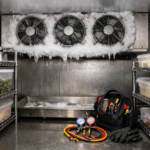
Evaporator fans move cold air through the box. If a fan motor seizes, overheats, or develops an internal electrical fault, it can overload the circuit. You may notice uneven temperatures, reduced airflow, noisy fan operation, ice on the coil, or a breaker trip when the fans come on.
In walk-in coolers and walk-in freezer service calls, fan motor issues are common because these motors operate in cold, humid environments. Moisture, ice, and worn bearings can all contribute to failure.
4. Condenser Fan Motor or Dirty Condenser Coil
The condenser fan and coil release heat from the refrigeration system. A failing condenser fan motor can draw excessive current, and a heavily clogged condenser coil can cause high head pressure, making the compressor work harder. Either condition can contribute to nuisance trips or component failure.
In Massachusetts summer humidity, Boston metro traffic dust, kitchen grease, and rooftop debris can all make condenser coils dirty faster than expected. Preventive maintenance helps catch these problems before they become an emergency.
5. Defrost Heater or Drain Heater Fault
Some walk-in coolers and many walk-in freezers use electric heaters for defrost, drain lines, door frames, or pressure relief. A heater that shorts to ground or becomes moisture-damaged can trip a breaker, especially during scheduled defrost cycles. If the breaker trips at the same time each day, the defrost circuit deserves attention.
6. Moisture Intrusion and Condensation Around Electrical Parts
Walk-in coolers are wet environments by nature. Door openings, warm humid air, condensation, washdown practices, drain problems, and damaged seals can allow moisture into electrical boxes, switches, controls, and conduit. Moisture can create ground faults, corrosion, nuisance trips, and unsafe conditions.
This is especially relevant for Massachusetts businesses during seasonal swings, humid summers, and busy delivery periods when doors are open frequently.
7. Overloaded or Shared Circuit
A walk-in cooler should be powered according to equipment specifications and electrical code requirements. If additional equipment has been added to the same circuit over time, the breaker may trip because the circuit is overloaded. This can happen in older restaurants, convenience stores, or tenant build-outs where equipment has changed but electrical infrastructure has not kept up.
A qualified technician can help determine whether the trip appears to come from the refrigeration equipment or from the building electrical system. In some cases, an HVAC contractor or commercial refrigeration technician may work alongside a licensed electrician.
8. Loose Connections, Worn Contactors, or Failed Capacitors
Loose electrical connections create heat and voltage problems. Contactors can pit or weld. Capacitors can weaken and make motors hard to start. Relays and controls can fail intermittently. These issues may not always trip the breaker immediately, but they can cause repeated failures, short cycling, overheating, and eventual shutdown.
Symptom Comparison: What the Breaker Trip May Be Telling You
| Symptom | Possible Cause | Risk Level | Recommended Action |
|---|---|---|---|
| Breaker trips immediately when reset | Short circuit, grounded compressor, damaged wiring, wet control box | High | Stop resetting and call for emergency refrigeration repair |
| Breaker trips when compressor starts | Compressor hard start, failed capacitor, locked rotor, high pressure | High | Call a commercial refrigeration technician for electrical and refrigeration diagnosis |
| Breaker trips during defrost | Shorted defrost heater, drain heater, timer, relay, or moisture issue | Medium to high | Schedule urgent walk-in cooler repair before temperature control worsens |
| Breaker trips after hours of operation | Overheating motor, dirty condenser, loose connection, overloaded circuit | Medium to high | Document timing and call for service |
| Cooler is warm and breaker is off | System power loss, component fault, tripped branch circuit | High for inventory | Keep doors closed, monitor product, call for service |
| Burning smell, smoke, buzzing, or hot panel | Electrical fault or overheating connection | Emergency safety concern | Do not reset; keep clear and call appropriate emergency help and a technician |
Can a Bad Compressor Cause a Walk-In Cooler Breaker to Trip?
Yes. A bad compressor can absolutely cause a walk-in cooler breaker to trip. The compressor is the heart of the refrigeration system and one of the largest electrical loads in the equipment. If it has internal winding damage, a grounded winding, mechanical seizure, failing start components, or abnormal operating pressures, it may pull more current than the circuit can safely handle.
That does not mean every breaker trip requires compressor replacement. Sometimes a compressor appears to be the problem when the real issue is a failed capacitor, contactor, start relay, dirty condenser coil, condenser fan failure, low voltage, refrigerant restriction, or control issue. This is why professional testing matters. Replacing parts based on guesswork can be expensive and may not solve the underlying problem.
What Royal Cooling Checks During a Service Call
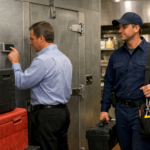
When Royal Cooling responds to a walk-in cooler repair request in Massachusetts, the goal is to restore safe, reliable operation while identifying the root cause of the trip. The exact diagnostic process depends on the equipment, symptoms, and site conditions, but a technician may check:
- Breaker behavior and circuit information: whether the breaker trips instantly, on startup, during defrost, or after running.
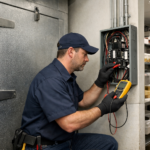
- Voltage and amperage: incoming voltage, running amps, startup amps, and comparison to equipment ratings.
- Compressor condition: winding resistance, grounded windings, hard start symptoms, contactor and capacitor condition, and refrigerant operating pressures.
- Fan motors: evaporator and condenser fan operation, amp draw, bearings, wiring, and rotation.
- Defrost system: heaters, timer or control board, termination controls, relays, drain heaters, and wiring.
- Control wiring and safety controls: pressure switches, temperature controls, relays, low-voltage circuits, and sensor issues.
- Moisture and corrosion: wet junction boxes, loose connectors, damaged conduit, rust, and condensation paths.
- Refrigeration performance: coil condition, refrigerant indicators, airflow, door gasket condition, and box temperature trend.
If the issue points to building wiring, panel capacity, or code-related electrical work outside the refrigeration equipment, the technician may recommend involving a licensed electrician. For many businesses, the fastest path is coordinated troubleshooting: refrigeration expertise for the equipment and electrical expertise for the building infrastructure when needed.
Repair vs. Replace: How to Think About the Decision
A breaker trip does not automatically mean you need a new walk-in cooler. Many electrical issues can be repaired: a failed capacitor, worn contactor, fan motor, heater, control, damaged wiring section, or dirty condenser condition. However, replacement may become part of the conversation when major components fail repeatedly or the equipment is old, inefficient, poorly matched to the load, or no longer reliable for the business.
Consider repair when the box is structurally sound, the equipment is otherwise in decent condition, and the failure is isolated. Consider replacement planning when compressor failure is combined with age, recurring service calls, refrigerant concerns, poor temperature recovery, deteriorated panels, chronic icing, or high energy use. Royal Cooling can help evaluate practical options for commercial refrigeration, walk-in coolers, walk-in freezers, reach-in refrigerators, wine coolers, and freezer repair needs.
What to Do While Waiting for a Technician
If you have already stopped resetting the breaker and called for service, focus on protecting inventory and helping the technician diagnose faster.
- Keep the walk-in door closed as much as possible.
- Write down the time the breaker tripped and whether it happened after a delivery, cleaning, defrost cycle, power outage, or busy service period.
- Record box temperature at regular intervals.
- Do not run extension cords to refrigeration equipment.
- Do not bypass safeties, tape breakers, or force equipment to run.
- Move product only if you can do so safely and in accordance with your food safety procedures.
- Clear access to the condensing unit, evaporator, electrical panel, and roof or mechanical area if applicable.
For urgent help, call Royal Cooling at 781-899-4441 or use the contact page. If you are planning service coverage across multiple properties, you can also review the Royal Cooling service area.
Prevention: Maintenance That Reduces Breaker Trips
Not every electrical failure can be prevented, but preventive maintenance can reduce the likelihood of surprise breaker trips and emergency shutdowns. A good maintenance visit looks beyond temperature and includes airflow, electrical readings, coil condition, wiring, fan motors, controls, door operation, and defrost performance.
- Clean condenser coils. Dirty coils raise operating pressure and compressor load.
- Inspect fan motors. Worn bearings and overheating motors should be addressed before failure.
- Check electrical connections. Loose or discolored terminals can signal heat and resistance.
- Test capacitors and contactors. Weak start components can make motors draw excessive current.
- Review defrost operation. Failed heaters or controls can cause icing, high load, or electrical trips.
- Inspect door gaskets and closers. Air leaks increase runtime and moisture load.
- Look for moisture pathways. Wet controls, condensation, and drain problems should be corrected early.
- Track temperature trends. A cooler that runs longer than usual may be developing a mechanical or electrical problem.
Maintenance is especially useful for Massachusetts businesses that cannot afford downtime during dinner rushes, weekend volume, campus events, hotel occupancy peaks, or grocery delivery cycles. Whether you operate in Newton, Waltham, Framingham, Springfield, Worcester County, or the Boston metro area, early detection is usually less disruptive than an emergency outage.
Who Repairs Commercial Refrigeration Electrical Issues in Massachusetts?
For a commercial refrigeration electrical problem, call a company that understands both refrigeration performance and equipment-level electrical diagnosis. Royal Cooling services commercial refrigeration systems for Massachusetts customers, including restaurants, commercial kitchens, convenience stores, supermarkets, grocery stores, liquor stores, hotels, facility managers, property managers, and homeowners with wine coolers or specialty freezers.
A general handyman may not have the tools or training to evaluate compressor windings, refrigerant pressures, defrost circuits, motor amperage, or refrigeration controls. A standard electrician may be needed for panel or branch-circuit work, but may not diagnose the refrigeration sequence of operation. A commercial refrigeration technician is often the right first call when the breaker is tied to the walk-in cooler, walk-in freezer, reach-in refrigerator, or condensing unit.
Royal Cooling can help with walk-in cooler repair, walk-in freezer service, freezer repair, reach-in refrigerators, wine coolers, and preventive refrigeration maintenance. If your breaker trip is connected to the equipment, the technician can isolate the likely cause and recommend repair options. If the issue appears to be building electrical infrastructure, you will know that too.
When to Call Immediately
Call for urgent service if any of the following are true:
- The breaker trips more than once.
- The breaker trips immediately when reset.
- You smell burning plastic, smoke, or overheated electrical components.
- The panel, breaker, disconnect, or conduit feels hot.
- The cooler temperature is rising and inventory is at risk.
- The compressor hums, clicks, or will not start.
- The trip happens during defrost or when fans start.
- You see water near electrical boxes or controls.
- The same issue has happened before.
If there is active smoke, fire, or an immediate life-safety hazard, follow emergency procedures first. For refrigeration equipment diagnosis and repair, contact Royal Cooling at 781-899-4441.
FAQ: Walk-In Cooler Breaker Trips in Massachusetts
Why does my walk-in cooler keep tripping the breaker?
Your walk-in cooler may keep tripping the breaker because of a compressor problem, short circuit, wet wiring, failed fan motor, defrost heater fault, loose electrical connection, dirty condenser coil, or overloaded circuit. If it trips more than once, stop resetting and call a commercial refrigeration technician.
Is it safe to reset a breaker for a walk-in cooler more than once?
No. One reset may be reasonable if there are no obvious hazards, but repeated trips mean the breaker is detecting a problem. Continuing to reset it can damage equipment or create a safety risk.
Can a bad compressor cause a walk-in cooler breaker to trip?
Yes. A failing or grounded compressor can draw excessive current and trip the breaker, especially on startup. A technician should test the compressor, start components, wiring, and refrigerant conditions before recommending replacement.
Who repairs commercial refrigeration electrical issues in Massachusetts?
Royal Cooling repairs and troubleshoots commercial refrigeration equipment issues for Massachusetts businesses. For building panel or branch-circuit defects, a licensed electrician may also be needed, but a commercial refrigeration technician is often the right first call for equipment-related trips.
What should I do if my walk-in cooler breaker trips during business hours?
Keep the cooler door closed, record the temperature and time of the trip, avoid repeated resets, protect inventory according to your procedures, and call for service. Do not use extension cords or bypass safety controls.
Can moisture cause a walk-in cooler breaker to trip?
Yes. Condensation, washdown water, clogged drains, humid air, or damaged seals can let moisture reach electrical controls, wiring, heaters, or motors. Moisture-related faults can cause nuisance trips or serious short circuits.
Does a tripped breaker mean I need a new walk-in cooler?
Not always. Many causes can be repaired, including fan motors, capacitors, contactors, heaters, wiring, and controls. Replacement may be considered if major components are failing repeatedly or the equipment is no longer reliable.
How can preventive maintenance reduce breaker trips?
Preventive maintenance can identify dirty coils, weak capacitors, worn contactors, loose connections, failing fan motors, moisture problems, and defrost issues before they cause shutdowns. It also helps reduce stress on the compressor.
Final CTA: Get Safe Walk-In Cooler Repair Help
A walk-in cooler breaker that keeps tripping is a warning sign, not a normal reset-and-forget problem. For Massachusetts restaurants, grocery stores, convenience stores, liquor stores, hotels, and facilities, the safest move is to protect inventory, stop repeated resets, and get the equipment checked by a qualified technician.
For commercial refrigeration troubleshooting, walk-in cooler repair, walk-in freezer service, freezer repair, reach-in refrigerators, wine coolers, and preventive maintenance, call Royal Cooling at 781-899-4441 or request help through the contact page. To learn more about coverage, visit the service area page.