Walk-In Cooler Evaporator Coil Freezing Up in Massachusetts: Causes,旟
Short Answer: Why a Walk-In Cooler Coil Freezes
If your walk-in cooler evaporator coil is freezing up, the system is usually losing proper airflow, defrost, drainage, temperature control, or refrigerant balance. In Massachusetts restaurants, markets, and commercial kitchens, humid summer air, heavy door traffic, blocked shelving, failed evaporator fans, bad defrost controls, or low refrigerant can create ice fast. Protect product first, thaw safely, and call a commercial refrigeration technician if icing returns.
Why Coil Ice Buildup Is a Serious Problem for Massachusetts Food Businesses
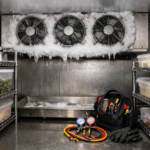
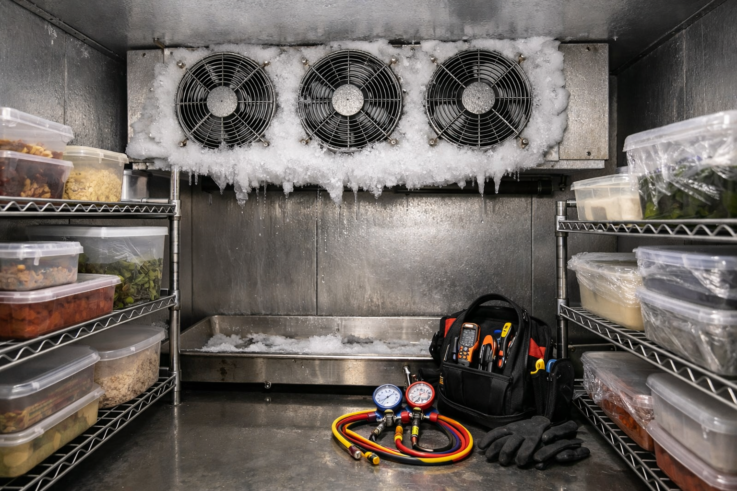
A light frost pattern on a commercial evaporator coil can be normal during operation, especially in busy kitchens. A thick white block of ice, fan guards packed with frost, or a coil that looks like a frozen wall is not normal. When a walk-in cooler evaporator coil freezing up problem develops, the cooler may still sound like it is running, but it cannot remove heat correctly. Air stops moving through the coil, product temperatures rise, and the compressor may run longer than it should.
For food businesses in Massachusetts, this often shows up at the worst time: a Boston restaurant during dinner service, a Worcester County market after a large delivery, a Cambridge café on a humid July morning, or a hotel kitchen in Quincy with repeated door openings. The coil icing may start as poor airflow, then turn into a commercial cooler not cooling because coil is frozen situation that threatens inventory and service.
Royal Cooling helps Massachusetts businesses with commercial refrigeration, walk-in coolers, walk-in freezers, reach-in refrigerators, wine coolers, freezer repair, and preventive refrigeration maintenance. If you are dealing with heavy evaporator ice now, call 781-899-4441 or request service through the contact page.
What Evaporator Coil Icing Looks Like
The evaporator coil is the cold heat-transfer component inside the walk-in box, usually mounted high on a wall or ceiling. Fans pull box air across the coil so heat can be absorbed and removed from the cooler. When ice blocks the coil, air cannot pass through the fins, and the system loses capacity.
Common symptoms of walk-in cooler coil ice buildup include:
- Visible ice or heavy frost on the evaporator coil, fan guard, drain pan, or suction line near the coil.
- Weak or no air blowing from the evaporator fans.
- Warm areas in the cooler even though the condensing unit is running.
- Long run times, short cycling, or the compressor never seeming to shut off.
- Water dripping after ice begins to melt, sometimes followed by refreezing.
- Product temperatures creeping upward, especially near the door or on top shelves.
- Unusual fan noise, blade scraping, or a fan motor that hums but does not spin.
- Temperature alarms from monitoring systems or staff noticing soft product, sweating containers, or condensation.
If the cooler temperature is moving into unsafe ranges, follow your food-safety procedures, document product temperatures, limit door openings, and relocate product if you have another approved cold storage option. Do not wait for the coil to become completely encased in ice before acting.
Why Is My Walk-In Cooler Evaporator Coil Covered in Ice?
There is no single cause for evaporator coil icing commercial refrigeration systems. The ice is a symptom. The underlying problem may be simple, such as cartons stacked against the return air path, or more technical, such as a failed defrost clock, defective sensor, expansion valve issue, or refrigerant leak.
1. Poor Airflow Inside the Walk-In
Walk-in cooler airflow problems are one of the most common reasons coils freeze. The evaporator needs consistent airflow across the coil. If shelving, cases, boxes, or prep containers are stacked too close to the evaporator, air short-circuits or becomes restricted. In busy restaurants in Boston, Waltham, Framingham, or Lowell, a delivery can quickly change airflow if staff load the cooler tightly during peak hours.
Airflow can also be reduced by dirty coils, damaged fan blades, failed evaporator fan motors, loose wiring, or a fan delay control that is not operating correctly. When airflow drops, the coil temperature falls below the intended range and moisture in the air freezes on the fins.
2. Door Traffic, Humidity, and Warm Product Loads
Massachusetts summer humidity can be hard on walk-in coolers. Every open door brings in warm, moist air. The evaporator coil must remove that heat and moisture. If the door is propped open during deliveries or service, the coil may accumulate frost faster than the system can clear it.
Large warm product loads can have the same effect. If a Worcester restaurant receives cases of warm produce, prepared foods, or beverages and immediately packs them tightly in the walk-in, the unit must work harder. Ice may build on the coil if airflow is limited or the system is already marginal.
3. Defrost Issues in the Walk-In Cooler
Defrost issues walk-in cooler systems can include a failed defrost timer, incorrect defrost schedule, bad termination control, damaged heater on freezer equipment, or controls that never initiate or properly end the defrost cycle. Walk-in coolers operate above freezing, so they may not use the same heater-based defrost setup as walk-in freezers, but they still need operating conditions that allow frost to clear.
If a coil never gets a chance to clear frost, thin frost becomes heavy frost, then heavy frost becomes solid ice. A technician checks whether the defrost schedule matches the business use, whether sensors are reading correctly, and whether the refrigeration system is returning to normal operation after defrost.
4. Refrigerant Problems or Metering Device Issues
A frozen evaporator coil does not automatically mean a refrigerant leak, but refrigerant-side issues can cause icing. Low refrigerant charge, a restriction, or a malfunctioning expansion valve can create abnormal coil temperatures and uneven frost patterns. You may see ice only on part of the coil, heavy frost near the inlet, or the unit may run continuously without reaching setpoint.
Because refrigerant diagnostics require proper tools and licensing, this is not a do-it-yourself repair. A Massachusetts commercial refrigeration technician will measure pressures, superheat, subcooling where applicable, line temperatures, and electrical performance before recommending a repair.
5. Thermostat, Sensor, or Control Problems
If the thermostat or temperature sensor is out of calibration, installed in the wrong location, damaged, or affected by drafts, the cooler may overrun. The evaporator may stay too cold for too long, creating ice. Controls can also fail intermittently, which is why a cooler may behave normally during one shift and ice up during the next.
6. Drainage Problems and Refreezing
A blocked drain line or drain pan issue can cause meltwater to sit near the evaporator and refreeze. This is more obvious in a walk-in freezer, but coolers can still develop recurring ice if condensate does not drain properly. Standing water, dripping, slime buildup, or repeated ice below the coil are warning signs.
Can I Safely Thaw a Frozen Walk-In Cooler Coil Myself?
In some cases, you can help the coil thaw safely while you wait for service or to restore temporary airflow. The goal is to melt ice without damaging the coil, fans, electrical parts, refrigerant tubing, or food inventory. If the cooler is warm, product safety comes first. Move product to another working cooler, freezer, refrigerated truck, or approved cold storage area when needed.
Safe steps include:
- Check and record product temperatures. Follow your company and local food-safety procedures before deciding whether product can remain in use.
- Reduce door openings. Keep humid air out while you assess the situation.
- Turn the system off if directed by a qualified person or if fans are striking ice. Spinning fan blades hitting ice can damage motors and blades.
- Allow a controlled thaw. Let the ice melt naturally where possible. Use towels, buckets, and floor caution signs to manage water.
- Use only gentle heat and air movement if appropriate. Room-temperature air circulation can help. Avoid direct high heat on coil tubing or plastic parts.
- Clear product away from the evaporator. Maintain open space around the coil and return air path before restarting.
- Inspect the door. Make sure it closes fully and is not being held open by racks, carts, damaged hinges, or a worn gasket.
Do not chip ice with a knife, screwdriver, chisel, or hammer. Do not pour boiling water over electrical components. Do not use a torch or heat gun against the coil. Puncturing a coil, warping fins, or soaking fan motors can turn an icing issue into a major repair.
Does a Frozen Evaporator Coil Mean My Walk-In Cooler Has a Refrigerant Leak?
Not always. A refrigerant leak is one possible cause, but it is not the only cause. Many frozen coils are caused by airflow restrictions, failed fans, heavy door traffic, dirty coils, poor loading practices, incorrect defrost settings, drain problems, or control issues. That is why guessing can be expensive.
A refrigerant leak diagnosis requires more than looking at ice. A technician will look at the frost pattern, suction pressure, line temperature, compressor behavior, metering device performance, and evidence of oil or leak points. If a leak is found, the proper repair is to locate and repair the leak where feasible, verify the system, evacuate as required, and charge according to manufacturer and field requirements. Simply adding refrigerant without diagnosing the root cause can lead to repeat failures.
Quick Triage: What You Can Check vs. When to Call
| Situation | What It May Mean | Safe Operator Action | When to Call Royal Cooling |
|---|---|---|---|
| Light frost only, cooler holding temperature | May be normal operation or early airflow issue | Keep product away from coil, check door closure, monitor temperatures | Schedule preventive maintenance if frost increases or temperatures drift |
| Heavy ice on coil and weak airflow | Airflow restriction, fan failure, defrost/control problem | Protect product, limit door openings, allow safe thawing | Call if airflow does not return or ice comes back |
| Fan blades hitting ice or fan not spinning | Ice blockage, failed fan motor, electrical issue | Do not keep running a fan that is striking ice | Call for walk-in cooler repair before restarting under load |
| Coil freezes again within hours or days | Unresolved mechanical, control, refrigerant, or loading problem | Document temperatures and icing pattern | Call a commercial refrigeration technician for diagnosis |
| Cooler temperature rising and product at risk | Active cooling failure | Move product if possible and follow food-safety procedures | Request emergency refrigeration repair |
What a Commercial Refrigeration Technician Checks
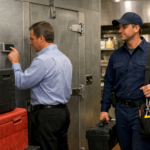
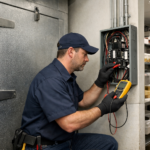
When Royal Cooling evaluates a frozen walk-in cooler coil, the goal is not just to melt the ice. The goal is to find why the ice formed and prevent repeat downtime. Depending on the equipment and conditions, a technician may check:
- Evaporator fan motors, blades, guards, wiring, and fan cycling.
- Coil cleanliness, fin condition, and air temperature drop across the coil.
- Product loading, shelving distance, and air circulation patterns inside the box.
- Door gaskets, hinges, closers, strip curtains, sweeps, and door alignment.
- Thermostat or controller setpoint, calibration, sensor placement, and error codes.
- Defrost timer or electronic defrost settings, termination, and frequency.
- Condensate drain, pan, trap, and drain line slope or blockage.
- Condensing unit operation, condenser coil condition, compressor amperage, and pressures.
- Refrigerant charge indicators, superheat, restrictions, and possible leak symptoms.
- Electrical components, contactors, relays, capacitors, and safety controls.
This process matters for restaurants, grocery stores, convenience stores, liquor stores, and commercial kitchens across the Boston metro, Worcester County, Middlesex County, and Suffolk County because downtime has both operational and inventory consequences. A quick thaw may buy time, but proper troubleshooting protects the system.
When Should a Massachusetts Restaurant Call a Technician for Coil Icing?
Call for professional service when the coil is heavily iced, the cooler is not holding temperature, fans are not running, ice returns after thawing, you see water refreezing, or staff are repeatedly adjusting controls to compensate. You should also call if the system has a history of refrigerant leaks, nuisance alarms, compressor short cycling, or high energy use.
For busy Massachusetts kitchens, do not wait until the walk-in is warm. If a restaurant in Newton notices weak airflow during lunch, a market in Springfield sees frost spreading over the fan guards, or a facility manager in Framingham receives a temperature alarm overnight, early action can reduce product risk and repair severity.
If you need help, call Royal Cooling at 781-899-4441. You can also learn more about the company service region on the service area page or request help through Royal Cooling contact.
Repair vs. Replacement: What Makes Sense?
Many frozen coil problems can be repaired by correcting airflow, replacing a fan motor, repairing controls, clearing drains, adjusting defrost, cleaning coils, repairing doors, or addressing a refrigerant leak. Replacement becomes more likely when the evaporator coil is physically damaged, severely corroded, repeatedly leaking, poorly matched to the condensing unit, or no longer suitable for the business load.
The age and condition of the overall refrigeration system also matter. If a walk-in cooler has recurring compressor issues, obsolete controls, frequent leaks, and rising energy use, replacing a component without addressing system condition may not be cost-effective. On the other hand, a newer system with a failed fan motor or incorrect loading pattern may only need a targeted repair and better maintenance practices.
How to Reduce Future Walk-In Cooler Coil Ice Buildup
Preventive maintenance is the best way to reduce repeat icing. In a high-volume Massachusetts food business, a walk-in cooler is not a set-it-and-forget-it appliance. It is a critical production system that needs airflow, clean heat-transfer surfaces, working controls, and good operating habits.
- Keep at least several inches of clearance around evaporator air intake and discharge areas.
- Do not stack boxes against the coil or ceiling.
- Train staff not to prop the walk-in door open during deliveries or prep.
- Check that doors close and latch without force.
- Replace damaged gaskets before humid air causes bigger problems.
- Keep evaporator and condenser coils clean as part of maintenance.
- Monitor temperatures daily and respond to trends, not just alarms.
- Inspect fan operation and listen for noise changes.
- Schedule preventive refrigeration maintenance before Massachusetts summer humidity increases the load.
Royal Cooling provides preventive maintenance and commercial refrigeration repair for walk-in coolers, walk-in freezers, reach-in refrigerators, wine coolers, and related equipment. A planned visit can often identify airflow, defrost, door, and control issues before they cause an emergency.
FAQ: Walk-In Cooler Evaporator Coil Freezing Up
Why is my walk-in cooler evaporator coil covered in ice?
Your coil is usually covered in ice because moisture is freezing faster than the system can clear it. Common causes include poor airflow, failed evaporator fans, blocked shelving, heavy door traffic, humid air infiltration, defrost issues, drain problems, bad controls, or refrigerant-side problems.
Can I safely thaw a frozen walk-in cooler coil myself?
You can allow a controlled thaw, protect product, reduce door openings, and clear items away from the evaporator. Do not chip ice, use open flame, apply extreme heat, or pour water over electrical parts. If the coil freezes again, call a technician.
Does a frozen evaporator coil mean my walk-in cooler has a refrigerant leak?
Not necessarily. Refrigerant leaks can cause icing, but so can airflow restrictions, failed fans, dirty coils, door leaks, control problems, or defrost issues. A technician should test the system before any refrigerant is added.
When should a Massachusetts restaurant call a commercial refrigeration technician for coil icing?
Call when the coil is heavily iced, the cooler temperature is rising, fans are not running, ice returns after thawing, or product safety may be at risk. Restaurants should also call if icing appears during service hours or after repeated high-humidity door traffic.
Can I keep using my walk-in cooler if the evaporator coil is frozen?
You should be cautious. A frozen coil can prevent proper cooling even if the unit is running. Monitor product temperatures, limit door openings, relocate food if needed, and arrange service if the cooler cannot maintain safe temperatures.
How can I prevent walk-in cooler coil ice buildup during Massachusetts summers?
Control door openings, keep shelving away from the evaporator, maintain door gaskets and closers, clean coils, verify fan operation, and schedule preventive maintenance before humid weather and heavy seasonal demand increase the refrigeration load.
Is evaporator coil icing different in a walk-in freezer?
Yes. Walk-in freezers normally require more active defrost control, often involving heaters and termination controls. However, both coolers and freezers can ice up from airflow restrictions, door leaks, fan issues, drain problems, and control failures.
Get Help With a Frozen Walk-In Cooler Coil in Massachusetts
A frozen evaporator coil is more than an inconvenience. It can interrupt service, put inventory at risk, and strain expensive refrigeration equipment. If your walk-in cooler is icing up in Boston, Worcester, Cambridge, Lowell, Springfield, Quincy, Newton, Waltham, Framingham, or another Massachusetts community, Royal Cooling can help diagnose the cause and recommend the right repair or maintenance plan.
Call Royal Cooling at 781-899-4441 for walk-in cooler repair, commercial refrigeration service, walk-in freezer service, or preventive maintenance. For non-urgent requests, use the contact page and include the equipment type, temperature readings, photos of the coil if available, and when the icing started.