Commercial Refrigeration Service for Liquor Stores in Massachusetts: P
Liquor Store Refrigeration Service in Massachusetts: Protecting Beer, Wine, and Beverage Coolers
Short answer: A liquor store refrigeration service in Massachusetts should include prompt diagnosis, repair, and preventive maintenance for beer coolers, wine coolers, beverage displays, reach-in coolers, walk-in coolers, and related controls. If your package store coolers are running warm, sweating, icing up, leaking, or cycling constantly, a commercial refrigeration technician should inspect the system before product quality, sales, or equipment reliability are affected.
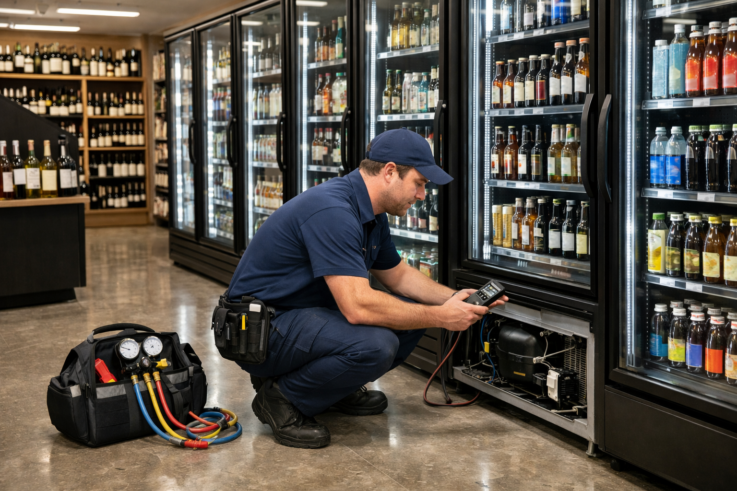
For Massachusetts liquor stores and package stores, refrigeration is not just back-of-house equipment. It is part of the customer experience, inventory protection, and daily sales flow. Cold beer, chilled wine, ready-to-drink cocktails, seltzers, mixers, and nonalcoholic beverages need consistent temperatures from the moment cases arrive to the moment customers open the cooler door.
Royal Cooling provides commercial refrigeration support for businesses that depend on reliable cold storage, including liquor stores, convenience stores, grocery stores, restaurants, hotels, and facility-managed properties. If you need liquor store refrigeration service Massachusetts owners can rely on, the right approach is more than a quick reset. It requires a technician who understands display cases, walk-ins, reach-ins, evaporator airflow, door gaskets, controls, defrost operation, drains, refrigerant charge, and the operating conditions inside busy retail stores.
This guide explains the most common refrigeration problems liquor stores see in the Boston metro area, Worcester County, Middlesex County, Suffolk County, and other parts of Massachusetts. It also covers when to schedule preventive refrigeration maintenance, what a commercial refrigeration technician checks, and when a warm beer cooler should be treated as an urgent service call.
Why Refrigeration Matters So Much in a Liquor Store
Liquor store coolers work under demanding conditions. Glass display doors are opened repeatedly during busy hours. Cases are restocked with room-temperature product. Walk-in doors may be opened by vendors, employees, and delivery teams. Store layouts often place beverage coolers near exterior doors, sunny windows, or high-traffic aisles where warm, humid air enters the case.
In Massachusetts, seasonal weather adds another layer. A beer cooler that seems fine in February may struggle during a humid July weekend in Boston, Cambridge, Quincy, or Waltham. A walk-in cooler in Worcester or Framingham may develop condensation or icing when door seals are worn and outside air loads increase. Even in colder months, heating systems, building pressure, and customer traffic can affect glass-door coolers and reach-in units.
When refrigeration is inconsistent, the impact is immediate. Beer and canned beverages may not feel properly chilled. Wine coolers can drift outside the preferred serving or storage range. Customers may avoid visibly sweating or fogged cooler doors. Employees may spend extra time mopping condensate, moving inventory, or manually checking temperatures. In severe cases, a compressor, fan motor, or control failure can turn into an emergency refrigeration repair.
Common Liquor Store Equipment That Needs Service
Package stores use several types of commercial refrigeration equipment. Each has different airflow patterns, controls, and failure points. Royal Cooling services many of the systems that liquor stores depend on every day.
- Glass-door beer coolers: Multi-door display cases used for craft beer, domestic beer, imports, seltzers, and ready-to-drink beverages.
- Wine coolers: Specialty coolers designed for controlled storage and display of white wine, sparkling wine, rosé, and premium bottles.
- Reach-in coolers: Smaller commercial cases for mixers, single-serve beverages, refrigerated snacks, or overflow inventory.
- Walk-in coolers: Back-room cold storage used for keg beer, cases, overstock beverages, and high-volume inventory.
- Walk-in freezer service: Some liquor and convenience stores also operate freezer equipment for ice, frozen beverages, or food-related items.
- Condensing units and evaporators: The mechanical equipment that rejects heat, circulates cold air, and maintains setpoint.
- Controls, thermostats, sensors, and defrost components: Small parts that can create large temperature problems when they fail or drift out of calibration.
Because many stores use a mix of older and newer equipment, proper diagnosis matters. A warm display case may be caused by a dirty condenser coil, weak evaporator fan, refrigerant leak, failed door gasket, blocked drain, poor loading practice, or a failing compressor. A qualified commercial refrigeration technician looks at the complete system rather than replacing parts at random.
Why Is My Liquor Store Beer Cooler Not Getting Cold Enough?
A beer cooler that is not getting cold enough can have several causes. Some are simple operating issues. Others require professional beer cooler repair before the problem becomes more expensive.
Common causes of a warm beer cooler
- Dirty condenser coil: Dust, lint, cardboard debris, and store grime restrict heat rejection. The cooler may run constantly but never reach setpoint.
- Blocked airflow: Cases stacked too close to vents can prevent cold air from circulating across the product and return air path.
- Door gasket leaks: Torn or compressed gaskets let warm, humid air enter the case and increase run time.
- Weak or failed evaporator fan: The refrigeration system may be cold at the coil, but cold air is not moving through the cabinet.
- Refrigerant leak or low charge: Low refrigerant can reduce capacity, cause icing, and damage the compressor if ignored.
- Control or thermostat issue: A sensor may be reading incorrectly, a thermostat may be out of calibration, or a controller may be misprogrammed.
- Heavy restocking loads: Loading warm beer into a cooler during a rush can temporarily raise case temperature, especially if airflow is blocked.
- Compressor or relay problem: If the compressor is short cycling, overheating, or failing to start, the cooler will not maintain temperature.
If your beer cooler is only slightly warm after a large delivery, monitor the temperature and confirm that airflow is not blocked. If it continues to run warm, if the compressor is cycling rapidly, if ice is forming on the evaporator, or if product is not recovering to proper serving temperature, call a commercial refrigeration technician.
What Causes Condensation on Glass Display Cooler Doors?
Condensation on glass display cooler doors is common in liquor stores, especially during humid Massachusetts weather. A small amount of fogging during heavy customer traffic may clear quickly. Persistent sweating, dripping, or water pooling is a sign that the cooler needs attention.
Common causes include worn gaskets, misaligned doors, failed door closers, low anti-sweat heater performance, high store humidity, air infiltration, blocked airflow across the glass, incorrect temperature settings, or a refrigeration system that is running too cold in one area and too warm in another. In a Boston metro store with frequent door openings, even a small gasket gap can pull enough humid air into the case to create fog, frost, and water problems.
Condensation is not just cosmetic. Wet floors can create slip concerns for employees and customers. Water can damage labels, shelves, packaging, and nearby flooring. Moisture can also signal that the cooler is working harder than necessary, which can shorten component life. Beverage cooler repair should include checking door alignment, gaskets, heaters, drains, fan operation, airflow, and system temperatures.
Liquor Store Refrigeration Symptoms and Likely Causes
| Symptom | Possible Cause | Recommended Action |
|---|---|---|
| Beer cooler is warm or slow to recover | Dirty condenser, weak fan, low refrigerant, blocked airflow, heavy restocking | Check loading and airflow, then schedule beer cooler repair if temperature does not recover |
| Glass doors are sweating or dripping | Worn gaskets, door misalignment, humidity, anti-sweat heater issue, air leaks | Inspect seals and closers; call for beverage cooler repair if moisture persists |
| Wine cooler temperature swings | Control problem, sensor issue, poor airflow, short cycling, oversized heat load | Request wine cooler service to test controls, fans, and temperature stability |
| Ice on evaporator coil | Airflow restriction, failed fan, defrost problem, low refrigerant, door leakage | Avoid chipping ice; call a commercial refrigeration technician |
| Walk-in cooler runs constantly | Dirty coil, refrigerant issue, door leak, failing compressor, warm product load | Schedule walk-in cooler repair before the compressor is damaged |
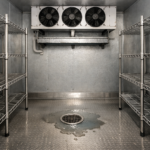
| Water pooling near case | Clogged drain, frozen drain line, condensate pan problem, case sweating | Clean visible water for safety and request service to find the source |
| Unit is noisy or vibrating | Fan motor, loose panel, compressor issue, failing bearing, mounting problem | Do not ignore new noises; arrange inspection before failure occurs |
What a Commercial Refrigeration Technician Checks
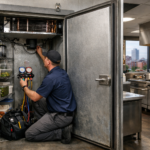
A professional service visit should be systematic. The goal is to confirm the complaint, find the root cause, and protect the equipment from repeat failure. When Royal Cooling evaluates a liquor store cooler, the inspection may include several practical checks depending on the equipment and symptoms.
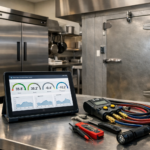
- Measure box temperature, product temperature where appropriate, and air temperature entering and leaving the evaporator.
- Inspect condenser coils for dirt, dust, blocked airflow, and heat rejection problems.
- Check evaporator fans, condenser fans, fan guards, blades, bearings, and wiring.
- Inspect door gaskets, hinges, closers, latches, sweep seals, and glass door alignment.
- Look for evaporator icing, frost pattern issues, and evidence of airflow restriction.
- Test thermostats, sensors, electronic controls, pressure controls, relays, contactors, and defrost operation.
- Evaluate refrigerant pressures, superheat, subcooling, and signs of refrigerant leaks when needed.
- Inspect drains, pans, heat tape where applicable, and condensate disposal.
- Listen for compressor short cycling, hard starts, overheating, vibration, or abnormal noise.
- Review operating conditions such as stocking practices, clearances, ambient temperature, and door-open frequency.
The best refrigeration repair is not just about getting a unit to turn back on. It is about restoring stable operation so your store can sell chilled products confidently during peak hours, weekend rushes, holidays, and delivery cycles.
How Often Should a Package Store Schedule Refrigeration Maintenance?
Most liquor stores and package stores should schedule preventive refrigeration maintenance at least twice per year, and higher-volume stores may benefit from quarterly service. The right frequency depends on equipment age, store traffic, dust conditions, condenser location, humidity, and how much revenue depends on cold beverage sales.
A store in a busy urban area such as Boston, Cambridge, Lowell, or Quincy may have more door openings and heavier customer traffic than a small neighborhood shop. A package store in Worcester County or Middlesex County with large walk-in storage and multiple glass-door lineups may need a more structured preventive maintenance plan. Stores with older equipment, repeated service calls, or hard-to-access condensers should not wait for an annual visit.
Typical maintenance tasks for liquor store refrigeration
- Clean condenser coils to improve heat rejection and reduce compressor strain.
- Inspect evaporator coils and fans for dirt, ice, and airflow problems.
- Check door gaskets and closures before humidity causes sweating or icing.
- Verify thermostat calibration and controller setpoints.
- Confirm defrost timing and termination where applicable.
- Flush or inspect drains to reduce leaks and standing water.
- Check electrical connections, amperage, contactors, relays, and signs of overheating.
- Look for early signs of refrigerant leaks, oil staining, vibration, and worn components.
- Document findings so owners can plan repairs before emergencies occur.
Preventive refrigeration maintenance cannot prevent every breakdown, but it often catches small issues before they become larger problems. A dirty condenser, loose fan motor, clogged drain, or failing gasket is less disruptive when found during a scheduled visit than during a Saturday evening rush.
Repair or Replace: How Liquor Store Owners Should Think About the Decision
Not every cooling problem means equipment replacement. Many reach-in cooler repair, beverage cooler repair, and walk-in cooler repair calls are resolved by cleaning coils, replacing fan motors, repairing controls, correcting defrost issues, fixing doors, or addressing refrigerant leaks. However, repair decisions should consider the whole system, not just the immediate invoice.
Repair may make sense when the equipment is generally in good condition, parts are available, the cabinet is solid, the compressor is healthy, and the issue is isolated. Replacement may be worth discussing when a cooler has repeated compressor failures, severe corrosion, obsolete controls, poor energy performance, chronic temperature instability, or repair costs that approach the value of the unit.
For wine cooler service, the decision can also depend on how the store uses the equipment. A premium wine display that protects customer perception and product quality may justify a higher level of repair or replacement planning. For an older reach-in used only as overflow, a simpler repair may be appropriate. A technician can provide practical guidance after inspecting the equipment, its service history, and its role in your store operations.
When Should a Liquor Store Call for Emergency Refrigeration Repair?
A liquor store should call for emergency refrigeration repair when a cooler or walk-in cannot maintain safe or required temperatures, when multiple units are down, when product quality or sales are immediately at risk, or when there are signs of electrical, compressor, or refrigerant system failure. Do not wait if the problem is getting worse quickly.
Urgent warning signs include:
- Beer, wine, or beverage coolers are rising in temperature and not recovering.
- A walk-in cooler is warm and the evaporator fans or compressor are not running.
- The compressor is short cycling, loudly buzzing, tripping, or overheating.
- Evaporator coils are heavily iced and airflow is blocked.
- There is water near electrical components or persistent pooling around customer areas.
- You smell burning, see damaged wiring, or notice breakers tripping repeatedly.
- Doors will not close or seal on a walk-in or glass display case.
- A large delivery is sitting warm because the storage cooler failed.
If a unit is failing, keep doors closed as much as possible, avoid unnecessary restocking into the affected cooler, record observed temperatures, and move high-value or temperature-sensitive product if you have another properly operating cooler. Then contact a refrigeration professional. For service requests, you can call Royal Cooling at 781-899-4441 or use the contact page.
Local Service Context for Massachusetts Package Stores
Liquor stores across Massachusetts operate in many building types: tight urban storefronts, suburban plazas, mixed-use buildings, freestanding retail locations, and older properties with limited mechanical access. A cooler in Suffolk County may have different ventilation challenges than a walk-in in Worcester County or a display case in Middlesex County. Store owners in Boston, Worcester, Cambridge, Lowell, Springfield, Quincy, Newton, Waltham, and Framingham all face the same basic concern: refrigeration must be dependable when customers are ready to buy.
Royal Cooling supports commercial refrigeration customers throughout the Massachusetts service area without implying that every city has a separate office. The focus is responsive, practical service for the equipment that keeps businesses operating. If you want to confirm coverage for your location, visit the service area page or call 781-899-4441.
How Store Staff Can Reduce Refrigeration Problems Between Service Visits
Daily habits make a difference. Employees do not need to be refrigeration experts, but they can help reduce avoidable strain and spot problems earlier.
- Keep product below load lines and away from discharge or return air grilles.
- Do not block condenser airflow with boxes, displays, bags, or seasonal merchandise.
- Make sure glass doors and walk-in doors close fully after stocking.
- Wipe up water promptly and report recurring puddles rather than assuming they are normal.
- Listen for new rattling, buzzing, squealing, or rapid cycling sounds.
- Record temperature concerns with the date, time, unit, and conditions.
- Schedule maintenance before summer humidity and before high-volume holiday seasons when possible.
These steps do not replace professional preventive maintenance, but they give your technician better information and help prevent small operating issues from turning into emergency repair calls.
Why Choose Royal Cooling for Liquor Store Refrigeration Service?
Liquor stores need a refrigeration contractor that understands retail urgency. A beer cooler that is warm during a weekend rush is not a minor inconvenience. A wine cooler with unstable temperatures can affect customer confidence. A walk-in cooler failure can disrupt receiving, stocking, and sales. Royal Cooling works on commercial refrigeration systems including walk-in coolers, walk-in freezers, wine coolers, reach-in refrigerators, beverage coolers, freezer repair, and preventive refrigeration maintenance.
Whether you operate a neighborhood package store, a high-volume beverage retailer, a convenience store with beer and wine, or a property with multiple refrigerated cases, the service goal is the same: identify the problem, explain the repair options clearly, and help you protect your equipment and inventory.
Need liquor store refrigeration service in Massachusetts? Call Royal Cooling at 781-899-4441 or request help through the contact page. For service area information, visit Royal Cooling service areas.
Frequently Asked Questions
Why is my liquor store beer cooler not getting cold enough?
A beer cooler may run warm because of a dirty condenser coil, blocked airflow, worn door gaskets, weak evaporator fans, low refrigerant, control problems, or heavy restocking with warm product. If the cooler does not recover or is icing up, schedule beer cooler repair.
How often should a package store schedule refrigeration maintenance?
Most package stores should schedule preventive refrigeration maintenance at least twice per year. Busy stores, older systems, dusty locations, and stores with multiple walk-ins or glass-door coolers may benefit from quarterly maintenance.
What causes condensation on glass display cooler doors?
Condensation is usually caused by warm humid air entering the cooler, worn gaskets, misaligned doors, high store humidity, failed anti-sweat heaters, or airflow problems. Persistent sweating should be inspected before it leads to water damage or temperature issues.
When should a liquor store call for emergency refrigeration repair?
Call for emergency refrigeration repair when a cooler or walk-in is rising in temperature, product is at risk, the compressor is short cycling or not starting, coils are iced over, breakers are tripping, or water is near electrical components.
Do wine coolers need different service than beer coolers?
Yes. Wine cooler service often focuses on stable temperature control, airflow, sensor accuracy, and cabinet conditions that protect product presentation. Beer coolers usually face heavier door openings and larger warm product loads.
Can a reach-in cooler repair be handled without replacing the whole unit?
Often, yes. Many reach-in cooler repair issues involve fans, controls, door gaskets, coils, drains, or electrical components. Replacement may be considered if the cabinet is deteriorated, parts are obsolete, or major failures repeat.
What should I do while waiting for a refrigeration technician?
Keep doors closed, reduce stocking into the affected unit, move sensitive product to another working cooler if available, note temperatures and symptoms, and clear access around the equipment for the technician.
Schedule Liquor Store Refrigeration Service in Massachusetts
If your beer cooler, wine cooler, beverage display, reach-in refrigerator, walk-in cooler, or walk-in freezer is not performing the way it should, do not wait for a complete shutdown. Royal Cooling can help evaluate the problem, recommend the right repair, and set up preventive refrigeration maintenance for your store.
Call Royal Cooling at 781-899-4441 or send a service request through /contact/. To review coverage, visit /service-area/.