Walk-In Cooler Drain Line Clogs in Massachusetts: Warning Signs, Root
Short answer: A walk-in cooler drain line clog usually shows up as water pooling on the floor, musty odors, slow drainage from the evaporator pan, ice near the coil or drain, or recurring moisture after mopping. For Massachusetts restaurants, grocery stores, convenience stores, and commercial kitchens, a clogged commercial refrigeration drain line should be checked promptly because it can create slip hazards, sanitation concerns, and equipment performance issues.
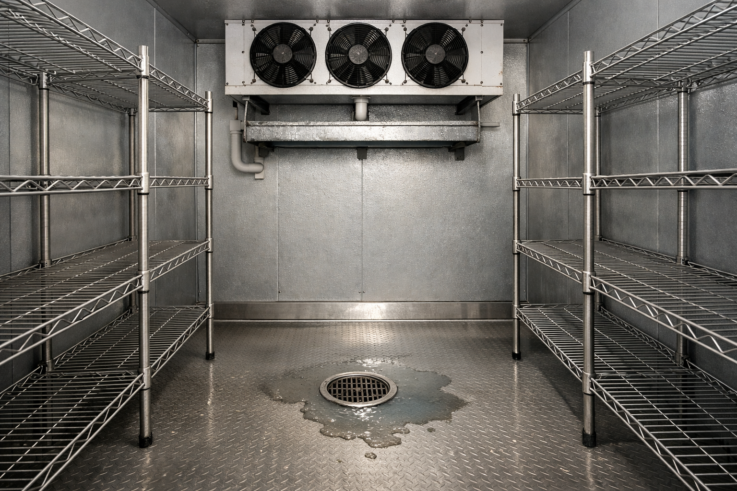
When you open a walk-in cooler and see standing water, it is tempting to mop it up and move on. If the water keeps returning, however, you may be dealing with a walk-in cooler drain line clog or another moisture-related refrigeration issue. In a busy Massachusetts food business, that small puddle can become a daily operational headache: employees stepping around wet floors, cardboard cases absorbing moisture, odors building near the evaporator, and managers wondering whether the cooler is still safe for stored product.
Royal Cooling helps Massachusetts businesses troubleshoot and service commercial refrigeration equipment, including walk-in coolers, walk-in freezers, reach-in refrigerators, wine coolers, and related systems. This guide explains the warning signs of a clogged drain, what causes drain line problems, what you can safely check, and when to call a commercial refrigeration technician for service.
Why a Walk-In Cooler Drain Line Matters
Your walk-in cooler removes heat and moisture from the refrigerated space. As warm, humid air enters through door openings or from product loading, moisture can collect on the evaporator coil. That water should drain into a pan and then leave the box through the condensate drain line. When the drain is clean, properly pitched, trapped as needed, and free of biological buildup or debris, you may never think about it.
When the drain slows or plugs, water backs up. Depending on the system layout, that can mean walk-in cooler water on floor, overflow from the drain pan, dripping near the evaporator, water tracking along panels, or ice forming if the cooler temperature and airflow conditions allow freezing. A refrigeration condensate drain clog is not just a housekeeping issue. It can point to maintenance gaps, installation problems, air infiltration, coil icing, or damaged drain components.
For restaurants in Boston, commercial kitchens in Cambridge, markets in Worcester, convenience stores in Lowell, hotels in Quincy, or food retailers in Waltham and Framingham, recurring drain trouble should be handled as part of overall walk-in cooler maintenance, not just floor cleanup.
Common Warning Signs of a Walk-In Cooler Drain Line Clog
The symptoms can be obvious or subtle. Watch for these signs before the problem spreads:
- Standing water on the cooler floor: Puddles near the evaporator, along the wall, or around the floor drain area often indicate drainage is not keeping up.
- Water returns soon after mopping: If staff cleans the floor and water reappears within hours, the source is likely mechanical, drainage, or condensation-related.
- Musty or sour odors: A blocked commercial refrigeration drain line can hold stagnant water, food residue, slime, and organic buildup.
- Dripping from the evaporator pan: Water may overflow from the drain pan when the line is restricted or the pan outlet is blocked.
- Ice around the drain, pan, or coil: Ice can form when water backs up, airflow is restricted, or temperatures drop near the drain area.
- Wet boxes, shelving, or product packaging: Moisture on inventory can create quality and sanitation issues.
- Temperature inconsistency: Drain clogs do not always cause warm temperatures, but ice buildup and airflow problems connected to drainage issues can affect performance.
- Recurring pest or sanitation concerns: Standing water and organic residue can attract unwanted problems in a food facility.
If these symptoms are happening repeatedly, it is time to look beyond a mop bucket and consider professional walk-in cooler drain cleaning or inspection.
Why Is There Water Pooling on the Floor of My Walk-In Cooler?
Water pooling on the floor of a walk-in cooler usually comes from one of four categories: a drain line restriction, excess condensation, ice melting, or a building-related water source. A walk-in cooler drain line clog is one of the most common explanations, especially when water appears beneath or near the evaporator. However, a technician will also consider door air leaks, damaged gaskets, poor drainage slope, failed insulation, improper defrost operation, cracked drain pans, loose fittings, and floor issues.
In Massachusetts, seasonal humidity swings can make cooler moisture problems more noticeable. During humid summer weather in the Boston metro area, warm air enters the box whenever the door opens. If the door gasket is worn, the closer is weak, or employees prop the door open during deliveries, moisture load increases. More moisture means more condensate. A drain line that was barely flowing in spring may overflow in July.
Common Causes of Commercial Refrigeration Drain Line Clogs
A clogged drain line is usually the result of buildup over time, but there can be several contributing causes. Common causes include:
- Slime and biological buildup: Moist, dark drain lines can develop buildup that slows water flow.
- Food debris or packaging fragments: Small debris can enter the pan or line during stocking, cleaning, or daily operation.
- Grease and residue from kitchen environments: In foodservice settings, airborne residue can contribute to drain pan and line buildup.
- Improper drain pitch: If the line does not slope correctly, water can sit and collect sediment.
- Missing, blocked, or incorrectly installed trap: Drain trap problems can cause odors, air movement issues, or drainage trouble.
- Kinked, crushed, or damaged drain tubing: A line may be physically restricted behind a wall, above a ceiling, or near the condensing equipment path.
- Evaporator coil icing: Ice can block the pan outlet or melt faster than the line can drain.
- Freezing drain line: If a section is exposed to low temperatures or not properly heat traced where required, water can freeze inside.
- Poor preventive maintenance: Drains often get ignored until there is visible water on the floor.
The right fix depends on the cause. Clearing a line without addressing poor pitch, repeated icing, or a broken pan may only provide temporary relief.
Quick Checks You Can Do Before Calling
Business owners and managers can perform a few safe checks before requesting walk-in cooler repair. Do not remove electrical panels, disassemble refrigeration components, or use harsh chemicals in a way that could damage the system or contaminate food areas.
- Map the water location: Note whether the water is directly below the evaporator, near the door, along a wall seam, or throughout the floor.
- Check the door: Make sure the walk-in door closes fully and the gasket is not torn, loose, or folded.
- Look for obvious debris: If visible debris is sitting in the drain pan area and can be safely removed without tools or contact with electrical parts, document and remove it carefully.
- Inspect product storage: Make sure boxes are not blocking airflow around the evaporator.
- Note odors: A sour or sewer-like smell may indicate stagnant water, trap issues, or drain contamination.
- Record temperatures: Check whether the box is maintaining the required setpoint and whether temperatures fluctuate during the day.
- Take photos: Photos of water patterns, ice, and the evaporator area help the service technician understand the problem faster.
If there is electrical exposure, heavy ice, product temperature risk, or water spreading into a customer or employee traffic area, stop troubleshooting and call for professional service.
Symptom Comparison: Drain Clog or Something Else?
| Symptom | Possible Cause | What It Usually Means | Recommended Action |
|---|---|---|---|
| Water pooling under evaporator | Clogged drain pan outlet or drain line | Condensate cannot leave the cooler fast enough | Schedule walk-in cooler drain cleaning and inspection |
| Water returns after mopping | Recurring commercial refrigeration drain line restriction | The source has not been corrected | Call a commercial refrigeration technician |
| Ice near coil or drain pan | Drain freezing, airflow issue, defrost issue, or low temperature condition | Drainage and refrigeration performance may both need testing | Request walk-in cooler repair; do not chip ice aggressively |
| Musty odor near evaporator | Stagnant condensate, slime buildup, trap issue | Drain sanitation and proper flow should be checked | Clean and flush drain; inspect trap and pan |
| Water near the door | Air infiltration, bad gasket, weak door closer, sweating threshold | Moist outside air may be entering the box | Inspect door hardware and moisture load |
| Wet walls or ceiling panels | Condensation, insulation issue, air leak, or refrigeration imbalance | The problem may not be limited to the drain | Have the full cooler inspected |
Can a Clogged Drain Line Make a Walk-In Cooler Unsafe for Food Storage?
A clogged drain line can contribute to unsafe or unacceptable food storage conditions, especially when it leads to standing water, odors, contamination concerns, wet packaging, or temperature instability. The clog itself does not automatically mean all product is unsafe, but it creates conditions that food businesses should take seriously.
Standing water can create slip hazards for employees. It can also soak cardboard, damage labels, and make cleaning more difficult. If water is dripping from overhead areas or splashing near stored food, managers should protect product and review food safety procedures. If the cooler is also running warm, cycling abnormally, or showing heavy ice, the concern becomes more urgent. When in doubt, follow your internal food safety plan and applicable health department requirements. A refrigeration technician can address the equipment side, but product disposition decisions should be made by the responsible food operator based on temperature logs, exposure, and sanitation procedures.
When Should a Massachusetts Restaurant Call for Walk-In Cooler Drain Service?
A Massachusetts restaurant, grocery store, liquor store, convenience store, hotel, or commercial kitchen should call for service when water is recurring, spreading, creating odors, affecting product, or appearing with ice or temperature problems. If the cooler floor is wet once after a busy delivery on a humid day, cleaning and monitoring may be reasonable. If staff is mopping the same area every shift, the issue needs professional attention.
Call Royal Cooling at 781-899-4441 or use the contact page if you notice any of the following:
- Water pooling on the floor more than once
- Drain pan overflow or dripping from the evaporator
- Musty, sour, or drain-like odors inside the cooler
- Ice around the coil, drain pan, drain line, or floor
- Cooler temperatures drifting outside your normal range
- Employees reporting slip hazards
- Wet product packaging or sanitation concerns
- A drain line that clogs again shortly after cleaning
Royal Cooling provides commercial refrigeration service for businesses throughout Massachusetts, including service-area examples such as Boston, Worcester, Cambridge, Lowell, Springfield, Quincy, Newton, Waltham, and Framingham. Visit the service area page for more information about locations served.
What a Commercial Refrigeration Technician Checks
A thorough service visit does more than push water through the line. For a recurring walk-in cooler drain line clog, a technician may check:
- Drain pan condition: Corrosion, cracks, loose fittings, debris, and pan slope.
- Drain outlet: Blockage at the pan connection, which is a common restriction point.
- Drain line routing: Pitch, sagging sections, improper traps, physical damage, and discharge location.
- Trap design and condition: Missing or blocked traps can cause odor and flow issues.
- Evaporator coil: Dirt, ice, airflow restriction, fan operation, and defrost performance.
- Door and air infiltration: Gaskets, closers, hinges, sweeps, and employee usage patterns.
- Temperature operation: Setpoint, controls, sensor location, and refrigeration cycle behavior.
- Sanitation considerations: Whether drain buildup or stagnant water may require cleaning beyond basic clearing.
Depending on the situation, service may include clearing the drain, flushing the line, cleaning the pan, correcting slope or trap issues, replacing damaged tubing, addressing icing, recommending door repairs, or adding the drain to a preventive maintenance checklist.
Repair vs. Replacement: What Makes Sense?
Most drain line clogs can be corrected with cleaning, flushing, and minor repairs. However, replacement may be the better option when the drain line is brittle, crushed, heavily contaminated, incorrectly routed, repeatedly freezing, or inaccessible for proper cleaning. A technician may also recommend replacing the drain pan outlet, fittings, heat trace components, insulation, or sections of tubing if they are causing repeat calls.
Repair is typically appropriate when the line is structurally sound and the issue is buildup or a localized obstruction. Replacement becomes more practical when the physical drain system is the problem. For older walk-in coolers in Massachusetts buildings, especially in tight kitchens, basements, or older mixed-use properties, routing and access can affect the recommendation.
How Preventive Maintenance Helps Avoid Drain Emergencies
Drain problems are often preventable. A good preventive maintenance program for commercial refrigeration should include the condensate path, not just temperatures and electrical readings. For walk-in coolers and walk-in freezer service, maintenance can include evaporator inspection, drain pan cleaning, drain line flushing, door gasket checks, fan operation checks, coil condition review, and verification that water is moving where it should.
Practical maintenance tips for managers include:
- Keep product and boxes away from evaporator fans to maintain airflow.
- Do not prop the walk-in door open during deliveries longer than necessary.
- Report small puddles early instead of waiting for widespread water.
- Keep the area under and around the evaporator accessible for service.
- Train staff to document when water appears, where it appears, and whether it is linked to deliveries or cleaning.
- Schedule periodic commercial refrigeration maintenance before peak summer humidity.
A planned maintenance visit is less disruptive than an urgent wet-floor call during a lunch rush, weekend service, or a busy holiday inventory period.
Emergency Signs: Do Not Wait
Some drain problems can be scheduled promptly during business hours. Others may require urgent attention. Consider requesting emergency refrigeration repair if water is creating an active slip hazard, electrical components are wet, the cooler is not holding temperature, ice is rapidly expanding, product is being exposed to dripping water, or the drain issue is connected to a broader refrigeration failure.
If you manage a restaurant in Boston, a grocery operation in Worcester County, a convenience store in Middlesex County, or a commercial kitchen in Suffolk County, recurring moisture inside a cooler can disrupt operations fast. Royal Cooling can help identify whether the problem is a simple drain restriction or part of a larger walk-in cooler repair issue.
Local Service Context for Massachusetts Businesses
Walk-in cooler moisture problems can look different depending on the building and business type. A high-volume restaurant in Cambridge may open the cooler door constantly during prep. A small market in Newton may have limited storage space that blocks airflow. A hotel kitchen in Quincy may have heavy morning and evening demand. A liquor store or specialty food shop in Waltham may need stable storage conditions to protect inventory. A supermarket or grocery store in Framingham may have multiple boxes, floor drains, and maintenance responsibilities spread across departments.
Royal Cooling works with Massachusetts commercial refrigeration customers that need practical troubleshooting, clear communication, and service recommendations based on the equipment condition. Whether the call involves walk-in cooler drain cleaning, a commercial refrigeration drain line repair, freezer repair, reach-in refrigerator service, or preventive refrigeration maintenance, the goal is to restore reliable operation and reduce repeat problems.
FAQ: Walk-In Cooler Drain Line Clogs
Why is there water pooling on the floor of my walk-in cooler?
Water pooling is commonly caused by a clogged condensate drain line, blocked drain pan outlet, excess condensation, coil icing, door air leaks, or poor drain slope. If water returns after mopping, schedule a refrigeration inspection.
How do I know if my walk-in cooler drain line is clogged?
Signs include standing water under the evaporator, dripping from the drain pan, musty odors, slow drainage, water that reappears after cleaning, or ice forming near the drain area.
Can a clogged drain line make a walk-in cooler unsafe for food storage?
It can contribute to unsafe conditions by causing standing water, wet packaging, odors, sanitation concerns, slip hazards, or temperature problems. Follow your food safety procedures and have the equipment issue corrected promptly.
When should a Massachusetts restaurant call for walk-in cooler drain service?
Call when water is recurring, spreading, creating odors, affecting product, forming ice, or appearing with temperature changes. Restaurants should not ignore repeated wet-floor conditions in a food storage area.
Can my staff clear a walk-in cooler drain line?
Staff can remove obvious surface debris if it is safe and accessible, but they should not disassemble refrigeration equipment, open electrical panels, or use harsh chemicals. Recurring clogs should be handled by a commercial refrigeration technician.
How often should walk-in cooler drains be cleaned?
The right schedule depends on usage, humidity, food environment, and equipment condition. Many businesses include drain inspection and cleaning as part of regular preventive maintenance, especially before warm and humid weather.
Is water in a walk-in cooler always from the drain?
No. Water may also come from air leaks, damaged door gaskets, condensation, floor problems, cleaning practices, coil icing, or building plumbing. A technician can trace the source.
Does Royal Cooling service walk-in coolers outside Boston?
Royal Cooling serves Massachusetts businesses in the broader service area, with city examples including Boston, Worcester, Cambridge, Lowell, Springfield, Quincy, Newton, Waltham, and Framingham. Check the service area page or call 781-899-4441.
Need Help With a Walk-In Cooler Drain Line Clog?
If your staff is dealing with puddles, odors, ice, or repeated mopping, do not wait for the issue to affect inventory or create a slip hazard. Royal Cooling provides commercial refrigeration service for Massachusetts restaurants, grocery stores, convenience stores, hotels, facility managers, and commercial kitchens. Call 781-899-4441 or request service through the Royal Cooling contact page. For location details, visit the service area page.