Walk-In Freezer Door Ice Buildup: Door Heaters, Gaskets, Closers, and
Walk-In Freezer Door Ice Buildup: What It Means for Massachusetts Businesses
Short answer: Walk-in freezer door ice buildup is usually caused by warm, humid air leaking through a damaged gasket, weak closer, misaligned door, failed door or frame heater, or heavy traffic pattern. Ice around the door can quickly affect temperature, product safety, and safe access, so Massachusetts businesses should troubleshoot promptly and call a commercial refrigeration technician when ice returns or blocks operation.
For a restaurant in Boston, a grocery store in Worcester, a hotel kitchen in Cambridge, or a convenience store in Waltham, ice around a walk-in freezer door is more than an inconvenience. It can keep the door from closing, create slip hazards, strain the refrigeration system, and make it harder to maintain safe freezer temperatures during busy service periods.
This guide focuses specifically on walk-in freezer door ice buildup: why it happens, how door heaters and gaskets are involved, what you can safely check, and when to call Royal Cooling for walk-in freezer service or emergency refrigeration repair in Massachusetts.
Why Ice Around a Walk-In Freezer Door Is a High-Intent Warning Sign
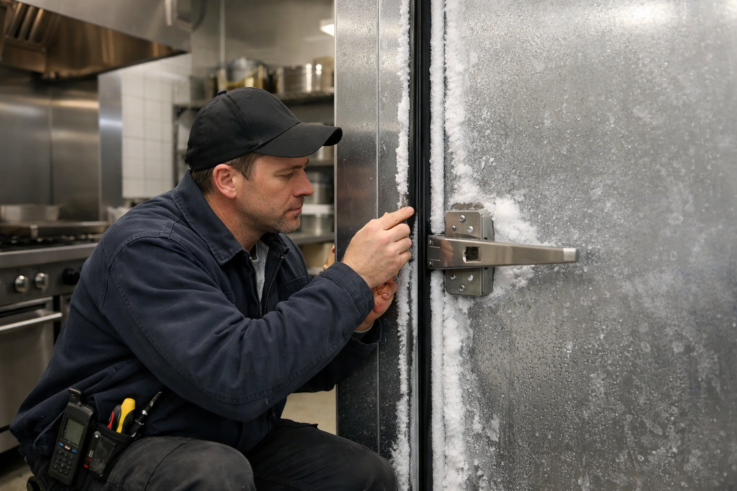
Some freezer frost problems start at the evaporator coil, drain, or defrost system. Door ice is different. When you see ice around a walk-in freezer door, especially near the gasket, threshold, hinges, latch, or frame, it often means outside air is entering the box. In Massachusetts, seasonal humidity, kitchen heat, snow tracked near entrances, and frequent delivery traffic can all make the problem worse.
Warm air carries moisture. When that air leaks into a freezer, moisture condenses and freezes on the coldest nearby surfaces. Over time, a small frost line becomes a ridge of ice. That ridge can hold the door open slightly, which allows even more air infiltration. The freezer then runs longer, frost expands, and the door problem becomes a temperature problem.
For businesses in the Boston metro, Worcester County, Middlesex County, and Suffolk County, this can disrupt production, receiving, overnight storage, and health-code temperature management. If staff are chipping ice daily just to close the door, the equipment needs service, not just cleanup.
Common Symptoms of Walk-In Freezer Door Ice Problems
Door-related freezer icing can show up in several ways. Watch for these symptoms during opening, closing, and temperature checks:
- Frost or ice along the gasket edge, door jamb, threshold, or strike plate.
- The door is hard to open, hard to close, or sticks to the frame.
- The latch does not catch unless staff push or kick the door shut.
- The door pops back open after closing.
- Visible light gaps around the gasket.
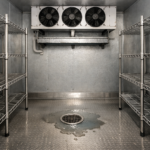
- Wet floors or ice forming outside the freezer entrance.
- Temperature alarms after deliveries, dinner rush, or overnight operation.
- Excess frost on product boxes near the door.
- Door heater areas feel cold where they normally should be slightly warm.
- Staff report drafts, whistling, suction changes, or frost returning soon after removal.
If these symptoms are happening in a commercial kitchen in Quincy, Newton, Framingham, Lowell, Springfield, or elsewhere in Massachusetts, it is worth treating the issue as a system problem. The cause may be a gasket, but it may also be electrical, mechanical, or airflow-related.
Why Is Ice Forming Around My Walk-In Freezer Door?
The most common reason is a walk-in freezer air leak. Air infiltration occurs when warm, moist kitchen air enters through a seal failure or an opening caused by door hardware problems. However, door ice can also be caused by failed anti-sweat heaters, poor door alignment, improper pressure relief, or defrost issues.
1. Damaged, Brittle, or Loose Door Gaskets
The gasket is the flexible seal around the door. When it is torn, compressed, brittle, pulled loose, or coated with food debris, it cannot seal tightly against the frame. That gap allows humid air to enter. A walk-in freezer gasket replacement may be needed when the gasket no longer rebounds, has missing magnetic pull, or shows cracks and tears.
Gaskets often fail faster in high-traffic restaurants and supermarkets because doors are opened constantly, carts strike the seal, and staff may pull on the gasket area instead of the handle. In a busy Massachusetts kitchen, a small split can become a serious ice problem within a short period.
2. Failed Door Heater or Frame Heater
Many walk-in freezer doors use heaters around the door frame, threshold, or mullion area to prevent condensation from freezing the door shut. If a heater wire, heater circuit, controller, switch, relay, or power connection fails, the frame can become cold enough for moisture to freeze. This is when walk-in freezer door heater repair becomes necessary.
A bad heater does not always cause an immediate temperature alarm. It may first show up as frost along the frame, ice under the gasket, or a door that sticks in the morning. Because heater circuits involve electrical testing, diagnosis should be handled by a qualified commercial refrigeration technician.
3. Weak or Broken Door Closer
A walk-in freezer door closer is designed to pull the door shut after use. If the closer is weak, broken, misadjusted, or fighting a misaligned door, the door may remain slightly open after staff walk away. Even a narrow gap can pull warm kitchen air into the freezer for hours.
Door closers are especially important in restaurants, hotels, and grocery prep areas where staff move quickly. If the door does not self-close reliably, ice buildup is likely to return even after cleaning.
4. Misaligned Hinges, Latches, or Door Panels
Heavy doors can sag over time. Hinges can loosen. Latches can shift. Floors can settle. When the door does not sit squarely in the frame, the gasket may seal at the top but leak at the bottom, or seal at the hinge side but leak near the latch. A technician may need to adjust hinges, replace hardware, shim components, or evaluate whether the door or frame is damaged.
5. Pressure Relief or Vacuum Issues
Walk-in freezers can develop pressure differences after the door closes or during defrost cycles. If pressure relief is not working properly, staff may fight the door, slam it, or leave it cracked open. Poor pressure balance can also affect gasket sealing. A commercial refrigeration technician can inspect pressure relief ports and confirm they are not iced over, blocked, or failed.
6. High Humidity and Traffic Patterns
Massachusetts kitchens often deal with big seasonal swings. Summer humidity, winter snowmelt, dishwashing steam, open loading doors, and nearby cooking equipment can all increase moisture near the freezer entrance. Heavy traffic during deliveries or rush periods can overwhelm a marginal seal. If the door area is already weak, humidity makes the ice worse.
7. Defrost or Evaporator Issues That Make Door Ice Worse
Although this article focuses on the door, a defrost problem can contribute to icing throughout the freezer. If the evaporator coil is heavily iced, airflow can change, temperature recovery can slow, and humidity may linger. A technician may check defrost heaters, timers or controls, fan operation, drain function, and refrigerant conditions to make sure the door ice is not part of a larger freezer repair issue.
Symptom Comparison: What the Ice Pattern May Be Telling You
| What You See | Likely Cause | Business Risk | Recommended Action |
|---|---|---|---|
| Ice line following the gasket | Damaged gasket, dirt on sealing surface, door misalignment, or weak magnetic seal | Air infiltration, longer run times, product frost near door | Clean and inspect gasket; schedule walk-in freezer gasket replacement if damaged |
| Ice on the frame or jamb even when gasket looks intact | Failed door/frame heater, electrical issue, cold threshold, or moisture migration | Door sticking, ice returning after removal, possible electrical fault | Call for walk-in freezer door heater repair and electrical testing |
| Door does not close unless pushed hard | Weak closer, sagging hinges, latch problem, ice obstruction, or warped door | Door left open, temperature rise, staff safety issues | Remove loose surface ice only if safe; call for hardware and alignment service |
| Ice forms on floor at the entrance | Warm air leak, condensation, damaged sweep, threshold heater issue, or drain water tracking | Slip hazard and possible health inspection concern | Place caution signage and call a technician if ice returns |
| Temperature alarms along with door ice | Door leak plus refrigeration system strain, defrost issue, fan problem, or low capacity | Product safety risk and possible food loss | Treat as urgent; contact emergency refrigeration repair support |
How Do I Know If a Walk-In Freezer Door Heater Is Bad?
A bad door heater often shows up as frost or ice on the frame, especially near the jamb, threshold, or around the gasket contact area. The door may freeze shut, stick in certain areas, or develop recurring ice even after the gasket is cleaned. Staff may notice one part of the frame is colder than expected.
However, a visual check is not enough to confirm heater failure. Door heater systems can involve heater cable continuity, voltage supply, controls, relays, switches, terminations, and sometimes wiring hidden in the frame. A commercial refrigeration technician typically uses electrical meters and safe diagnostic procedures to verify whether the heater is receiving power and whether the heater element is intact.
Do not keep chipping ice from a heater area without addressing the cause. Aggressive scraping can damage the gasket, heater wire, door frame, threshold, or floor. If the door is sticking shut or ice keeps returning in the same heated area, call for service.
Can a Damaged Gasket Make a Walk-In Freezer Ice Up?
Yes. A damaged gasket is one of the most common causes of ice around a walk-in freezer door. A gasket does not need to be completely missing to cause problems. Small cracks, crushed corners, separated magnetic strips, or a loose gasket track can be enough to let humid air enter the freezer.
Signs a gasket may need replacement include:
- Cracks, tears, missing sections, or hardened rubber.
- Gasket pulling away from the door.
- Condensation or frost exactly along the gasket line.
- Paper or thin cardboard slips out easily when closed in the door.
- Door seal works in one area but leaves a visible gap in another.
- Staff must push hard on the door to make it seal.
In some cases, gasket replacement solves the issue. In others, the new gasket will not seal properly until the door is aligned, hinges are corrected, the closer is repaired, or the frame is checked. That is why recurring gasket problems should be evaluated as part of the complete door assembly.
Safe Checks Your Staff Can Perform Before Calling
Before scheduling service, your team can gather useful information. Keep safety first. Do not remove panels, test electrical parts, use open flames, or chip ice aggressively.
- Look for visible gaps: With the door closed, inspect around the perimeter for light, frost trails, or gasket sections not touching the frame.
- Check the closing action: Open the door slightly and let it close. It should close fully without being slammed.
- Inspect the gasket: Look for splits, brittleness, loose corners, food buildup, or missing magnetic contact.
- Note the ice location: Take photos of the ice pattern before cleaning. This helps the technician identify the failure point.
- Check temperature logs: Note whether the freezer is holding setpoint, recovering slowly, or alarming after busy periods.
- Review traffic patterns: Ask whether deliveries, prep rushes, or specific staff habits leave the door open longer than normal.
- Clear obstructions: Make sure product boxes, carts, strip curtains, or floor mats are not preventing closure.
If the freezer is warm, the door cannot close, the ice is creating a slip hazard, or food safety is in question, skip extended troubleshooting and contact a professional. Royal Cooling can be reached at 781-899-4441, or you can use the contact page.
What a Commercial Refrigeration Technician Checks
Professional diagnosis goes beyond replacing a visible gasket. For Massachusetts businesses needing walk-in freezer service, a technician may evaluate:
- Gasket condition and fit: Compression, magnet pull, corner sealing, proper profile, and compatibility with the door.
- Door alignment: Hinge wear, sagging, latch engagement, door sweep, threshold contact, and frame condition.
- Closer operation: Spring tension, hydraulic action, mounting condition, and full self-closing performance.
- Door heater operation: Voltage, continuity, amperage where applicable, wiring connections, heater controls, and failed sections.
- Frame and threshold condition: Cold spots, damaged metal, ice pockets, water intrusion, and insulation concerns.
- Pressure relief: Blocked or failed pressure relief ports that make the door hard to open or close.
- Evaporator and defrost performance: Coil frost pattern, fan operation, drain function, defrost timing, and control settings.
- Box temperature performance: Setpoint, actual temperature, recovery after door openings, and alarm history.
- Operating environment: Nearby heat sources, humidity, traffic flow, loading practices, and strip curtain condition.
This complete approach helps prevent repeat calls. For example, replacing a gasket on a sagging door may only provide temporary relief. Replacing a heater without correcting an air leak may also fail to solve the root problem.
Repair vs. Replacement: What Makes Sense?
The right fix depends on the condition of the door assembly and the freezer. A relatively new door with a torn gasket may only need a walk-in freezer gasket replacement and minor adjustment. A door with a failed heater may need electrical repair or heater component replacement. A heavily damaged, warped, or corroded door may be a candidate for larger repair or replacement planning.
Repair is often appropriate when the door panel is structurally sound, hinges can be adjusted, the latch can be restored, and replacement parts are available. Replacement may be considered when the door is badly warped, insulation is compromised, the frame is damaged, repeated heater failures are tied to deteriorated construction, or hardware mounting points are no longer secure.
A technician can help you weigh downtime, part availability, safety, energy waste, and product risk. For a supermarket freezer or high-volume restaurant, avoiding repeated failures may be more important than choosing the smallest short-term repair.
When Should a Restaurant Call a Commercial Refrigeration Technician for Freezer Door Ice?
A restaurant, grocery store, hotel, liquor store, or commercial kitchen should call a commercial refrigeration technician when ice returns after cleaning, the door does not seal, the door heater appears to be failing, temperatures are rising, or the freezer is unsafe to access. Door ice is especially urgent when it affects closing, product temperature, or staff safety.
Call for service promptly if you notice:
- The freezer door is frozen shut or will not close securely.
- Ice creates a slip hazard at the entrance.
- Temperature is above the required range or alarms are active.
- Product boxes near the door are soft, frosted, wet, or temperature-abused.
- Staff are removing ice every day or every shift.
- The gasket is torn, hanging loose, or not making contact.
- The frame heater area is icing repeatedly.
- The latch, hinges, or closer are damaged.
For urgent freezer issues, ask about emergency refrigeration repair. Royal Cooling serves Massachusetts businesses including restaurants, grocery stores, convenience stores, hotels, facility managers, property managers, and commercial kitchens. To confirm coverage for your location, visit the service area page or call 781-899-4441.
Preventive Maintenance Tips to Reduce Door Ice
Preventive maintenance can reduce repeat icing and extend the life of freezer door components. It is especially valuable for high-traffic walk-ins in Boston, Worcester, Cambridge, Lowell, Springfield, Quincy, Newton, Waltham, Framingham, and other Massachusetts communities where daily operations depend on reliable cold storage.
- Clean gaskets weekly: Use appropriate cleaner and avoid harsh tools that damage rubber.
- Train staff to close doors fully: Do not prop freezer doors open during prep or receiving unless procedures are in place to control exposure.
- Keep product clear of the doorway: Boxes and carts can stop the door from closing and crush gaskets.
- Check closers monthly: The door should self-close without slamming or stopping short.
- Look for early frost lines: A small frost trail is easier to fix than a thick ice ridge.
- Maintain strip curtains: Damaged or missing strips increase air exchange during traffic.
- Control moisture nearby: Repair floor drains, reduce steam near the freezer, and avoid placing hot equipment next to the entrance when possible.
- Schedule preventive maintenance: A technician can inspect door hardware, heaters, defrost operation, fans, drains, controls, and refrigerant-side performance.
Royal Cooling provides commercial refrigeration, walk-in freezers, walk-in coolers, reach-in refrigerators, wine coolers, freezer repair, and preventive refrigeration maintenance for Massachusetts customers. Door ice is often easiest to correct before it becomes a full temperature emergency.
Why Door Ice Should Not Be Ignored
It can be tempting to chip away ice and move on. But repeated ice at the door is usually a symptom, not the root cause. The longer air leaks continue, the more the freezer must work to remove heat and moisture. That can contribute to longer runtimes, frost accumulation, door hardware wear, and inconsistent product temperatures.
It can also affect workflow. A door that sticks slows down prep. A latch that does not catch frustrates staff. Ice on the floor raises safety concerns. If a freezer door fails during a dinner rush, delivery window, or overnight storage period, the operational cost can exceed the cost of timely service.
If your Massachusetts business is seeing walk-in freezer door ice buildup, especially with temperature changes or unsafe access, it is time to get the door system checked.
FAQ: Walk-In Freezer Door Ice Buildup
Why is ice forming around my walk-in freezer door?
Ice usually forms because warm, humid air is leaking into the freezer through a bad gasket, weak closer, misaligned door, failed door heater, or blocked pressure relief. The moisture freezes around the door frame, gasket, threshold, or latch area.
How do I know if a walk-in freezer door heater is bad?
Common signs include recurring ice on the frame or threshold, a door that freezes shut, and frost returning after cleaning even when the gasket looks intact. A technician should test the heater circuit, wiring, voltage, and controls before replacing parts.
Can a damaged gasket make a walk-in freezer ice up?
Yes. A torn, brittle, loose, or compressed gasket allows humid air to enter the freezer. That air freezes near the leak and can cause frost lines, door ice, temperature problems, and longer equipment runtimes.
When should a restaurant call a commercial refrigeration technician for freezer door ice?
Call when ice returns after cleaning, the door will not close or seal, the gasket is damaged, the frame heater area is icing, temperatures are rising, or staff safety is affected. Temperature alarms or a frozen-shut door should be treated as urgent.
Is it safe to chip ice off a walk-in freezer door?
Only remove loose surface ice carefully if it can be done without damaging the gasket, heater, frame, threshold, or floor. Avoid sharp tools, force, and heat sources. If ice is thick, recurring, or blocking the door, call for service.
Can preventive maintenance stop walk-in freezer door ice?
Preventive maintenance can reduce many door ice problems by catching worn gaskets, weak closers, heater faults, hinge issues, blocked pressure relief, and defrost problems early. It also helps identify staff or traffic patterns that increase air infiltration.
Does door ice always mean the refrigeration system is failing?
No. Door ice often starts with air infiltration or door hardware. However, if temperatures are unstable or the evaporator is heavily frosted, a technician should check the broader refrigeration system, including fans, defrost, drains, controls, and refrigerant-side performance.
Need Walk-In Freezer Door Ice Repair in Massachusetts?
Royal Cooling helps Massachusetts businesses troubleshoot and repair walk-in freezer door ice buildup, door heater problems, gasket failures, closers, air leaks, and related freezer performance issues. Whether you operate a restaurant in Boston, a grocery store in Worcester County, a hotel kitchen in Cambridge, or a facility in Middlesex or Suffolk County, prompt diagnosis can help protect product and daily operations.
For walk-in freezer service, preventive maintenance, walk-in cooler repair, freezer repair, or emergency refrigeration repair, call 781-899-4441 or request service through the Royal Cooling contact page. You can also review the service area page to confirm support for your Massachusetts location.