Commercial Refrigeration Repair in Massachusetts: What to Check Before
Short answer: Before calling a commercial refrigeration technician in Massachusetts, check power, thermostat settings, door seals, airflow, condenser cleanliness, ice buildup, drains, alarms, and current box temperature. If product is warming, a breaker repeatedly trips, there is a burning smell, a suspected refrigerant leak, or a walk-in freezer is failing, stop troubleshooting and request professional commercial refrigeration repair.
When a cooler or freezer starts acting up during service, the first question is usually simple: “Is this something my team can check quickly, or do I need a technician now?” For restaurants, grocery stores, convenience stores, hotels, liquor stores, and facility managers, the answer affects inventory, food safety, labor, and customer service. This guide explains what to check before booking commercial refrigeration repair Massachusetts businesses can rely on, when the problem becomes urgent, and what information helps Royal Cooling arrive prepared.
Royal Cooling provides commercial refrigeration service for walk-in coolers, walk-in freezers, reach-in refrigerators, wine coolers, and related cold storage equipment across Massachusetts service areas, including the Boston metro, Middlesex County, Suffolk County, Worcester County, and nearby communities. Whether you manage a kitchen in Boston, a market in Worcester, a hotel in Cambridge, a facility in Waltham, or a store in Framingham, the goal is the same: protect product, reduce downtime, and get the right repair started quickly.
Why a pre-call checklist matters
Refrigeration failures are not all the same. A display case with a loose power cord is very different from a walk-in freezer with a failing compressor, iced evaporator, or electrical fault. A quick, safe pre-call check helps you separate simple causes from problems that require a licensed HVAC contractor or commercial refrigeration technician.
This does not mean taking equipment apart or bypassing safety controls. Commercial refrigeration systems use high voltage components, pressurized refrigerant, motors, contactors, capacitors, defrost controls, and drain heaters. Unsafe DIY work can create electrical hazards, damage the system, and delay proper repair. The right approach is to observe, document, and perform basic checks that do not expose your staff to risk.
A good checklist also improves the repair visit. When you can tell a technician the box temperature, product temperature, equipment type, time the issue started, and what alarms appeared, the service process becomes more efficient. That is especially important for emergency refrigeration repair in busy Massachusetts operations where every hour matters.
Start with safety and product protection
Before touching the equipment, focus on people and inventory. If you notice smoke, sparks, a burning electrical odor, hot wiring, or a breaker that trips repeatedly, keep staff away from the unit and call for service. Do not keep resetting the breaker. Repeated trips often point to an electrical fault, shorted component, motor issue, or compressor problem that should be diagnosed by a professional.
Next, check the stored product. For restaurants and food retailers, product safety depends on time and temperature. Use your internal food safety procedures and temperature logs. If a cooler or freezer is not maintaining safe holding temperatures, move product to another working unit if possible. Avoid repeatedly opening the door to “see if it is getting colder,” because warm, humid Massachusetts air can enter the box and make the issue worse.
If the equipment serves critical inventory, such as seafood, dairy, meat, frozen foods, prepared meals, pharmaceuticals, floral products, or temperature-sensitive beverages, treat the issue with added urgency. A small reach-in refrigerator problem in a convenience store may still be urgent if it holds high-value or regulated product. A walk-in freezer service issue at a hotel or commercial kitchen can affect multiple departments at once.
What to check before calling a commercial refrigeration technician
1. Confirm power to the unit
Check whether the unit has power at the switch, disconnect, outlet, or control panel. Look for blank displays, dark interior lights, silent evaporator fans, or a condenser that is not running. If a plug-in reach-in refrigerator has been moved for cleaning, make sure it has not been unplugged or partially pulled from the outlet. For hardwired walk-in coolers and freezers, do not open electrical panels unless you are qualified to do so.
If a breaker is off, you may note it for the technician. However, if it trips again after reset or trips immediately, stop resetting it. Breaker issues can be associated with motors, compressors, heaters, wiring, or controls. This is a common point where refrigeration troubleshooting should shift from staff checks to professional service.
2. Check thermostat and control settings
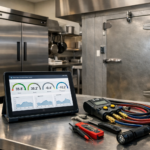
Look at the thermostat, digital controller, or building management interface. Confirm that the setpoint has not been changed accidentally. In busy restaurants, stock carts, cleaning, or staff handling can bump controls. For some cases, a controller may show an alarm code, sensor error, defrost message, or unusually high temperature reading.
Write down the displayed temperature and setpoint before changing anything. If you do adjust a setting back to normal, record the time. This information helps a commercial refrigeration technician understand whether the system is responding or whether there may be a sensor, control, airflow, refrigerant, or mechanical issue.
3. Inspect doors, gaskets, hinges, and closers
Warm air infiltration is one of the most common causes of temperature problems. Check whether walk-in cooler or freezer doors are closing fully. Look for torn gaskets, sagging hinges, damaged sweeps, loose latches, blocked thresholds, or ice preventing the door from sealing. On reach-in refrigerators, inspect magnetic gaskets and make sure shelves or pans are not holding the door slightly open.
If you can see daylight around a closed door or feel warm air entering, the system may run constantly and still struggle to reach temperature. Door and gasket problems can also lead to sweating walls, ice buildup, water on the floor, and evaporator coil icing. For a restaurant cooler repair call, photos of the gasket, hinge, and threshold can be helpful.
4. Look for blocked airflow
Commercial refrigeration equipment needs air movement. Inside the box, product stacked against evaporator fans can block cold air distribution. Outside the box, boxes, dust, grease, or stored items around the condensing unit can block heat rejection. Airflow restrictions can make a unit run warm, short cycle, ice up, or overheat.
Check that product is not stacked directly against fan guards or return-air paths. In walk-in coolers and freezers, leave space around evaporators so air can circulate. In reach-ins, avoid overloading shelves or covering vents with containers. Around condensers, remove cardboard, linen carts, storage bins, or trash that restrict ventilation. Do not remove covers or guards while the unit is operating.
5. Check condenser coil condition
The condenser coil releases heat from the refrigeration system. In Massachusetts restaurants, bakeries, stores, and hotel kitchens, condenser coils can collect grease, dust, flour, lint, and debris. A dirty condenser can cause high head pressure, poor cooling, compressor stress, and shutdowns.
If the coil is accessible without disassembly, visually inspect it. If it is coated with debris, the system may need cleaning and maintenance. Some light surface dust may be manageable during routine preventive maintenance, but heavily impacted coils should be handled carefully to avoid bending fins or pushing debris deeper into the coil. If the system is already warm, call for service rather than relying on cleaning alone.
6. Note ice buildup, frost patterns, and water leaks
Ice and frost tell a story. Light frost may be normal in certain areas during operation, but heavy ice on an evaporator coil, fan guard, door frame, drain pan, or floor usually indicates a problem. Causes can include door air leaks, failed evaporator fans, defrost timer issues, bad heaters, low refrigerant, blocked drains, or control problems.
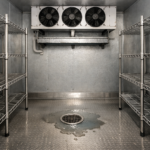
Water leaks can come from clogged condensate drains, cracked pans, misrouted drain lines, ice melting after a defrost issue, or insulation problems. In winter, some Massachusetts buildings also experience temperature swings in mechanical spaces that affect drains and condensers. Take photos, note where water is appearing, and keep the area safe for staff and customers.
7. Listen for unusual sounds
Commercial freezer repair and cooler repair often start with symptom details. Listen for clicking, buzzing, rattling, grinding, squealing, short starts, or fans hitting ice. A compressor that clicks and shuts off may be overloaded or failing. A fan motor that hums but does not spin may have a motor, capacitor, obstruction, or control issue. A rattling condenser may have loose hardware or vibration from worn components.
Do not place hands near moving fan blades. Simply note the sound, location, and whether it is constant or intermittent. If possible, record a short video from a safe distance. This can help Royal Cooling understand the issue before dispatch.
8. Review recent changes
Many refrigeration problems appear after a change in use or environment. Ask your team: Was the unit recently loaded with warm product? Was there a power outage? Did someone clean behind the unit? Was a delivery left in the doorway? Did the kitchen hood, HVAC system, or nearby heat source change? Was maintenance recently performed by another vendor?
Massachusetts businesses in Boston, Quincy, Newton, Lowell, Springfield, Worcester, and Cambridge often face seasonal load changes. Summer humidity, winter mechanical room conditions, heavy delivery days, and holiday volume can all expose weak components. These details help determine whether the system is overloaded temporarily or developing a deeper mechanical fault.
When is a commercial refrigerator problem an emergency?
A refrigeration issue becomes an emergency when there is immediate risk to product, safety, business operations, or equipment. Emergency refrigeration repair is appropriate when product temperatures are rising quickly, a walk-in freezer is losing temperature, the unit is completely down, electrical symptoms appear, or there is evidence of a refrigerant leak. If you are unsure, it is better to call and describe the symptoms than wait until inventory is compromised.
| Symptom | Likely urgency | What to do before service |
|---|---|---|
| Box temperature slightly high but stable, doors closing, product still within your safe range | Prompt service | Record temperatures, reduce door openings, check airflow, call for scheduling |
| Temperature rising steadily in a restaurant cooler or grocery case | Urgent | Move product if possible, document readings, call a commercial refrigeration technician |
| Walk-in freezer not holding product frozen | Urgent to emergency | Keep door closed, relocate critical inventory, request walk-in freezer service |
| Breaker trips repeatedly, burning smell, sparks, or hot electrical components | Emergency | Stop using the unit, keep staff away, call for professional repair |
| Heavy ice on evaporator, fans stopped, or water leaking onto floor | Urgent | Keep area safe, avoid chipping ice from coils, call for diagnosis |
| Suspected refrigerant leak, oil stains, hissing, or sudden loss of cooling | Emergency | Ventilate if appropriate, avoid tampering, call a qualified technician |
How restaurants can reduce downtime during refrigeration failure
Downtime planning is part of good refrigeration troubleshooting. Start by assigning one manager to handle the situation. That person should track temperatures, take photos, communicate with staff, and speak with the service company. Multiple people making separate changes can make the problem harder to diagnose.
Next, limit door openings. Post a temporary note on the walk-in cooler or freezer door if needed. Move fast-moving items to another working cooler where practical, but avoid overloading the backup unit. Overloading a second cooler can create a second failure. If you have nearby locations, catering equipment, refrigerated trucks, or approved cold storage options, follow your internal emergency plan.
Separate high-value and high-risk inventory first. Restaurants may prioritize proteins, dairy, seafood, sauces, and prepared foods. Liquor stores may prioritize wine coolers and specialty inventory. Hotels and facility managers may need to protect banquet storage, employee cafeteria stock, or tenant equipment. Grocery stores and convenience stores should document affected cases and preserve temperature records.
Finally, call early. A system that is “almost holding” in the morning may fail during the lunch rush or after a hot delivery. In Boston metro buildings, rooftop equipment, tight mechanical rooms, and shared loading areas can add access time. Early communication helps the repair company understand access, parking, roof entry, loading dock rules, and after-hours procedures.
What information should you give a refrigeration repair company?
When you contact Royal Cooling at 781-899-4441 or through the contact page, the following details help the team understand the urgency and prepare for the service visit:
- Business name, address, city, and best on-site contact
- Type of business, such as restaurant, grocery store, hotel, liquor store, convenience store, or facility
- Equipment type: walk-in cooler, walk-in freezer, reach-in refrigerator, prep table, display case, wine cooler, or ice-related equipment
- Current temperature, normal setpoint, and product temperature if available
- When the issue started and whether it is getting worse
- Visible symptoms: ice, water, alarms, unusual sounds, warm air, blank display, tripped breaker, or door problems
- Equipment brand, model, and serial number if accessible
- Photos or video of the controller, coil area, door gasket, condenser, and alarm display
- Access details: roof access, mechanical room location, parking, loading dock, security, and hours of operation
- Whether this is an emergency refrigeration repair request or a prompt but non-emergency repair
If you are not sure about the model or system layout, do not worry. A technician can identify the equipment on site. The most important details are what the unit is doing now, what it normally does, and how quickly the temperature is changing.
What a commercial refrigeration technician checks on site
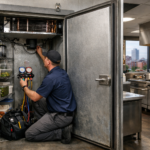
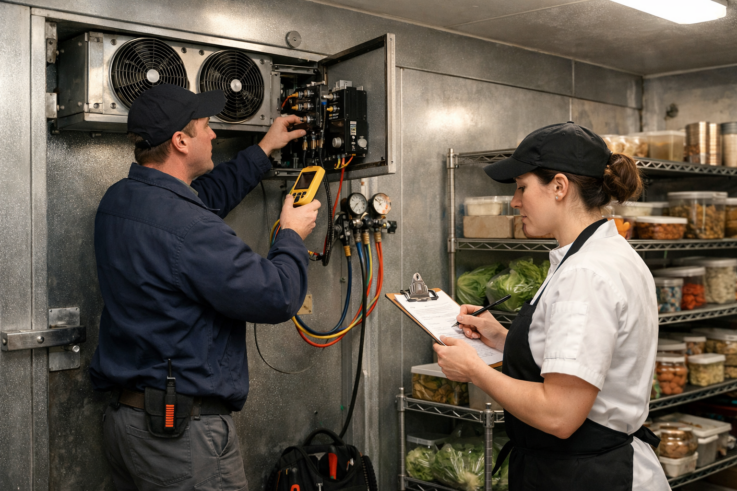
Once on site, a commercial refrigeration technician does more than look at the thermostat. The diagnosis may include checking electrical supply, contactors, capacitors, relays, pressure controls, safety switches, compressor operation, evaporator fans, condenser fans, defrost components, drain heaters, thermostats, sensors, refrigerant pressures, superheat, subcooling, airflow, coil condition, and door integrity.
For walk-in cooler repair, the technician may verify whether the evaporator coil is properly feeding refrigerant, whether fans are moving air across the coil, whether the defrost schedule is correct, and whether warm air infiltration is overwhelming the system. For commercial freezer repair, the technician may pay close attention to defrost heaters, drain line heat, door heaters, ice patterns, low-temperature controls, and compressor performance.
For reach-in refrigerators and wine coolers, the diagnosis may include checking plugged condensers, failed fan motors, low refrigerant charge, temperature sensors, compressor start components, blocked air passages, and door seals. A good service visit also considers the surrounding environment: kitchen heat, ventilation, equipment spacing, roof conditions, and how the unit is loaded during normal business.
Repair vs replace: when does replacement make sense?
Many commercial refrigeration issues are repairable. Door gaskets, fan motors, controls, start components, drains, defrost parts, and some electrical components can often be replaced without replacing the entire system. Refrigerant leak repair, compressor replacement, and major coil issues require a closer look at age, refrigerant type, equipment condition, and business needs.
Replacement may be worth discussing if the equipment has repeated failures, uses an older refrigerant that is becoming harder to support, cannot maintain temperature even after proper repair, has major cabinet deterioration, or costs too much to operate compared with modern equipment. For a supermarket, hotel, or busy Massachusetts restaurant, the decision should include downtime risk, not just repair price. A lower-cost repair may not be the best answer if the unit is likely to fail again during peak service.
Royal Cooling can help evaluate practical options without turning every service call into a sales pitch. The right answer may be repair, targeted component replacement, improved preventive maintenance, or planned equipment replacement during a controlled schedule.
Preventive maintenance tips after the repair
After the immediate problem is handled, preventive maintenance helps reduce repeat downtime. Commercial refrigeration maintenance usually includes condenser coil cleaning, evaporator inspection, drain cleaning, temperature control checks, fan operation checks, electrical inspection, door gasket review, defrost verification, and performance documentation.
Businesses with heavy kitchen grease, flour, lint, outdoor condensers, rooftop units, or high door traffic may need more frequent maintenance than light-use equipment. A restaurant in Cambridge or Boston may have different operating conditions than a storage facility in Worcester County or a convenience store in Lowell. The right schedule depends on equipment type, environment, product risk, and usage.
Maintenance does not eliminate every failure, but it can catch weak fans, dirty coils, blocked drains, deteriorating gaskets, and control issues before they become emergency calls. If your business has multiple coolers and freezers, ask about a preventive maintenance plan that prioritizes your most critical units first.
Massachusetts service-area context
Royal Cooling serves Massachusetts commercial refrigeration customers across the Boston metro and nearby counties, including areas such as Suffolk County, Middlesex County, and Worcester County. Service requests may come from restaurants in Boston, property managers in Newton, markets in Quincy, kitchens in Waltham, facilities in Framingham, grocery operations in Worcester, businesses in Lowell, and hospitality or retail sites in Springfield.
Because every building is different, it helps to explain access conditions when you call. Rooftop condensers, basement compressors, shared mechanical rooms, tight alleys, downtown parking, loading dock rules, and security procedures can all affect how quickly a technician can reach the equipment and begin diagnosis. For broader location information, visit the Royal Cooling service area page.
Frequently asked questions
What should I check before calling a commercial refrigeration technician in Massachusetts?
Check power, thermostat settings, door seals, airflow, condenser cleanliness, ice buildup, water leaks, alarms, and current temperatures. Do not open electrical panels or disturb refrigerant lines. If temperatures are rising or safety symptoms appear, call a technician.
When is a commercial refrigerator problem an emergency?
It is an emergency when product temperatures are rising quickly, the unit is completely down, a breaker keeps tripping, there is a burning smell, a suspected refrigerant leak, or a walk-in freezer is no longer keeping product frozen.
How can restaurants reduce downtime during refrigeration failure?
Assign one manager to coordinate, limit door openings, move critical product to approved backup storage, document temperatures, avoid overloading other coolers, and call for service early with clear equipment and access details.
What information should I give a refrigeration repair company before they arrive?
Provide the equipment type, location, current temperature, setpoint, symptoms, when the issue started, model and serial number if available, photos of alarms or ice, business hours, parking, roof access, and an on-site contact.
Can a dirty condenser cause a commercial cooler to run warm?
Yes. A dirty condenser can prevent the system from rejecting heat, causing warm temperatures, compressor stress, high pressure issues, and shutdowns. Heavy buildup should be addressed through proper maintenance and service.
Should I turn off a malfunctioning walk-in cooler or freezer?
Do not shut equipment off unless there is an electrical hazard, burning smell, smoke, flooding risk, or you are instructed to do so. If the unit is unsafe, keep staff away and call a qualified technician.
Does Royal Cooling service both walk-in coolers and walk-in freezers?
Yes. Royal Cooling services commercial refrigeration equipment including walk-in coolers, walk-in freezers, reach-in refrigerators, wine coolers, freezer systems, and preventive refrigeration maintenance for Massachusetts businesses.
Call Royal Cooling for commercial refrigeration repair in Massachusetts
If your cooler, freezer, reach-in, wine cooler, or walk-in box is not maintaining temperature, do the safe checks above and contact Royal Cooling before the problem escalates. For commercial refrigeration repair in Massachusetts, restaurant cooler repair, commercial freezer repair, walk-in cooler repair, walk-in freezer service, preventive maintenance, or emergency refrigeration repair guidance, call 781-899-4441 or request service through the Royal Cooling contact page.