Commercial Refrigeration for Massachusetts Restaurants: How to Choosef
Short answer: choosing a commercial refrigeration partner in Massachusetts
Short answer: The right commercial refrigeration service Massachusetts partner should have local coverage, trained refrigeration technicians, experience with restaurant equipment, emergency repair capability, and a documented preventive maintenance process. Restaurants should ask how the company handles walk-in cooler repair, walk-in freezer service, after-hours calls, parts sourcing, temperature problems, and maintenance records before a breakdown happens.
Why Massachusetts restaurants should choose a service partner before something breaks
Commercial refrigeration problems rarely happen at a convenient time. A walk-in cooler that was holding temperature during prep can drift warm during dinner service. A reach-in refrigerator can stop pulling down after a busy lunch rush. A walk-in freezer can begin icing up over a weekend when no one is watching the evaporator. For restaurants, commercial kitchens, liquor stores, hotels, supermarkets, grocery stores, and convenience stores across Massachusetts, refrigeration is not just another building system. It protects inventory, food quality, production schedules, and daily revenue.
Choosing a restaurant refrigeration service company only after a failure puts your team in a reactive position. You may not know who answers the phone, what equipment they service, whether they understand your kitchen layout, or how they prioritize emergency refrigeration repair. A better approach is to evaluate a local provider before you have a warm cooler, a frosted freezer, a failed compressor, or a temperature log that is moving in the wrong direction.
Royal Cooling works with commercial refrigeration equipment used by restaurants and food service operations in Massachusetts, including walk-in coolers, walk-in freezers, reach-in refrigerators, wine coolers, and freezer systems. Whether your operation is in Boston, Cambridge, Worcester, Quincy, Newton, Waltham, Framingham, Lowell, Springfield, or another part of the service area, the goal is the same: establish a reliable plan before downtime turns into an urgent inventory risk.
What a qualified commercial refrigeration technician should understand
A strong commercial refrigeration technician does more than swap parts. Restaurant refrigeration problems involve electrical controls, airflow, refrigerant circuit performance, defrost systems, drains, door seals, fan motors, thermostats, pressure controls, condensers, evaporators, and the way staff use the equipment during service. In Massachusetts, technicians also need to consider seasonal conditions: humid summers, cold outdoor condenser locations, heavy kitchen loads during peak dining hours, and older building conditions in parts of the Boston metro, Worcester County, Middlesex County, and Suffolk County.
When you compare a service provider, ask whether the technician can evaluate the full system instead of only the obvious symptom. A walk-in cooler running warm may be caused by a dirty condenser coil, a failing evaporator fan, a refrigerant leak, a door gasket pulling in humid air, a blocked drain, a thermostat issue, or an overloaded box. A walk-in freezer not holding temperature may have defrost clock problems, heater issues, door infiltration, compressor trouble, low refrigerant charge, or restricted airflow from product stacked too close to the evaporator.
Good diagnostics matter because the cheapest visible repair is not always the correct repair. A qualified refrigeration company should explain what was checked, what failed, why the failure matters, and what options exist for repair, maintenance, or replacement planning.
Comparison table: what restaurants should look for
| Evaluation factor | Why it matters | Questions to ask |
|---|---|---|
| Local Massachusetts coverage | Restaurants need a provider familiar with the region and able to serve locations across the relevant service area. | Do you service my city or county, such as Boston metro, Worcester County, Middlesex County, or Suffolk County? |
| Commercial refrigeration experience | Restaurant equipment has different demands than residential cooling or basic HVAC. | Do your technicians service walk-in coolers, walk-in freezers, reach-in refrigerators, wine coolers, and freezers? |
| Emergency repair process | A clear process helps reduce confusion during a temperature emergency. | How do you handle emergency refrigeration repair calls, triage, and communication? |
| Preventive maintenance plan | Preventive refrigeration maintenance can catch coil, airflow, drain, fan, and control issues early. | What is included in a maintenance visit, and do you provide service notes? |
| Diagnostic approach | Accurate troubleshooting helps avoid repeated failures and unnecessary parts. | What does a technician check before recommending repair or replacement? |
| Communication and documentation | Managers need clear findings, priorities, and next steps. | Will we receive explanations, photos when useful, and recommendations for urgent versus non-urgent issues? |
How do I choose a commercial refrigeration technician in Massachusetts?
Start with equipment fit and service-area fit. A technician who mainly works on residential air conditioning may not be the right choice for a busy commercial kitchen. You want a provider that understands restaurant refrigeration service, has experience with commercial compressors and controls, and can work around the realities of prep, service, deliveries, and health-code temperature expectations.
Look for a company that asks about your equipment list, box temperatures, recent symptoms, service history, and operating schedule. For example, a restaurant in Cambridge with a compact kitchen may have different access challenges than a supermarket in Worcester or a hotel kitchen in Boston. A convenience store in Quincy may rely heavily on reach-in refrigerators and display cases, while a restaurant in Newton or Waltham may be more concerned with walk-in cooler repair, wine cooler performance, and freezer reliability.
Before signing up, confirm that the company services your type of equipment, not just your general location. Royal Cooling provides commercial refrigeration service for many common food service applications, including walk-in coolers, walk-in freezers, wine coolers, reach-ins, and freezer repair needs. To check service availability, visit the Royal Cooling service area page or call 781-899-4441.
What should restaurants look for in a refrigeration service company?
Restaurants should look for a company that can support both planned maintenance and unplanned repair. A good HVAC contractor Massachusetts restaurants rely on should be comfortable with refrigeration-specific work, not only heating and air conditioning. Commercial refrigeration has its own failure patterns, pressure relationships, defrost requirements, and temperature-control needs.
Important qualities include:
- Clear refrigeration experience: Ask about walk-in cooler repair, walk-in freezer service, reach-in refrigerators, wine coolers, and freezer repair.
- Preventive maintenance capability: The company should inspect coils, fans, drains, electrical components, controls, door gaskets, hinges, temperatures, and visible refrigerant concerns.
- Emergency process: The company should explain how calls are handled when a cooler is warming up, a freezer is thawing, or product is at risk.
- Local awareness: Massachusetts buildings vary widely, from older Boston and Cambridge properties to larger facilities in Framingham, Lowell, Worcester, and Springfield.
- Documentation: After service, you should understand what was found, what was corrected, what should be monitored, and what may require future repair.
- Professional communication: Managers need direct language, practical priorities, and no pressure around non-urgent recommendations.
Symptoms that show your refrigeration plan may not be enough
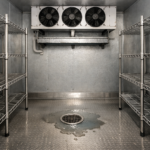
If your kitchen staff is constantly adjusting thermostats, moving product, chipping ice, or calling for one-off repairs, your current refrigeration plan may not be protecting the operation. Warning signs include walk-in cooler temperatures that rise overnight, freezer ice buildup around the evaporator, water near the box, loud compressor starts, short cycling, product freezing in a cooler, product softening in a freezer, repeated breaker trips, or door gaskets that no longer seal.
Some symptoms point to maintenance needs, while others may indicate an urgent repair. Dirty condenser coils, poor airflow, worn gaskets, clogged drains, loose electrical connections, and fans coated with debris can often be addressed during preventive refrigeration maintenance. A compressor that will not start, a fan motor that has failed, a refrigerant leak, a control failure, or a freezer that cannot maintain safe operating temperature may require prompt emergency refrigeration repair.
The key is not to wait until the system fails completely. If a walk-in cooler is slowly losing performance, an experienced technician can often find the cause before the compressor is under severe stress. If a walk-in freezer is icing up repeatedly, the technician can evaluate defrost controls, heaters, termination controls, door infiltration, and drain performance before the coil becomes a block of ice.
Should my restaurant use the same company for emergency repairs and maintenance?
In many cases, yes. Using the same company for emergency repairs and preventive refrigeration maintenance can improve continuity. A maintenance technician who has service history on your walk-in cooler, freezer, or reach-in refrigerator may understand normal temperature patterns, recurring concerns, parts previously replaced, and equipment nearing the end of its useful life. That context can make troubleshooting more efficient during a breakdown.
However, the company must be capable of both types of work. A maintenance-only vendor that cannot support urgent refrigeration issues may leave you scrambling. An emergency-only repair company that never sees the equipment until it fails may miss opportunities to prevent downtime. The best fit is a service partner that can inspect systems on a planned basis and respond appropriately when a critical issue occurs.
For Massachusetts restaurants, especially those with multiple pieces of refrigeration equipment, continuity matters. A facility manager responsible for a restaurant in Boston, a kitchen in Waltham, and a store in Framingham benefits from consistent maintenance records and a provider that understands the equipment across locations.
What questions should I ask before signing up for commercial refrigeration service?
Before you choose a commercial refrigeration service Massachusetts provider, ask direct questions. The answers will reveal whether the company is organized, refrigeration-focused, and realistic about your needs.
- Do you service commercial walk-in coolers, walk-in freezers, reach-in refrigerators, wine coolers, and freezer systems?
- Do you provide both preventive refrigeration maintenance and emergency refrigeration repair?
- What does a standard maintenance visit include?
- How do you document findings after a visit?
- What information should my manager provide when calling about a warm cooler or freezer problem?
- How do you determine whether equipment should be repaired or replaced?
- Do you service restaurants and commercial kitchens in my part of Massachusetts?
- Can you help prioritize urgent safety or inventory-risk issues versus maintenance recommendations?
A strong provider should welcome these questions. Clear answers now are better than confusion during a Friday-night refrigeration problem.
What a technician checks during a service visit
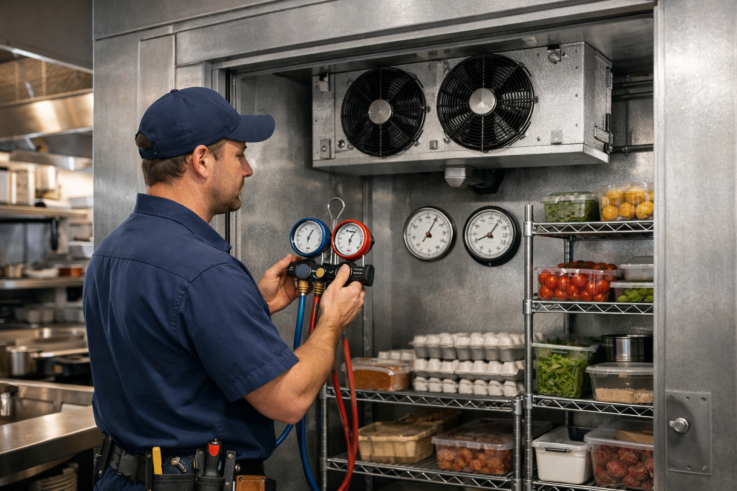
During a refrigeration service visit, the technician should inspect the system in a structured way. The exact steps depend on the equipment and complaint, but common checks include verifying box temperature, checking thermostat or controller settings, inspecting evaporator and condenser coils, confirming fan operation, looking for ice patterns, testing drain performance, checking door gaskets and closers, listening for compressor abnormalities, inspecting electrical connections, and reviewing pressure or temperature conditions where appropriate.
For a walk-in cooler repair call, the technician may look for airflow restrictions, product blocking the evaporator, a failing fan motor, dirty condenser coil, refrigerant issues, or door air leaks. For walk-in freezer service, the focus may include defrost timing, heater operation, drain line freezing, door infiltration, coil icing, and compressor performance. For reach-in refrigerators, the technician may inspect condenser cleanliness, fan operation, control calibration, door seals, and cabinet loading.
The best visits end with practical recommendations. Some items may need immediate repair. Others may be scheduled during off-hours or added to a preventive maintenance checklist. If equipment is aging, the technician may recommend monitoring compressor performance, repair frequency, parts availability, energy use, and downtime risk before a replacement decision is made.
Preventive maintenance tips for Massachusetts restaurant teams
Even with a professional maintenance plan, restaurant teams play an important role. Keep aisles clear around walk-in doors, avoid blocking evaporator fans with product, report torn gaskets early, make sure doors close fully, and keep cardboard or debris away from condenser airflow. Staff should not ignore recurring alarms, standing water, frost patterns, or temperature swings.
Managers should record temperature trends rather than only single readings. A cooler that rises a few degrees every evening may be showing load, airflow, or door-infiltration problems. A freezer that recovers slowly after deliveries may need a technician to evaluate coil condition, defrost operation, door seals, and system capacity. In humid Massachusetts summers, small gasket and door issues can quickly lead to frost, condensation, and longer run times.
Professional preventive refrigeration maintenance should be scheduled based on equipment type, kitchen volume, environment, and risk tolerance. High-volume restaurants, grocery stores, convenience stores, and hotels may need more frequent attention than low-use equipment. If you are not sure what cadence makes sense, Royal Cooling can help review your equipment and recommend a practical plan.
When to repair versus replace refrigeration equipment
Not every failure means replacement, and not every repair is a smart long-term investment. The repair-or-replace decision depends on the age of the equipment, the cost and availability of parts, repair history, condition of the box or cabinet, compressor health, refrigerant considerations, insulation condition, and how critical the unit is to daily operations.
Repair may make sense when the equipment is generally sound, the failure is isolated, parts are available, and the repair restores reliable operation. Replacement planning may be worth discussing when the unit has repeated compressor or refrigerant problems, severe corrosion, failing insulation, chronic temperature instability, or repair costs that are becoming frequent and disruptive. For walk-in coolers and freezers, the technician may also evaluate whether the box, doors, panels, and refrigeration system are aging at different rates.
A reputable refrigeration company should not push replacement without explaining the reason. The right recommendation should connect to performance, risk, repair history, and your business needs.
Emergency signs that should not wait
Call for help promptly if a walk-in cooler is above its normal operating range and continuing to climb, a freezer is thawing product, the compressor is making unusual noises, fans are not running, a breaker trips repeatedly, you smell electrical overheating, or you see heavy ice preventing airflow through the evaporator. You should also treat repeated temperature alarms as more than a nuisance. They are often the first sign that a system is losing capacity or struggling under load.
When calling for service, provide the equipment type, location, current temperature, normal setpoint, how long the issue has been happening, whether fans are running, whether there is ice, whether doors are sealing, and any recent service history. This helps the service team understand urgency and prepare for the visit.
How Royal Cooling supports Massachusetts commercial refrigeration customers
Royal Cooling provides commercial refrigeration service for restaurants, commercial kitchens, liquor stores, convenience stores, supermarkets, grocery stores, hotels, facility managers, property managers, and homeowners with specialty wine coolers or freezer needs. Services include commercial refrigeration, walk-in freezers, walk-in coolers, wine coolers, reach-in refrigerators, freezer repair, and preventive refrigeration maintenance.
If you are comparing providers in Massachusetts, use the questions in this guide to evaluate readiness before something breaks. The right partner should understand your equipment, communicate clearly, and help you reduce avoidable downtime. Royal Cooling serves customers across Massachusetts service areas, with city examples including Boston, Worcester, Cambridge, Lowell, Springfield, Quincy, Newton, Waltham, and Framingham. Service availability can vary by location and schedule, so it is best to confirm your address directly.
Planning ahead is easier than reacting to a warm cooler. To discuss commercial refrigeration service, maintenance, or repair support, call Royal Cooling at 781-899-4441 or use the contact page. You can also review the service area to learn more about Massachusetts coverage.
FAQ: commercial refrigeration service for Massachusetts restaurants
How do I choose a commercial refrigeration technician in Massachusetts?
Choose a technician with commercial refrigeration experience, not only general HVAC experience. Confirm they service your equipment type, understand restaurant operations, provide maintenance and repair support, and serve your Massachusetts location.
What should restaurants look for in a refrigeration service company?
Look for experience with walk-in coolers, walk-in freezers, reach-in refrigerators, wine coolers, preventive maintenance, emergency repair processes, clear documentation, and practical communication with managers and facility teams.
Should my restaurant use the same company for emergency repairs and maintenance?
Often, yes. One provider can build service history, understand recurring issues, and maintain continuity. The company should be capable of both scheduled preventive maintenance and urgent refrigeration repair.
What questions should I ask before signing up for commercial refrigeration service?
Ask what equipment they service, what maintenance includes, how emergency calls are handled, how findings are documented, whether they cover your area, and how they advise on repair versus replacement.
What are signs my walk-in cooler needs professional service?
Warning signs include rising temperatures, short cycling, loud operation, water on the floor, damaged gaskets, heavy condensation, unusual frost, fan problems, or product not staying consistently cold.
How often should commercial refrigeration equipment be maintained?
Frequency depends on equipment type, kitchen volume, environment, and risk. Busy restaurants and food retailers often need more regular preventive maintenance than lightly used equipment.
Can an HVAC contractor in Massachusetts also handle refrigeration?
Some HVAC contractors handle refrigeration, but you should confirm specific commercial refrigeration experience. Restaurant equipment requires knowledge of controls, defrost, airflow, refrigerant circuits, and food-service operating conditions.
When should I consider replacing instead of repairing refrigeration equipment?
Consider replacement when repairs are frequent, major components are failing, parts are difficult to source, temperatures remain unreliable, or the equipment condition creates ongoing downtime risk.