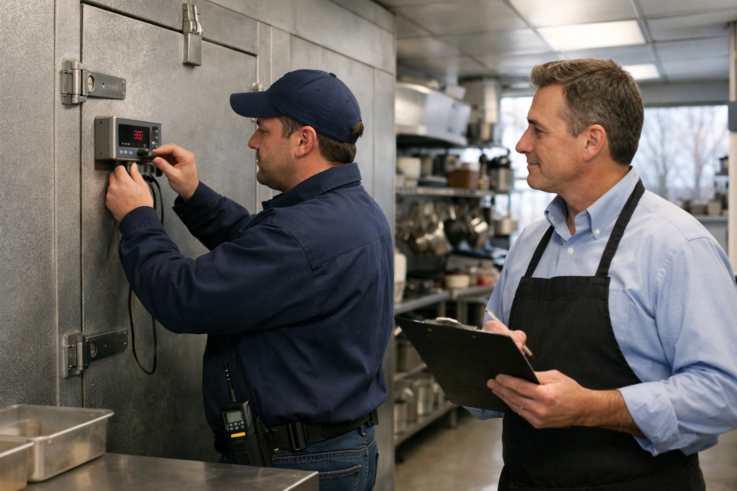
Commercial Refrigeration Failure During a Massachusetts Health Check:
Short answer: If commercial refrigeration fails during a Massachusetts health inspection, move potentially affected food to verified cold storage, record product and air temperatures, stop using questionable equipment, and call a qualified commercial refrigeration technician. Fast repair, clear temperature logs, and written service documentation help restaurants, grocery stores, hotels, and commercial kitchens show corrective action and protect food safety.
A failed walk-in cooler or reach-in refrigerator is stressful on any day. During a health inspection, it can feel like a full business emergency. For Massachusetts food-service operators, a restaurant cooler temperature problem is not just a mechanical inconvenience; it can threaten inventory, interrupt service, trigger corrective action, and put your team under immediate pressure to prove that food is being held safely.
Royal Cooling provides commercial refrigeration service for Massachusetts businesses that rely on walk-in coolers, walk-in freezers, reach-in refrigerators, wine coolers, prep tables, display cases, and other cold-storage equipment. If you are dealing with health inspection refrigeration issues in the Boston metro area, Worcester County, Middlesex County, Suffolk County, or nearby communities such as Boston, Worcester, Cambridge, Lowell, Springfield, Quincy, Newton, Waltham, or Framingham, the goal is the same: stabilize the situation, protect the product, and get a trained technician involved quickly.
If your cooler is running warm now, call Royal Cooling at 781-899-4441 or use the contact page to request help. This article explains what to fix fast, when the issue becomes an emergency, and how to document commercial refrigeration repair in Massachusetts for inspection follow-up.
Why Refrigeration Problems Matter During a Massachusetts Health Inspection
Commercial kitchens and food businesses depend on safe cold holding. When a walk-in cooler, reach-in refrigerator, salad prep table, beer cooler, deli case, or freezer cannot maintain proper temperatures, inspectors may ask questions about time, temperature, corrective action, equipment condition, and whether food has been protected from unsafe holding conditions.
Common inspection concerns include food stored above safe cold-holding temperatures, missing or inconsistent temperature logs, thermometers that do not match the actual cabinet temperature, blocked airflow inside a cooler, door gaskets that do not seal, active leaks, standing water, ice buildup, dirty condenser coils, or equipment that appears unable to recover after deliveries or heavy use.
Not every warm reading means the equipment has completely failed. A door left open during a busy lunch rush, a large delivery of warm product, or poor loading practices can temporarily raise air temperature. But if the box does not recover, if product temperatures are elevated, or if the same unit has repeated issues, it is time to treat the situation as a food safety refrigeration service priority.
What Should a Restaurant Do If a Cooler Is Running Warm During a Health Inspection?
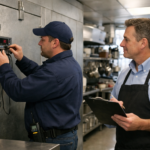
When an inspector is present and a cooler is running warm, the best response is calm, visible corrective action. Do not ignore the reading, reset the control without investigating, or continue loading food into a questionable unit. Instead, follow a practical process your manager and kitchen team can repeat.
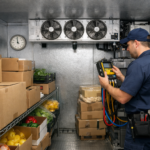
- Verify the temperature. Use a calibrated food thermometer to check product temperatures, not only the display on the thermostat or controller. Record the time, equipment name, air temperature, and product temperature.
- Stop adding product. Do not place new deliveries, prepped food, or ready-to-eat items into a cooler that is not recovering.
- Move food if needed. Transfer product to another verified cold unit, a working walk-in cooler, refrigerated truck, or approved temporary cold storage if available.
- Separate questionable items. Clearly identify food that may require manager review or disposal according to your food safety procedures.
- Check obvious causes. Look for open doors, blocked fans, damaged gaskets, iced evaporator coils, tripped breakers, dirty condenser coils, or a controller that has been accidentally changed.
- Call for service. A qualified commercial refrigeration technician can diagnose whether the issue is mechanical, electrical, airflow-related, refrigerant-related, or caused by improper use.
- Document everything. Keep temperature logs, corrective actions, service invoices, technician notes, and any follow-up readings after repair.
This type of response shows that your business takes health inspection refrigeration issues seriously. It also gives the technician useful information, which can speed up commercial kitchen refrigeration repair and reduce unnecessary downtime.
Refrigeration Problems That Can Put a Restaurant at Risk During Inspection
Some refrigeration problems are obvious, while others build slowly until an inspector or manager catches them. The following issues often deserve immediate attention in Massachusetts restaurants, convenience stores, supermarkets, hotels, schools, corporate cafeterias, and commissary kitchens.
Warm Walk-In Cooler or Reach-In Refrigerator
A unit that cannot hold its setpoint is the most urgent sign. Possible causes include a failed evaporator fan, dirty condenser coil, low refrigerant charge, leaking door gasket, bad temperature control, restricted airflow, a failing compressor, or an oversized product load. If the unit is holding food and not recovering, call for commercial refrigeration repair in Massachusetts promptly.
Freezer Not Freezing Hard Enough
Soft ice cream, thawing product, frost-covered boxes, or product that refreezes after partially thawing can create serious quality and food safety concerns. A walk-in freezer service call may reveal defrost problems, door heater failure, refrigerant issues, evaporator icing, a weak compressor, or air infiltration around the door.
Ice Buildup on Coils, Fans, or Doors
Ice can block airflow and prevent the evaporator from absorbing heat. It may be caused by failed defrost heaters, a bad defrost timer or controller, fan delay issues, open doors, torn gaskets, clogged drains, or humidity infiltration. Chipping ice away is not a complete repair and can damage coils or refrigerant lines.
Water Leaks and Standing Water
Standing water near food storage areas can raise inspection concerns. In refrigeration equipment, water may come from a clogged condensate drain, frozen drain line, cracked drain pan, poor line pitch, or excessive coil icing. Water on a walk-in floor also creates slip hazards and can damage flooring over time.
Door Gasket, Closer, and Hinge Failures
A torn gasket or door that does not self-close allows warm, humid air to enter the box. The system then runs longer, coils ice up, temperatures fluctuate, and energy use rises. During an inspection, visible gasket damage is easy to notice and often simple to document for repair.
Dirty Condenser Coils and Poor Ventilation
Commercial refrigeration rejects heat through the condenser. When coils are packed with grease, dust, flour, lint, or debris, head pressure can rise and cooling performance can drop. This is common in kitchens, bakeries, convenience stores, and grocery environments where equipment is surrounded by heat-producing appliances.
Inaccurate Thermometers or Controls
If the display says one thing and product temperatures say another, your team may not know the true condition of the food. A technician can check sensor placement, controller calibration, probe condition, wiring, and actual operating performance.
Emergency Service or Scheduled Repair: What Requires Fast Action?
Not every refrigeration issue requires the same response. The table below can help managers decide when to treat a problem as emergency refrigeration repair versus a scheduled service or maintenance item.
| Situation | Inspection or Food Safety Risk | Recommended Response |
|---|---|---|
| Cooler holding perishable food is running warm and not recovering | High | Move product if needed, document temperatures, call for emergency refrigeration repair |
| Walk-in freezer product is soft, thawing, or refreezing | High | Protect inventory, limit door openings, call for walk-in freezer service quickly |
| Evaporator coil is iced over and fans are blocked | High to moderate | Stop relying on the unit for critical storage and request commercial kitchen refrigeration repair |
| Door gasket is torn but temperature is stable | Moderate | Schedule repair promptly before temperature loss or icing develops |
| Condenser coil is dirty but unit is still at temperature | Moderate | Schedule cleaning and preventive maintenance before peak load conditions |
| Temperature log shows occasional minor fluctuation during delivery | Low to moderate | Verify product temperatures, review loading practices, monitor recovery, schedule service if recurring |
| Controller display is blank, breaker trips, or compressor will not start | High | Stop using the equipment and call a commercial refrigeration technician |
When Does a Refrigeration Issue Require Emergency Service in a Commercial Kitchen?
A refrigeration issue usually requires emergency service when the equipment is actively holding perishable product and cannot maintain safe temperatures, when product temperatures are rising, when a freezer is thawing, when there is an electrical burning smell, when breakers trip repeatedly, when the compressor or fans fail to run, or when multiple units are affected. It is also urgent if an inspection is underway and the equipment condition may determine whether your corrective action is accepted.
For restaurants in Boston, grocery stores in Worcester, hotels in Cambridge, liquor stores in Quincy, food prep facilities in Waltham, or convenience stores in Framingham, the operational cost of waiting can be higher than the service call. Lost inventory, menu disruption, and inspection follow-up can all affect business continuity.
If you are unsure whether it is an emergency, call Royal Cooling at 781-899-4441. Describe the equipment, current air temperature, product temperature, how long the issue has been happening, whether food is inside, and what troubleshooting steps your team already took.
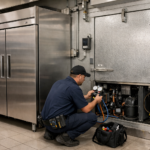
What a Commercial Refrigeration Technician Checks First
A trained commercial refrigeration technician does more than lower the thermostat. Turning the setpoint down may hide symptoms temporarily while the real problem gets worse. During a diagnostic visit, the technician may check:
- Air and product temperature readings compared with the controller display
- Evaporator fan operation, airflow direction, and blocked coil conditions
- Condenser coil cleanliness and condenser fan operation
- Compressor starting components, amperage, cycling, and operating condition
- Refrigerant pressures, superheat, subcooling, and signs of refrigerant leaks where appropriate
- Defrost heaters, timers, sensors, drain heaters, and defrost termination controls
- Door gaskets, hinges, closers, thresholds, curtains, and air leaks
- Thermostat or electronic controller programming and sensor placement
- Electrical connections, contactors, relays, capacitors, breakers, and safety controls
- Drain pans, condensate lines, traps, and sources of standing water
The best repair depends on the diagnosis. A warm walk-in cooler may need a fan motor, gasket adjustment, coil cleaning, control replacement, refrigerant leak repair, compressor work, or a combination of corrections. This is why professional commercial refrigeration repair in Massachusetts is important when food safety is involved.
How Massachusetts Food Businesses Can Document Refrigeration Repairs for Compliance
Documentation is one of the most useful tools during and after a health inspection. It shows that your business noticed the issue, took corrective action, and involved qualified service support. Documentation does not guarantee a specific inspection outcome, but it can help organize your response and support your internal food safety process.
Keep a simple refrigeration compliance folder, either digital or printed, for each major unit. Include the unit name, location, make and model if available, serial number, normal setpoint, service history, and emergency contact information. For each incident, document:
- Date and time the issue was discovered
- Air temperature and product temperature readings
- Who took the readings and what thermometer was used
- Corrective action taken, such as moving product or taking a unit out of service
- Foods discarded or relocated, if applicable
- Time service was requested and technician arrival or follow-up details
- Technician findings, repairs completed, parts replaced, and recommendations
- Post-repair temperature readings showing recovery and stability
- Any preventive maintenance scheduled after the incident
Ask your service provider for a clear invoice or work order that describes the equipment, symptoms, diagnosis, corrective action, and recommendations. If an inspector requests follow-up, having organized repair records can make the conversation easier for managers and facility teams.
Repair Versus Replacement After an Inspection-Related Failure
Some inspection-related refrigeration issues can be repaired quickly. Others reveal that equipment is near the end of its useful service life or no longer fits the demands of the business. A repair may make sense when the cabinet or box is in good condition, parts are available, the system has a clear single failure, and the unit has not had repeated breakdowns.
Replacement may be worth discussing when the compressor has failed on an older unit, refrigerant leaks are recurring, the box has major insulation or floor problems, doors no longer seal properly despite adjustments, the equipment is undersized for the volume of product, or energy and repair costs keep rising. For example, a busy restaurant in Cambridge that has expanded catering production may overload a reach-in cooler that was adequate years ago. A grocery or convenience store in Lowell may have display cases that struggle during summer humidity and heavy door openings.
A good HVAC contractor or commercial refrigeration technician should explain the repair option, the replacement consideration, and the operational risk in plain language. The decision should account for food safety, equipment age, parts availability, downtime, and how critical the unit is to your menu or inventory.
Preventive Maintenance That Helps Reduce Inspection Surprises
Preventive maintenance cannot prevent every failure, but it can reduce avoidable breakdowns and give managers better visibility before inspection day. In Massachusetts, refrigeration systems work through hot humid summers, cold winter conditions, busy tourist seasons, university schedules, and constant kitchen heat. Preventive maintenance is especially important for high-use food businesses in the Boston metro area, Worcester County, Middlesex County, and Suffolk County.
Useful maintenance steps include cleaning condenser coils, checking door seals, confirming self-closing hardware works, inspecting evaporator coils for frost patterns, verifying drain function, testing defrost operation, checking electrical components, confirming controller settings, reviewing temperature logs, and educating staff not to block airflow. Managers should also keep boxes organized so fans are not blocked and deliveries are cooled correctly.
Daily operator checks are simple but powerful. Assign staff to record temperatures at opening, during peak service, and closing. If readings drift or recovery takes longer than usual, schedule service before the problem becomes an emergency. For planned maintenance support, visit Royal Cooling’s service area page to learn more about Massachusetts commercial refrigeration coverage.
Massachusetts Service Context: Restaurants, Markets, Hotels, and Facilities
Commercial refrigeration repair in Massachusetts often requires balancing urgency with local operating realities. A seafood restaurant near Boston may have high-value inventory in a walk-in cooler. A hotel in Newton may need banquet refrigeration back online before an event. A convenience store in Quincy may rely on reach-in beverage and food cases. A supermarket in Worcester may have multiple cases affected by one condensing problem. A facility manager in Waltham may need documentation for a tenant, property owner, or corporate compliance team.
Royal Cooling works with businesses that need practical troubleshooting, commercial kitchen refrigeration repair, walk-in cooler repair, walk-in freezer service, wine cooler service, freezer repair, reach-in refrigerator repair, and preventive refrigeration maintenance. Whether the issue appears before an inspection, during an inspector visit, or after a written correction request, fast communication and accurate diagnosis are essential.
Fast Fix Checklist for Managers
If your team is facing a refrigeration issue right now, use this quick checklist before and during the service call:
- Identify the equipment by location and unit type
- Record current air temperature and product temperature
- Move at-risk product to verified cold storage when appropriate
- Keep doors closed as much as possible
- Look for blocked fans, ice buildup, damaged gaskets, leaks, or tripped breakers
- Do not repeatedly reset breakers or controls if they trip again
- Take photos of visible ice, leaks, damaged gaskets, or error codes
- Call a commercial refrigeration technician and explain the inspection context
- Save all service notes, invoices, and post-repair temperature logs
For urgent help, contact Royal Cooling at 781-899-4441 or request service through the contact page. If a health inspector is involved, mention that during your call so the technician understands the documentation and timing concerns.
FAQ: Commercial Refrigeration Failure During a Massachusetts Health Inspection
What should a restaurant do if a cooler is running warm during a health inspection?
Verify air and product temperatures, stop loading the unit, move food to working cold storage if needed, document the readings and corrective actions, and call a qualified commercial refrigeration technician for diagnosis and repair.
When does a refrigeration issue require emergency service in a commercial kitchen?
Call for emergency refrigeration repair when perishable food is warming, a freezer is thawing, the unit will not recover, fans or the compressor are not running, breakers trip repeatedly, or an active inspection requires immediate corrective action.
How can Massachusetts food businesses document refrigeration repairs for compliance?
Keep temperature logs, product readings, corrective action notes, service invoices, technician findings, parts replaced, and post-repair recovery readings. Store records by equipment name or location so managers can access them during inspection follow-up.
What refrigeration problems can put a restaurant at risk during inspection?
Warm holding temperatures, icing coils, failed fans, damaged door gaskets, water leaks, dirty condenser coils, inaccurate thermometers, freezer thawing, and repeated temperature fluctuations can all create inspection concerns.
Can staff fix a warm cooler by lowering the thermostat?
Lowering the thermostat is not a reliable fix. If the problem is airflow, ice buildup, dirty coils, refrigerant charge, a failing compressor, or a bad sensor, changing the setpoint may delay proper repair and increase product risk.
Should a restaurant repair or replace refrigeration after a failed inspection?
Repair may be best for a clear component failure on otherwise sound equipment. Replacement should be considered when failures are repeated, parts are hard to obtain, the box is damaged, or the unit no longer meets the business’s load.
Does preventive maintenance help with health inspection readiness?
Yes. Preventive maintenance helps identify dirty coils, failing fans, gasket leaks, drain problems, defrost issues, and control concerns before they cause temperature failures during service or inspection.
Need Commercial Refrigeration Repair in Massachusetts?
When refrigeration problems threaten food safety, inspection readiness, or business continuity, do not wait for the next temperature log to confirm the problem is getting worse. Royal Cooling supports Massachusetts restaurants, commercial kitchens, supermarkets, liquor stores, convenience stores, hotels, and facility managers with commercial refrigeration repair, emergency refrigeration repair, preventive maintenance, walk-in cooler repair, walk-in freezer service, reach-in refrigerator service, freezer repair, and wine cooler support.
Call 781-899-4441 or contact Royal Cooling online through the contact page. Tell us what equipment is affected, where you are located in Massachusetts, what temperatures you are seeing, and whether the issue is tied to a health inspection or corrective action deadline.