Commercial Refrigeration Maintenance Plans in Massachusetts: What to look for
If your business depends on cold storage, choosing the right commercial refrigeration maintenance plans Massachusetts providers offer is not just an operating expense. It is a risk-control decision. A failed walk-in cooler, freezer, reach-in refrigerator, prep table, wine cooler, or ice machine can interrupt service, threaten inventory, and create urgent repair costs at the worst possible time.
Short Answer: What Should a Commercial Refrigeration Maintenance Plan Include?
A commercial refrigeration maintenance plan should include scheduled inspections, coil cleaning, temperature verification, thermostat calibration, door gasket checks, drain and defrost system service, electrical testing, refrigerant and airflow checks, written reporting, repair recommendations, and clear emergency service terms. For Massachusetts restaurants and food businesses, the plan should match equipment type, usage level, and local operating conditions.
For restaurants in Boston, grocery stores in Worcester, liquor stores in Cambridge, convenience stores in Lowell, hotels in Quincy, and facility managers across Middlesex County, Suffolk County, Worcester County, and the broader Boston metro, preventive refrigeration maintenance helps reduce surprise breakdowns and keeps equipment running closer to its intended performance. This guide explains what to look for in a commercial refrigeration service contract, how often to schedule visits, what a commercial refrigeration technician checks, and when repair or replacement should be discussed.
Royal Cooling provides commercial refrigeration service, walk-in coolers, walk-in freezers, wine coolers, reach-in refrigerators, freezer repair, and preventive refrigeration maintenance for Massachusetts businesses. To talk through a plan for your equipment, call 781-899-4441 or visit the contact page.
Why Preventive Refrigeration Maintenance Matters in Massachusetts
Massachusetts businesses operate refrigeration systems in demanding conditions. A restaurant in Boston may open a walk-in cooler door hundreds of times per day. A supermarket in Framingham may rely on display cases, reach-ins, and back-room storage coolers at the same time. A hotel kitchen in Newton may have different peak loads than a convenience store in Waltham. Seasonal humidity, kitchen heat, outdoor condenser exposure, and heavy door traffic all contribute to wear.
Without routine maintenance, small issues can turn into urgent service calls. Dirty condenser coils make compressors work harder. Worn door gaskets allow warm, moist air to enter the box. Clogged drains can create water or ice problems. Failing fan motors reduce airflow. A thermostat that reads incorrectly can hide a temperature control issue until product is at risk.
A well-built maintenance plan is designed to find those problems early. It does not eliminate every breakdown, and no contractor can promise that equipment will never fail. But routine inspections give owners and managers better information, cleaner equipment, and a chance to correct issues before they become emergency refrigeration repair events.
What Should Be Included in a Commercial Refrigeration Maintenance Plan?
A strong plan should be more than a quick visual check. The exact scope depends on equipment type, age, condition, manufacturer recommendations, and business use, but most Massachusetts commercial refrigeration systems benefit from the following service categories.
1. Equipment Inventory and Baseline Assessment
Before the plan begins, the contractor should document the equipment being covered. This may include walk-in coolers, walk-in freezers, reach-in refrigerators, undercounter units, prep tables, display cases, wine coolers, ice machines, condensers, evaporators, and controls. The technician should note model and serial information where accessible, approximate age, refrigerant type when available, visible condition, location, and known service history.
This baseline helps both the customer and contractor understand priorities. A newer walk-in freezer in a clean storage area may need a different schedule than an older restaurant cooler exposed to grease, flour, and constant traffic.
2. Temperature Checks and Control Verification
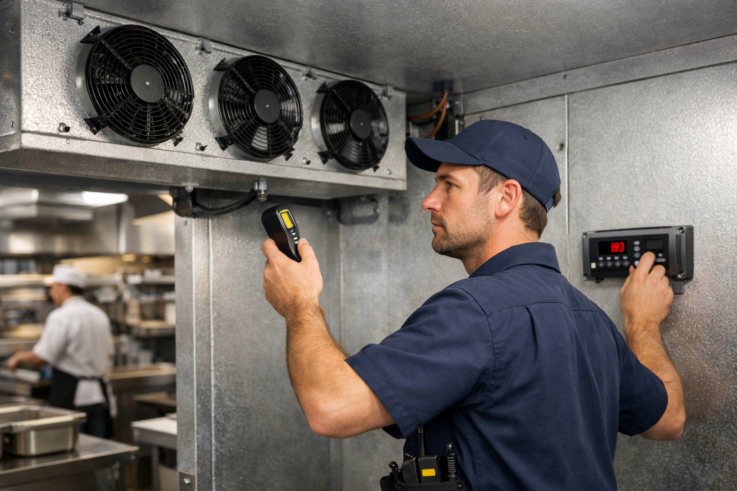
Temperature performance is one of the most important parts of restaurant refrigeration maintenance. A technician should check operating temperatures, compare readings with built-in controls, and look for signs that the equipment is struggling to maintain setpoint. If needed, thermostat calibration or control troubleshooting should be recommended.
Temperature problems can be caused by dirty coils, poor airflow, door gasket leaks, refrigerant issues, incorrect loading practices, failing sensors, or defrost problems. Good maintenance reporting should identify suspected causes rather than simply noting that a box is warm.
3. Condenser Coil Cleaning and Airflow Review
Condenser coils reject heat. When they are clogged with dust, grease, lint, cottonwood, or kitchen debris, the system runs hotter and less efficiently. In busy restaurants, bakeries, grocery stores, and convenience stores, coil cleaning is one of the most valuable preventive tasks.
The maintenance plan should state whether coil cleaning is included, how often it is performed, and whether heavily soiled coils require additional labor. Outdoor condensers should also be checked for blocked airflow, physical damage, debris, snow exposure, and clearance issues.
4. Evaporator Coil and Fan Inspection
Inside the cooler or freezer, evaporator coils and fans move cold air through the box. A technician should look for ice buildup, bent fins, abnormal frost patterns, blocked airflow, noisy motors, loose fan guards, and signs of defrost trouble. In a walk-in freezer service visit, frost and ice patterns can provide important clues about door infiltration, defrost heater issues, drain problems, or refrigerant concerns.
For walk-in cooler maintenance, evaporator airflow is especially important around stored product. Boxes that are overloaded or stacked directly against the evaporator can short-circuit airflow and cause uneven temperatures.
5. Door Gasket, Hinges, Closers, and Sweep Checks
Door problems are a common cause of refrigeration inefficiency. A worn gasket, misaligned hinge, weak door closer, or damaged sweep can allow warm air and moisture to enter the box. This can cause temperature swings, longer run times, ice buildup, water on floors, and product risk.
A maintenance plan should include inspection of gaskets, latches, closers, hinges, door heaters where applicable, and threshold conditions. Minor adjustments may be included depending on the plan. Larger repairs should be clearly quoted.
6. Drain Line and Pan Inspection
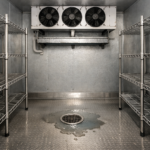
Clogged drains can cause water leaks, odors, ice accumulation, and slip hazards. A refrigeration maintenance checklist should include checking drain pans, drain lines, traps, heat tape where applicable, and evidence of backup. Freezer drain issues often create recurring ice sheets if not addressed properly.
7. Defrost System Review
Walk-in freezers rely on defrost cycles to keep coils from becoming blocked with ice. A technician should check defrost timers or electronic controls, heaters, termination sensors, drain heaters, and signs of incomplete or excessive defrost. Too little defrost can block airflow. Too much defrost can raise box temperature and waste energy.
8. Electrical Component Inspection
Electrical checks may include contactors, relays, capacitors, wiring condition, disconnects, fan motors, compressor operation, and control connections. Loose electrical connections and failing components can create intermittent problems that are difficult for staff to diagnose.
Technicians should follow safe electrical practices and explain when a licensed electrical contractor may be required for building-side power issues.
9. Refrigerant System Evaluation
Refrigerant is not something that should need routine topping off. If a system is low, there may be a leak or another issue requiring diagnosis. During maintenance, a technician may evaluate operating pressures, temperatures, superheat, subcooling, compressor behavior, and visible signs of oil or leakage where appropriate.
Because refrigerant handling is regulated, commercial refrigeration service should be performed by qualified technicians. If leak detection or refrigerant repair is needed, the maintenance report should separate that from the routine visit and explain the recommended next step.
10. Written Report and Priority Recommendations
A professional plan should produce a useful report. At minimum, it should document equipment serviced, findings, completed tasks, urgent concerns, recommended repairs, and items to monitor. For facility managers and property managers, clear documentation helps budget repairs and justify replacement decisions.
How Often Should a Restaurant Schedule Refrigeration Maintenance in Massachusetts?
Most restaurants should schedule preventive refrigeration maintenance at least quarterly, and high-volume kitchens may need monthly or bi-monthly visits. Grocery stores, supermarkets, convenience stores, hotels, and commercial kitchens with multiple systems may also benefit from more frequent service because one failure can affect a large amount of inventory.
Frequency should be based on use, environment, equipment condition, and business risk. A small wine cooler used by a homeowner may not need the same cadence as a walk-in freezer in a high-volume restaurant. A convenience store with display cases and reach-in freezers may need routine checks before summer heat and again before peak seasonal demand.
| Business or Equipment Type | Typical Maintenance Frequency | Why It Matters |
|---|---|---|
| High-volume restaurants and commercial kitchens | Monthly to quarterly | Heavy door traffic, grease, heat, and constant loading increase wear and temperature risk. |
| Walk-in coolers and walk-in freezers | Quarterly for many businesses; more often for critical storage | Coils, fans, doors, drains, and defrost systems need routine checks to prevent temperature issues. |
| Grocery stores and supermarkets | Monthly to quarterly depending on system count | Multiple cases and storage boxes create higher inventory exposure if a system fails. |
| Convenience stores and liquor stores | Quarterly to semiannual | Reach-ins, beverage coolers, and wine coolers benefit from coil cleaning and control checks. |
| Hotels and facility-managed kitchens | Quarterly or customized | Usage can vary by season, event schedule, and kitchen load. |
| Lower-use specialty equipment | Semiannual or annual | Wine coolers and specialty freezers still need airflow, coil, and control checks. |
The best schedule is the one that matches your risk. If a breakdown would close your kitchen, spoil inventory, or disrupt guests or tenants, a more frequent commercial refrigeration service contract may be worth considering.
What Does a Commercial Refrigeration Technician Check During Maintenance?
During a maintenance visit, a commercial refrigeration technician checks both the obvious and the hidden conditions that affect performance. A practical visit may include:
- Box temperature and operating setpoint verification
- Thermostat or controller operation
- Condenser coil condition and cleaning where included
- Evaporator coil condition, frost pattern, and airflow
- Fan motor operation, unusual noise, and vibration
- Door gaskets, hinges, closers, latches, and seals
- Drain lines, pans, traps, and signs of clogging or freezing
- Defrost timer, heaters, sensors, and termination controls
- Electrical connections, contactors, relays, and capacitors
- Compressor operation and visible signs of stress
- Refrigerant operating characteristics and signs of leaks when appropriate
- Outdoor condenser clearance, damage, or debris
- Staff-reported symptoms such as warm product, ice buildup, or alarms
- Written recommendations for repair, monitoring, or replacement planning
This checklist helps turn maintenance into usable business information. If a technician finds a cracked gasket, weak fan motor, or repeated defrost issue, the next step can be planned instead of discovered during a dinner rush or weekend emergency.
Comparing Basic, Standard, and Comprehensive Maintenance Plans
Not all commercial refrigeration maintenance plans are the same. Some are inspection-only. Others include cleaning, priority scheduling, and discounted repair labor. When comparing Massachusetts providers, ask what is included, what is excluded, and how emergency calls are handled.
| Plan Feature | Basic Inspection Plan | Standard Preventive Plan | Comprehensive Service Plan |
|---|---|---|---|
| Scheduled equipment inspections | Included | Included | Included |
| Condenser coil cleaning | May be extra | Often included at set intervals | Included more frequently or as defined |
| Temperature and control checks | Included | Included | Included with deeper trend review if available |
| Door gasket and hardware inspection | Visual check | Inspection plus minor adjustment if specified | Inspection, recommendations, and proactive replacement planning |
| Drain and defrost review | Limited | Included | Included with priority troubleshooting |
| Repair recommendations | Basic notes | Written priority list | Written priority list with budget planning |
| Emergency service terms | Usually separate | Defined response process | Defined response process and priority options where available |
| Best fit | Low-use or newer equipment | Restaurants, stores, and commercial kitchens | Multi-system facilities and high-risk inventory operations |
Before signing, ask whether parts, refrigerant, after-hours labor, coil washing chemicals, access equipment, and emergency refrigeration repair are included or billed separately. A transparent plan should make those terms clear.
Is Preventive Maintenance Worth It for Walk-In Coolers and Freezers?
For most businesses, yes. Preventive maintenance is worth it when the cost of failure is higher than the cost of planned service. Walk-in coolers and freezers are often central to food storage, beverage inventory, floral storage, hospitality operations, and production schedules. If a walk-in cooler repair is delayed because the problem was not noticed early, the impact can extend beyond the repair invoice.
Preventive maintenance helps by keeping coils clean, verifying controls, catching air leaks, identifying failing components, reducing ice buildup, and improving the odds that equipment runs as designed. It also creates a service history. That history matters when you need to decide whether to keep repairing an aging freezer or plan replacement before a critical failure.
When to Repair vs Replace Commercial Refrigeration Equipment
Maintenance visits sometimes reveal a bigger question: should the equipment be repaired or replaced? There is no one-size answer, but several factors help guide the decision.
Repair may make sense when the equipment is generally sound, the issue is isolated, parts are available, and the system still meets business needs. Examples include replacing a worn gasket, changing a fan motor, clearing a drain, correcting a control issue, or repairing a known electrical component.
Replacement planning may make more sense when the unit is aging, repair frequency is increasing, the box no longer holds temperature reliably, parts are difficult to obtain, insulation or panels are deteriorating, or compressor and refrigerant issues are recurring. A technician should explain the observed conditions so you can compare short-term repair cost with long-term reliability.
If your operation is growing, replacement may also be an opportunity to resize equipment, improve layout, or add monitoring. Royal Cooling can help evaluate commercial refrigeration options for walk-in coolers, walk-in freezers, reach-in refrigerators, wine coolers, and related equipment. You can explore the broader service area or request a consultation through the contact page.
Emergency Warning Signs That Need Prompt Service
Even with a maintenance plan, staff should know when to call for service. Contact a refrigeration professional promptly if you notice:
- A walk-in cooler or freezer not maintaining temperature
- Product that feels warm or is thawing
- Repeated high-temperature alarms
- Heavy ice buildup on evaporator coils, floors, doors, or ceilings
- Water leaking inside or outside the box
- Burning smells, buzzing, tripped breakers, or electrical concerns
- Compressor short cycling or running continuously
- Fans not spinning, grinding, or making unusual noise
- Door gaskets torn, loose, or not sealing
- Visible oil spots near refrigeration lines or components
These symptoms may point to airflow problems, refrigerant leaks, failed fan motors, clogged drains, defrost failures, electrical issues, or compressor trouble. If food safety or inventory is at risk, follow your internal temperature policy and call a qualified technician.
How Massachusetts Businesses Can Choose the Right Service Contract
When comparing commercial refrigeration maintenance plans Massachusetts businesses can choose from, focus on scope, documentation, and fit. A low-cost inspection may not include the tasks your equipment actually needs. A comprehensive plan may be ideal for a supermarket or hotel but more than a small specialty cooler requires.
Ask these questions before choosing a provider:
- What equipment is included in the plan?
- How often will visits occur?
- Is coil cleaning included or extra?
- Are walk-in cooler maintenance and walk-in freezer service handled differently?
- What documentation will be provided after each visit?
- How are recommended repairs quoted and prioritized?
- Are emergency refrigeration repair calls covered, discounted, or billed separately?
- What areas of Massachusetts does the contractor serve?
- Does the technician understand restaurants, grocery stores, liquor stores, convenience stores, hotels, and facility-managed properties?
Royal Cooling works with commercial refrigeration needs across Massachusetts, including the Boston metro and nearby communities such as Boston, Worcester, Cambridge, Lowell, Springfield, Quincy, Newton, Waltham, and Framingham. Service availability depends on scheduling, location, and the type of work required, but the goal is always to help businesses protect cold storage before a breakdown disrupts operations.
Build a Maintenance Plan Before the Next Breakdown
A maintenance plan is most valuable before there is an emergency. If your team has already dealt with warm coolers, icing freezers, leaking drains, short cycling compressors, or repeated repair calls, it may be time to move from reactive service to planned preventive refrigeration maintenance.
Royal Cooling can help review your equipment, identify maintenance priorities, and recommend a service schedule that fits your operation. Whether you manage a restaurant kitchen in Suffolk County, a grocery store in Worcester County, a liquor store in Middlesex County, or a hotel property in the Boston metro area, a clear maintenance plan can help reduce avoidable disruption.
Ready to compare maintenance options? Call Royal Cooling at 781-899-4441 or request service through the contact page. For location context, visit the Royal Cooling service area.
FAQ: Commercial Refrigeration Maintenance Plans in Massachusetts
What should be included in a commercial refrigeration maintenance plan?
It should include scheduled inspections, temperature checks, coil cleaning, airflow review, door gasket inspection, drain and defrost checks, electrical testing, refrigerant system evaluation where appropriate, written reports, and repair recommendations.
How often should a restaurant schedule refrigeration maintenance in Massachusetts?
Many restaurants should schedule maintenance quarterly, while high-volume kitchens may need monthly or bi-monthly visits. Frequency depends on equipment age, usage, kitchen conditions, inventory risk, and how critical the cooler or freezer is to daily operations.
Is preventive maintenance worth it for walk-in coolers and freezers?
Yes, preventive maintenance is usually worth it because walk-in cooler or freezer failure can disrupt operations and put inventory at risk. Maintenance helps catch dirty coils, failing fans, gasket leaks, drain issues, and defrost problems earlier.
What does a commercial refrigeration technician check during maintenance?
A technician typically checks temperatures, controls, condenser and evaporator coils, fan motors, door seals, drains, defrost components, electrical parts, compressor operation, refrigerant indicators, airflow, and visible wear or damage.
Are emergency refrigeration repairs included in a service contract?
Not always. Some contracts include priority scheduling or defined emergency procedures, while parts, refrigerant, after-hours labor, and major repairs are often billed separately. Always ask for the emergency terms in writing.
Do liquor stores and convenience stores need refrigeration maintenance plans?
Yes. Beverage coolers, wine coolers, reach-in refrigerators, display cases, and freezers can develop coil, fan, control, and door seal issues. Routine maintenance helps reduce unexpected downtime and temperature problems.
When should I replace refrigeration equipment instead of repairing it?
Replacement may be worth discussing when equipment is aging, repair calls are frequent, parts are hard to source, temperatures are unreliable, insulation is deteriorating, or major compressor and refrigerant problems keep returning.
Does Royal Cooling service commercial refrigeration equipment across Massachusetts?
Royal Cooling serves commercial refrigeration customers in Massachusetts, including businesses in and around the Boston metro, Worcester County, Middlesex County, and Suffolk County. Contact Royal Cooling to discuss availability for your location and equipment.