Walk-In Cooler Running Warm in Massachusetts: What Restaurant and Food Vendors Should Look Out For
Short answer: If you have a walk-in cooler running warm in Massachusetts, first verify the temperature with a separate thermometer, keep the door closed, check for blocked airflow, inspect the door gasket, and look for ice buildup or a dirty condenser. If the temperature keeps climbing, product is at risk, or the compressor is not operating normally, call a commercial refrigeration technician.
A walk-in cooler that will not hold temperature is one of the most stressful equipment problems for a restaurant, market, convenience store, hotel kitchen, or grocery operation. Inventory can be expensive, service windows are tight, and food safety responsibilities do not pause because a cooler is struggling. For Massachusetts businesses in Boston, Worcester, Cambridge, Lowell, Quincy, Newton, Waltham, Framingham, Springfield, and surrounding communities, the right first steps can reduce unnecessary door openings, help protect product, and give a technician better information when you call.
This guide focuses on what owners and managers should check first when the fans are still running but the box is warm. It is not a replacement for professional walk-in cooler repair, and you should not remove electrical panels, handle refrigerant, bypass controls, or attempt compressor repairs unless you are licensed and trained. The goal is to help you separate simple operational issues from problems that need emergency refrigeration repair.
Why a Walk-In Cooler Can Run Warm While the Fans Are Still On
One of the most common questions Royal Cooling hears is: Why is my walk-in cooler running warm but the fans are still on? The answer is that the evaporator fans only move air inside the cooler. They do not, by themselves, prove that the system is removing heat. The refrigeration cycle also depends on the compressor, condenser, refrigerant charge, metering device, controls, defrost system, coils, and door integrity.
In other words, you may hear fans and still have serious cooler temperature problems. The box can feel active even when the system is not actually cooling. A failed compressor contactor, dirty condenser coil, refrigerant leak, iced evaporator coil, bad thermostat, or door seal leak can all cause a walk-in to run warm while fans continue to spin.
For a busy Massachusetts restaurant cooler repair call, the timeline matters. A cooler may start by running a few degrees higher than normal during dinner service, then creep upward after repeated door openings. In a grocery store or convenience market, the problem may show up as soft product, sweating packages, or a temperature alarm. In a commercial kitchen, staff may notice the unit is running constantly but not recovering after deliveries.
What to Do First if Your Restaurant Walk-In Cooler Will Not Hold Temperature
If your restaurant walk-in cooler will not hold temperature, begin with safe, non-invasive checks. These steps help you reduce heat load and gather useful details before calling a commercial refrigeration technician.
1. Confirm the actual box temperature
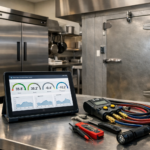
Do not rely only on the built-in display. Use a clean, independent thermometer placed in the airstream or among products. Record the reading and the time. If your operation uses temperature logs, mark when the issue began and whether the temperature is rising, stable, or slowly recovering.
2. Keep the door closed as much as possible
Every door opening adds warm, humid air. In Massachusetts, humid summer days in the Boston metro or busy delivery periods in Worcester County can make recovery harder. Assign one person to retrieve necessary product quickly and keep nonessential access to a minimum.
3. Check for blocked airflow inside the cooler
Boxes stacked tightly against the evaporator fan, shelves pressed against walls, or product loaded above safe storage height can restrict air circulation. Look for blocked fan guards, plastic wrap, cardboard, or product pushed too close to the evaporator coil. Restoring airflow may help the cooler recover if the refrigeration system is otherwise healthy.
4. Look at the door gasket and door closure
A torn door gasket, loose hinge, broken latch, worn sweep, or door that does not close fully can pull warm air into the box continuously. That added heat and moisture can make the cooler run longer, ice the coil, and cause unstable temperatures. Yes, a bad door seal can absolutely make a walk-in cooler run warm.
5. Check for visible ice or frost patterns
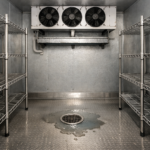
A light frost pattern may be normal in some conditions, but a coil packed with ice, heavy frost around the evaporator, or ice around the drain pan indicates a problem. Defrost failure, airflow restriction, door infiltration, low refrigerant, or a fan issue can all contribute. Do not chip ice with sharp tools; you can damage coils and create a refrigerant leak.
6. Inspect the condenser area from a safe distance
If the condenser is accessible without climbing unsafely or opening electrical panels, look for obvious dirt, grease, leaves, trash, or airflow obstruction. Many restaurant and market condensers operate in tough environments. A dirty condenser can prevent heat rejection and make a cooler run warm, especially during peak kitchen loads or warm Massachusetts weather.
Common Symptoms and What They May Mean
The table below gives a practical way to think about symptoms. It is not a final diagnosis, but it can help you describe the issue when requesting walk-in cooler repair or grocery store refrigeration service.
| Symptom | Possible Cause | What You Can Check Safely | When to Call |
|---|---|---|---|
| Fans run but box temperature rises | Compressor not running, low refrigerant, dirty condenser, control failure, iced coil | Verify temperature, keep door closed, check airflow, look for ice | Call if temperature does not recover quickly or product is at risk |
| Cooler runs constantly | Door leak, overloaded box, dirty condenser, weak compressor, refrigerant issue | Inspect door seal, reduce door openings, confirm product is not blocking fans | Call if constant running continues after operational issues are corrected |
| Heavy frost or ice on evaporator | Defrost problem, fan problem, door infiltration, drain issue, refrigerant problem | Look visually only; do not chip ice with tools | Call for service to protect the coil and diagnose defrost controls |
| Warm air near product but cold near coil | Air circulation issue, blocked fan, poor loading pattern | Move product away from fan discharge and return paths | Call if fans are weak, noisy, stopped, or temperature remains uneven |
| Alarm after deliveries | High heat load, door left open, product loaded warm, undersized or struggling equipment | Close door, reduce access, allow recovery while monitoring | Call if recovery is slow, repeated, or worsening |
| Condenser area very dirty or hot | Poor heat rejection, blocked coil, failed condenser fan | Remove loose debris around unit if safe; do not open panels | Call for coil cleaning, fan checks, and system testing |
When Is a Warm Walk-In Cooler an Emergency for a Massachusetts Business?
A warm walk-in cooler becomes an emergency when temperature rise threatens inventory, food safety, operations, or compliance obligations. For a restaurant in Boston during dinner service, a market in Lowell with cases of perishable product, or a hotel kitchen in Cambridge preparing for an event, waiting too long can make a manageable repair more expensive.
Consider requesting emergency refrigeration repair when any of the following are true:
- The cooler temperature is climbing and not stabilizing.
- The system is above your required holding range for perishable inventory.
- You hear fans but do not hear or feel normal refrigeration operation from the condensing unit.
- The evaporator is heavily iced and airflow is weak.
- The compressor short cycles, hums, trips, or will not start.
- You smell burning, see electrical arcing, or notice water near electrical components.
- The same cooler has had repeated temperature problems in recent days or weeks.
- You do not have enough backup refrigeration capacity for the product inside.
Massachusetts businesses should follow their internal food safety plan and applicable health department requirements for evaluating product. A refrigeration contractor can repair equipment, but the decision to keep or discard food should follow your operation’s safety procedures and regulatory guidance.
Can a Dirty Condenser or Bad Door Seal Make a Walk-In Cooler Run Warm?
Yes. A dirty condenser and a bad door seal are two of the most common conditions that can push a walk-in cooler out of range. They are also easy to underestimate because the cooler may still sound like it is running.
The condenser rejects heat from the refrigeration system. When the coil is coated with dust, grease, pollen, or debris, the system has to work harder. Head pressure can rise, cooling capacity can fall, and components can be stressed. In a commercial kitchen, grease-laden air can make condenser coil cleaning especially important. In a convenience store or supermarket, storage clutter around the condensing unit can reduce airflow.
A bad door gasket creates a different problem. It lets warm, moist air enter the cooler. The system now has to remove extra heat and moisture, and the moisture can freeze on the evaporator coil. That reduces airflow and causes even more warming. For restaurants, liquor stores with cold storage, and grocery operations, door gaskets should be treated as operating components, not cosmetic parts.
What a Commercial Refrigeration Technician Checks
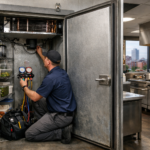
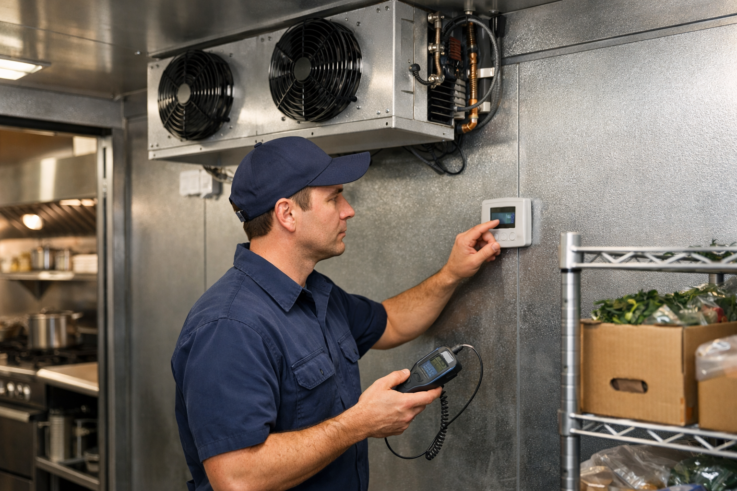
When Royal Cooling responds to a warm walk-in cooler, the technician’s job is to find the cause, not just reset an alarm. A trained commercial refrigeration technician will typically evaluate the full system: the box, evaporator, condensing unit, controls, refrigerant circuit, and operating conditions.
Depending on the equipment and symptoms, a service visit may include:
- Temperature verification with calibrated instruments.
- Inspection of evaporator fans, fan guards, coil condition, drain pan, and defrost operation.
- Review of thermostat, temperature control, sensors, relays, contactors, time clock, and wiring condition.
- Condenser coil inspection and cleaning recommendations.
- Condenser fan motor and blade checks.
- Compressor amperage, starting components, pressure readings, and operating performance checks.
- Refrigerant leak indicators and system charge evaluation where appropriate.
- Door gasket, hinge, latch, threshold, and panel condition inspection.
- Assessment of box loading, product temperature, and airflow paths.
For a business owner, the most useful information to provide is the current temperature, normal setpoint, when the issue started, whether the cooler was recently loaded, whether any alarms occurred, and whether prior repairs were made. If you have had recent walk-in freezer service, cooler controls replaced, or compressor work, mention it. Refrigeration systems often reveal patterns over time.
Repair vs. Replace: How to Think About the Decision
Not every warm cooler means major replacement. Many problems are repairable: door gaskets, fan motors, controls, defrost timers, clogged drains, electrical components, and condenser cleaning can often restore reliable operation when addressed promptly. However, repeated compressor failures, severe corrosion, failing insulated panels, chronic refrigerant leaks, obsolete components, or equipment that no longer matches the business load may justify a replacement discussion.
For example, a small restaurant in Quincy with a single reach-in and one walk-in may prioritize rapid repair to keep service going. A grocery store in Framingham or supermarket operation near Middlesex County may need a broader assessment of system reliability because inventory exposure is larger. A commercial kitchen in Springfield or Worcester may find that recurring service calls during peak production indicate the need for design changes, improved airflow, or scheduled preventive maintenance.
A good HVAC contractor or refrigeration specialist should explain the practical options: immediate repair, temporary risk reduction, maintenance needs, and long-term replacement considerations. The goal is not to sell equipment unnecessarily; it is to keep the business operating with reliable refrigeration.
Prevention Tips for Restaurants, Markets, and Commercial Kitchens
Many warm cooler emergencies can be reduced with routine attention. Preventive maintenance is especially important for Massachusetts businesses that depend on refrigeration every day, from Boston metro restaurants and Cambridge cafes to Worcester County markets and Waltham commercial kitchens.
- Keep condenser coils clean. Dirt and grease reduce heat rejection and increase system stress.
- Inspect door gaskets weekly. Look for splits, gaps, hardened rubber, and doors that do not self-close.
- Maintain airflow inside the box. Do not block evaporator fans or stack product tight to walls.
- Log temperatures consistently. Trends help identify cooler temperature problems before they become emergencies.
- Train staff to close doors quickly. Propped-open doors are a major heat and moisture source.
- Schedule service before peak seasons. Summer heat, high humidity, and holiday inventory surges can expose weak components.
- Address small noises early. Rattling fans, short cycling, and slow recovery are warning signs.
Royal Cooling provides commercial refrigeration service for walk-in coolers, walk-in freezers, wine coolers, reach-in refrigerators, freezer repair, and preventive refrigeration maintenance. If you manage multiple locations, ask about a maintenance approach that fits your equipment mix and operating schedule.
Local Service Context Across Massachusetts
A walk-in cooler running warm Massachusetts search usually means the problem is happening right now, not someday. Royal Cooling serves Massachusetts businesses that rely on commercial refrigeration, including restaurants, convenience stores, liquor stores, supermarkets, commercial kitchens, hotels, facility managers, and property managers. Service-area examples include Boston, Worcester, Cambridge, Lowell, Springfield, Quincy, Newton, Waltham, and Framingham, along with communities in the Boston metro, Worcester County, Middlesex County, and Suffolk County.
If your cooler is warm, start by protecting the box from additional heat, then contact a qualified technician. You can learn more about Royal Cooling’s coverage on the service area page or request help through the contact page. For urgent refrigeration issues, call 781-899-4441.
Before You Call: Quick Information to Gather
Having a few details ready can speed up the troubleshooting process:
- Business type: restaurant, grocery store, convenience store, commercial kitchen, hotel, or other facility.
- Equipment type: walk-in cooler, walk-in freezer, reach-in refrigerator, wine cooler, or combination system.
- Current temperature and normal setpoint.
- Whether fans are running, stopped, noisy, or weak.
- Whether the condensing unit appears to be running.
- Any ice, water leaks, alarms, burning smell, or tripped breakers.
- Recent deliveries, door issues, cleaning, power interruptions, or prior service.
Do not reset breakers repeatedly, bypass safeties, or continue running equipment that appears electrically unsafe. Those actions can damage components and create hazards. When in doubt, shut down unsafe equipment according to your facility procedures and call for professional service.
FAQ: Walk-In Cooler Running Warm in Massachusetts
Why is my walk-in cooler running warm but the fans are still on?
The fans only circulate air inside the box. The cooler may still run warm if the compressor is not operating, the condenser is dirty, refrigerant is low, the coil is iced, the thermostat is faulty, or the door seal is leaking.
What should I do if my restaurant walk-in cooler will not hold temperature?
Verify the temperature with a separate thermometer, limit door openings, check for blocked airflow, inspect the door gasket, look for ice buildup, and call a commercial refrigeration technician if the temperature does not recover quickly.
When is a warm walk-in cooler an emergency for a Massachusetts business?
It is an emergency when the temperature keeps rising, perishable inventory is at risk, the compressor will not run, heavy ice blocks airflow, electrical issues appear, or you do not have backup refrigeration capacity.
Can a dirty condenser make a walk-in cooler run warm?
Yes. A dirty condenser coil reduces heat rejection, raises system stress, and can prevent the cooler from reaching setpoint. Restaurants and markets should keep condenser areas clean and schedule professional maintenance.
Can a bad door seal cause cooler temperature problems?
Yes. A torn or loose gasket allows warm, humid air into the cooler. That increases heat load, can create evaporator ice, and may cause the system to run constantly without holding temperature.
Should I turn off my warm walk-in cooler?
Do not shut it off automatically unless there is an electrical hazard, burning smell, severe mechanical noise, or your facility procedure requires it. Limit door openings, monitor temperature, protect product, and call for service guidance.
How does a technician diagnose a warm walk-in cooler?
A technician checks box temperature, airflow, evaporator condition, defrost operation, controls, condenser coil, fan motors, compressor operation, electrical components, refrigerant performance, door gaskets, and loading conditions.
Call Royal Cooling for Walk-In Cooler Repair in Massachusetts
If your walk-in cooler is running warm, do not wait until the box is fully out of range or product is already in question. Royal Cooling helps Massachusetts restaurants, markets, convenience stores, commercial kitchens, and facility managers diagnose and repair commercial refrigeration problems. Call 781-899-4441 or visit the contact page to request service. If you are planning ahead, ask about preventive maintenance for walk-in coolers, walk-in freezers, reach-in refrigerators, wine coolers, and freezer repair needs.